
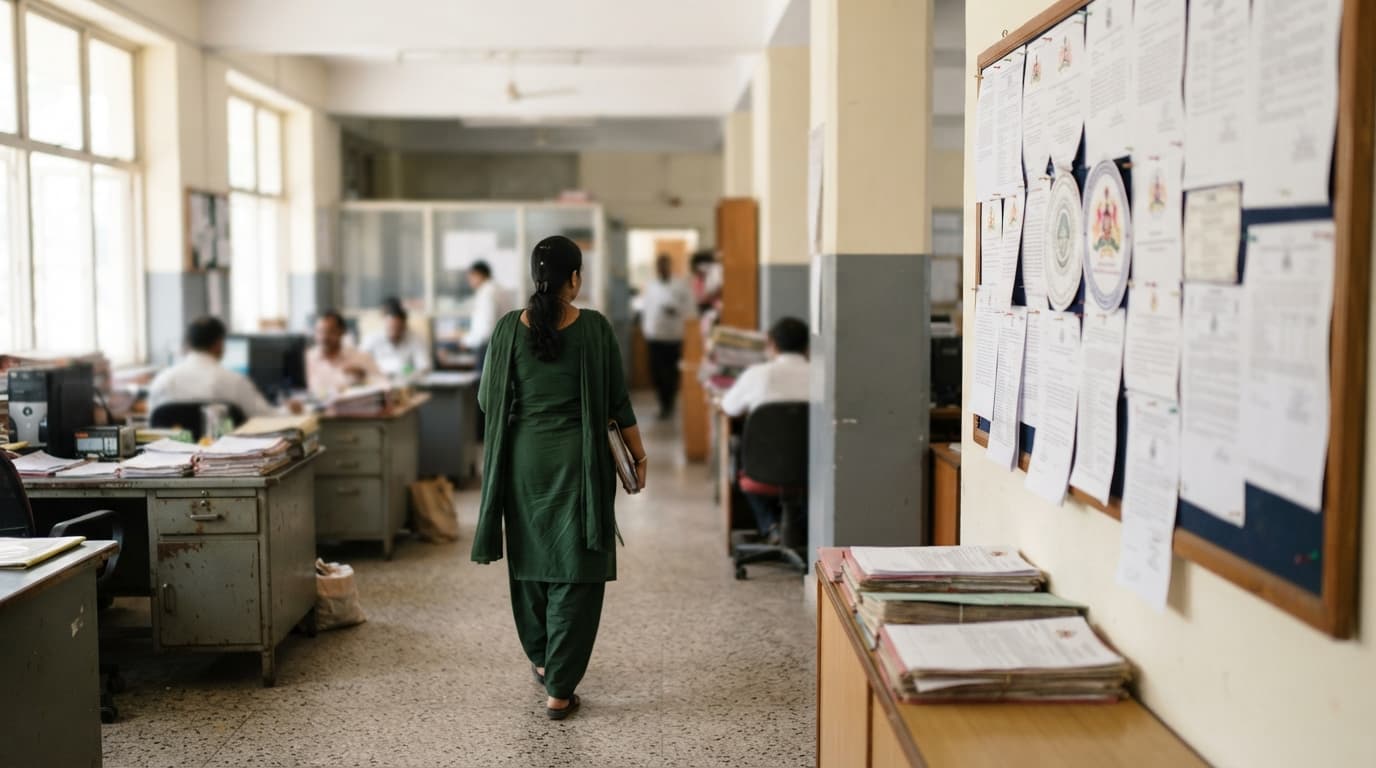
The Karnataka High Court halted implementation of a wage freeze circular issued by urban development authorities and the Directorate of Town and Country Planning on October 16, 2026. Justice H.T. Narendra Prasad granted an interim stay in response to a writ petition filed by the All India Central Council of Trade Unions. The circular, issued on October 9, 2026, had maintained existing minimum wages without implementing revised rates mandated by wage revision procedures.
Court Issues Notices to State Officials
Justice Prasad issued notices to three key state officials: the Chief Secretary of Karnataka, the Principal Secretary of the Labour Department, and the director of the Directorate of Town and Country Planning. They must respond to the petition and justify the circular's issuance and explain why revised wage rates were not implemented as required.
The Labour Department's involvement reflects the wage revision matter's connection to statutory labour law compliance. Urban development authorities in India fall within state government purview and are bound by minimum wage legislation applicable to their employees. The circular's maintenance of existing wages without implementing revisions raised questions about adherence to mandatory wage review procedures.
Trade Union Challenge and Grounds for Stay
The All India Central Council of Trade Unions argued that the circular violated wage revision mandates. Wage revision in India is typically governed by statutory provisions that require periodic review and adjustment of minimum wages to account for inflation and changes in living costs. The circular's failure to implement revised rates constituted a breach of these legal obligations.
The interim stay suggests the court found sufficient merit in the union's arguments to warrant halting the circular's operation pending fuller consideration. Interim stays are typically granted when the petitioner demonstrates a prima facie case, irreparable harm from the circular's continued implementation, and a balance of convenience favouring the stay.
For employees of urban development authorities, the stay provides immediate relief from the wage freeze. It prevents the circular from taking effect during the petition's pendency, preserving the status quo and allowing the court to examine the substantive questions raised by the trade union.
Impact on Urban Body Employees
Urban development authorities in Karnataka manage infrastructure projects, town planning initiatives, and administrative functions across multiple municipalities and urban centres. These authorities employ engineers, planners, administrative staff, and support personnel whose wages are subject to statutory minimum wage requirements. The circular's attempt to freeze wages at existing levels would have affected this entire workforce.
The stay order prevents the circular from altering the wage structure during the court's examination of the petition. However, the order does not automatically implement revised wage rates; rather, it maintains the legal status quo until the court issues a final judgment. Depending on the court's ultimate decision, revised wage rates may be implemented, the circular may be struck down entirely, or other remedial measures may be ordered.
The interim nature of the stay means it remains in effect only until the court takes up the matter again at a scheduled hearing. The notices issued to state officials will require written responses explaining the circular's rationale, the procedures followed in its issuance, and the state's position on the wage revision mandate.
Judicial Scrutiny of Wage Compliance
The court's intervention reflects judicial scrutiny of executive compliance with wage revision statutes. In India, minimum wages are prescribed under the Minimum Wages Act, 1948, which requires periodic revision to ensure that wages remain adequate for workers' subsistence and reasonable comfort. State governments and their agencies are bound by these statutory obligations, and any circular or order that circumvents or delays wage revision can attract judicial challenge.
The stay order sends a signal that courts will not permit administrative circulars to operate as a substitute for statutory wage revision compliance. Urban development authorities and similar state agencies cannot unilaterally freeze wages or delay revisions through administrative directives if those actions conflict with statutory mandates. The involvement of the Labour Department's Principal Secretary in the court notice indicates that the state's labour administration will be held accountable for ensuring compliance across all agencies under state control.
For urban body employees, the stay provides temporary protection against the wage freeze, but the petition's ultimate outcome will determine whether revised wages are permanently secured. The court's next hearing will likely involve detailed arguments from both the state government and the trade union on the statutory requirements governing wage revision, the procedures that should have been followed, and the remedies appropriate if the circular is found to violate those requirements.
Next Steps and Pending Hearing
The case now awaits the court's next hearing, at which time Justice Prasad will consider the responses filed by state officials and hear arguments from both parties. The trade union will present its case that wage revision is mandatory and that the circular's issuance violated statutory obligations. The state government will have the opportunity to explain the circular's rationale, whether any wage revision process was underway, and whether circumstances justified maintaining existing wage rates.
The interim stay's continuation depends on the court's assessment of these arguments. If the court finds that the circular was issued in violation of wage revision mandates, it may make the stay permanent by quashing the circular entirely. Alternatively, the court may direct the state government to complete the wage revision process within a specified timeframe and implement revised rates with effect from a particular date.
Other state agencies and urban bodies across Karnataka will likely monitor the court's judgment closely, as it may establish binding precedent on how wage revision mandates must be observed and what happens when administrative directives attempt to circumvent them. Until the court's next hearing and final judgment, the wage freeze circular remains stayed, preserving the existing wage structure for urban body employees and keeping the question of revised wage implementation open for judicial determination.
Comments
Sign in to read the discussion and share your thoughts.
Latest from LawWorld
News
View all- Supreme Court Directs Centre to Publish New Civil Aviation Rules Within Two Weeks Under Bharatiya Vayuyan Adhiniyam17 Oct 2026
- Supreme Court Rules Free Legal Aid in Prison Does Not Bar Parole for Supreme Court Appeal Access17 Oct 2026
- Supreme Court Declares Internet Access a Fundamental Right for All Individuals Including Children17 Oct 2026
- Supreme Court Holds Demanding Bribe is Pure Criminal Act, Section 17A Prevention of Corruption Act Inapplicable17 Oct 2026
- Supreme Court Rules Separate Trials Mandatory, Rejects Clubbing Sessions Cases with Complaints17 Oct 2026
Articles
View all- Supreme Court Issues Notice on Constitutional Validity of BNSS Section 172: Police Powers and Peaceful Assembly Rights at Stake17 Oct 2026
- Supreme Court Refers DPDP Act Constitutional Challenge to Five-Judge Bench: RTI vs. Privacy Rights at Stake12 Oct 2026
- Supreme Court Disposes PIL on Doxxing and Deepfakes; Directs Union Ministries to Implement Remedial Measures8 Oct 2026
Blogs
View all- Supreme Court Directs MEA to Publicize Compensation for Indians Killed in Russia-Ukraine War17 Oct 2026
- Contract Workers Cannot Claim Automatic Employment Despite Non-Compliance: Supreme Court Clarifies16 Oct 2026
- Supreme Court Calls for Separate Sexual Harassment Framework for Legal Professionals15 Oct 2026