
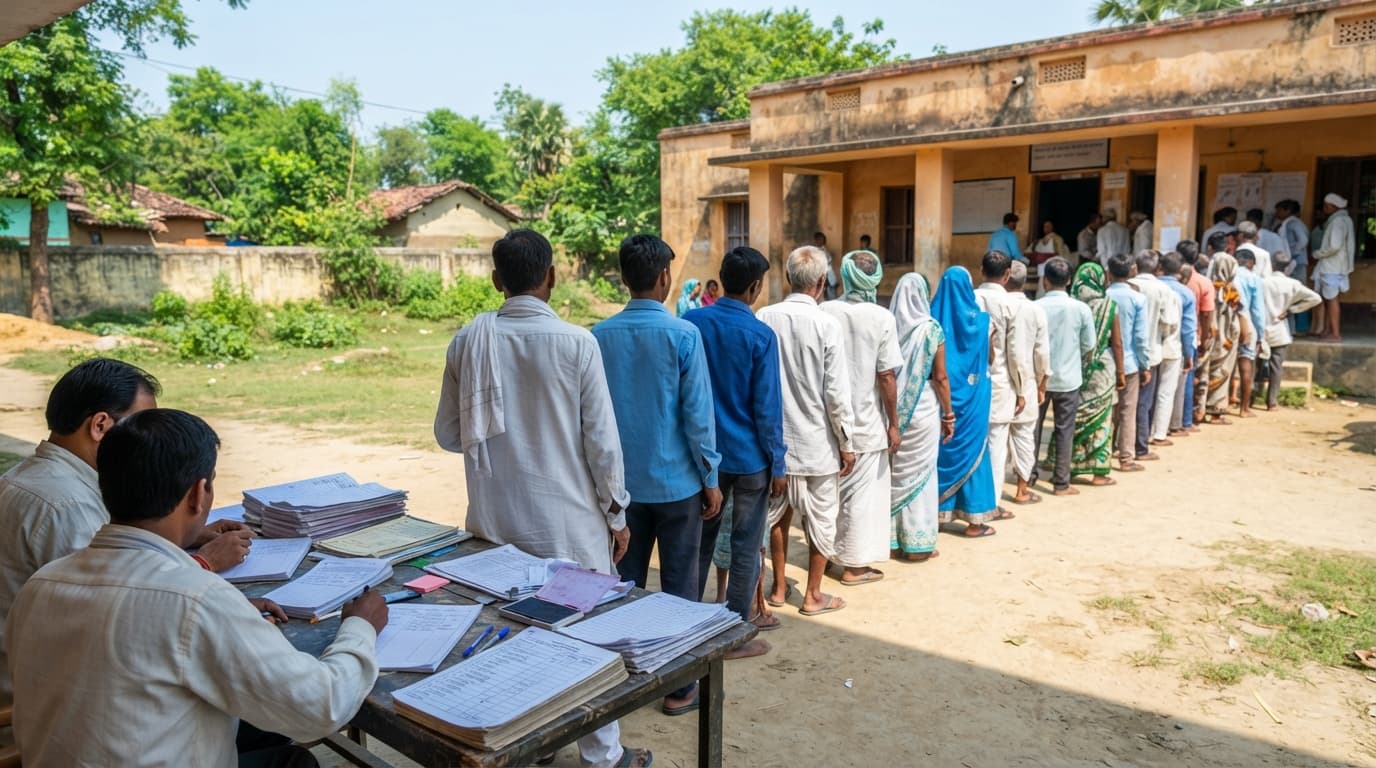
The Supreme Court on November 5, 2026 refused to stop the Election Commission of India from publishing Bihar's final voter list on November 6. The bench led by Chief Justice Surya Kant heard the Bihar special intensive revision case and passed no interim restraining order.
No one seeking restoration of a deleted name will face prosecution, the Chief Justice said verbally. Citizens "need not be apprehensive" as the court was dealing with the sub-judice matter.
That assurance followed an urgent mentioning a day earlier by advocate Prashant Bhushan. He said the Commission was still pushing deleted voters to use Form 6 despite the court's oral nudge against that course, sparking fear of criminal liability for a false declaration.
On November 3, 2026, the Commission had clarified that filling Form 6 would not technically amount to a false declaration and would not invite prosecution for deleted voters. The mentioning questioned whether that answered the bench's concern about forcing old voters to apply as new voters.
The first challenge to the Bihar special intensive revision came in July 2025. Activists and petitioners alleged the exercise risked widespread disenfranchisement of vulnerable communities because of stringent documentation and a compressed timeline.
Those petitions challenged the Commission's authority to conduct the electoral roll revision in that form. They also objected to the exclusion of Aadhaar and ration cards from the initial document list.
Hearings ran for 29 days of arguments before the court reserved judgment on the Bihar matter on January 29, 2026. It then delivered judgment on May 27, 2026, unanimously upholding the Bihar exercise.
Form 6 Fear Behind Clarification
In the Delhi voter-roll challenge heard last week, the court called insistence on Form 6 for previously registered voters a "structural incongruity". Form 6 is for new voters and carries a declaration that the applicant was never registered before.
Historical voters forced to sign it faced a dilemma. To recover voting rights, they had to declare themselves as never enrolled, risking criminal liability for a false statement.
Justice Joymalya Bagchi clarified during that hearing that the court had not finally decided on the legality of the Commission's use of the 'logical discrepancy' category. Oral observations should not be read as conclusive decisions, he cautioned.
Instead the bench orally nudged the Commission to let excluded or shifted voters use Form 8, meant for change of address or corrections, or to allow late collection of enumeration forms. The aim was to avoid treating old voters as fresh applicants.
The Bihar final roll will now come out as scheduled. Deleted voters seeking restoration can rely on the Chief Justice's verbal assurance against prosecution, while questions on Form 6 and the 'logical discrepancy' category remain open for adjudication.
Comments
Sign in to read the discussion and share your thoughts.
Latest from LawWorld
News
View all- Supreme Court Refuses to Transfer Tirupati Laddu Ghee Adulteration Trial Out of Andhra Pradesh5 Nov 2026
- Sharjeel Imam Moves Supreme Court for Bail in Delhi Riots UAPA Case After High Court Denial5 Nov 2026
- Supreme Court Rules 24-Hour Custody Clock Starts From Detention, Not Formal Arrest5 Nov 2026
- Karnataka Tells High Court Budget Constraints Withheld Two Months Of Gruha Lakshmi Payments5 Nov 2026
- Karnataka High Court Dismisses Amazon Plea Against FIR Over Pirated Ravi Belagere Novel5 Nov 2026