
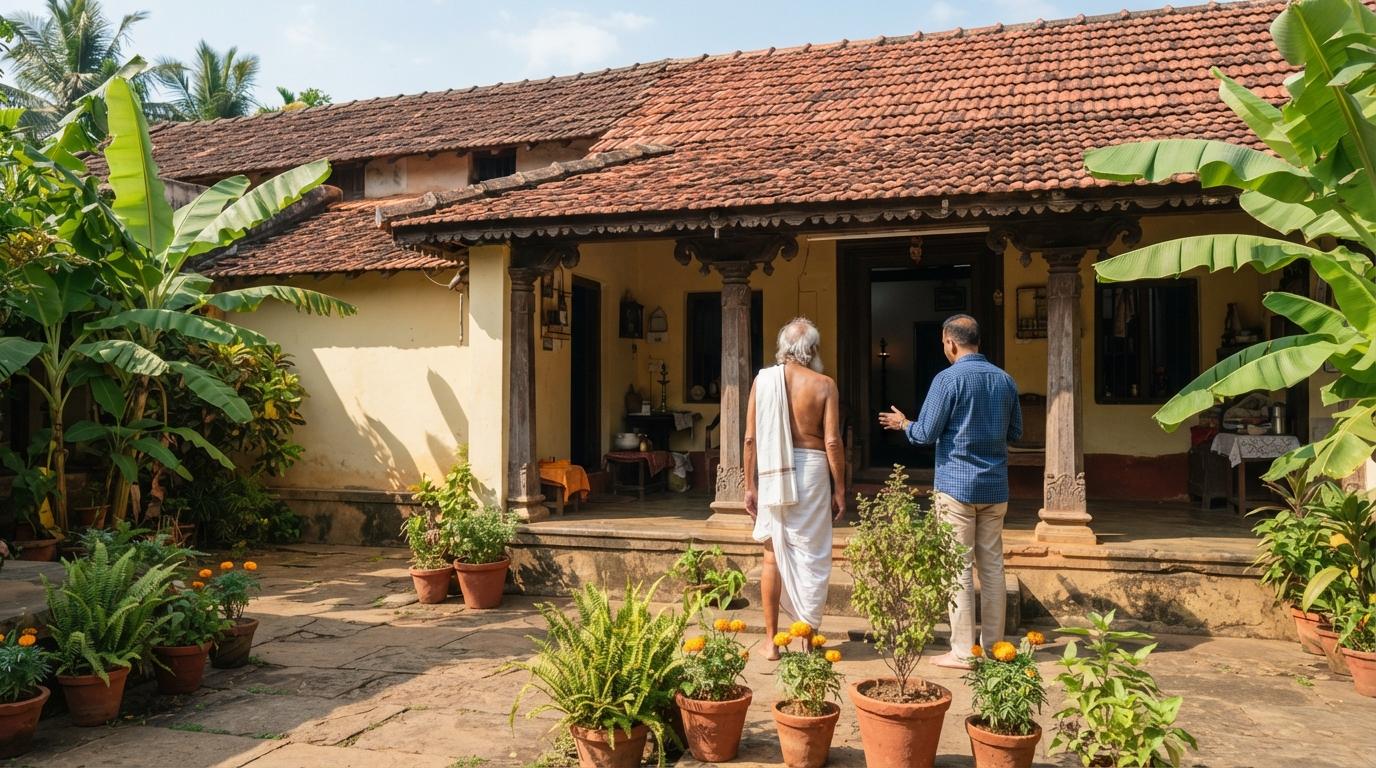
On November 13, 2026, the Karnataka High Court ruled that a son-in-law does not become a member or coparcener of his father-in-law's Hindu joint family merely by residing with the family or assisting in acquiring properties. Any contribution towards joint acquisition may support co-ownership, if proved, but it does not confer coparcenary status.
The ruling addresses the legal position of a son-in-law within a Hindu joint family structure on property rights and coparcenary status. Residence with the father-in-law's family is not enough by itself, the Court said, to establish membership in that family. Assistance in acquiring properties stands on the same footing. The bench kept coparcenary rights separate from co-ownership based on proved contribution.
Residence Alone Gives No Coparcenary Claim
Living in the father-in-law's household does not make the son-in-law part of that Hindu joint family for purposes of joint family property under Hindu law, the Court said. Working with the family to acquire assets makes no difference. Residence or help with purchases alone cannot establish coparcenary rights. To advance any property claim, a son-in-law who lived with the family and helped in purchases must show more than presence in the house. That further showing belongs to co-ownership and turns on evidence of actual contribution.
Proved contribution towards joint acquisition may support co-ownership, the Court said. The outcome depends on proof in each case. The same facts cannot create coparcenary status by birth or survivorship. In partition suits across Karnataka where affinal relatives claim a share on the basis of long residence or help with purchases, those facts must be tested as a co-ownership claim. Under the ruling, the claimant must prove the contribution relied upon.
A son-in-law who cannot prove contribution cannot remain in the litigation as a coparcener of the father-in-law's family, while one who proves contribution can pursue only the co-ownership share that the evidence supports.
Comments
Sign in to read the discussion and share your thoughts.
Latest from LawWorld
News
View all- Supreme Court Bars Customs Refund Without Challenge to Self-Assessment15 Nov 2026
- Karnataka High Court Restores GST Appeal Dismissed for 226-Day Delay15 Nov 2026
- Karnataka High Court Holds Adulterer Is Proper But Not Necessary Party in Divorce Plea15 Nov 2026
- Karnataka High Court Quashes SC/ST Act Complaint Against Bharat Forge Chairman Over 11-Year Delay15 Nov 2026
- Karnataka High Court Directs Review of Mental Health Policies for Armed Personnel While Quashing Suicide-Attempt Case15 Nov 2026
Articles
View all- Article 22(2) Clock Starts at Curtailment of Liberty, Not Formal Arrest: Supreme Court in NDPS Bail Case15 Nov 2026
- Supreme Court Upholds Bihar Special Intensive Revision of Electoral Rolls14 Nov 2026
- Seven-Judge Constitution Bench Holds Decades-Old State Sales Tax Surcharge Reference Academic After GST6 Nov 2026