
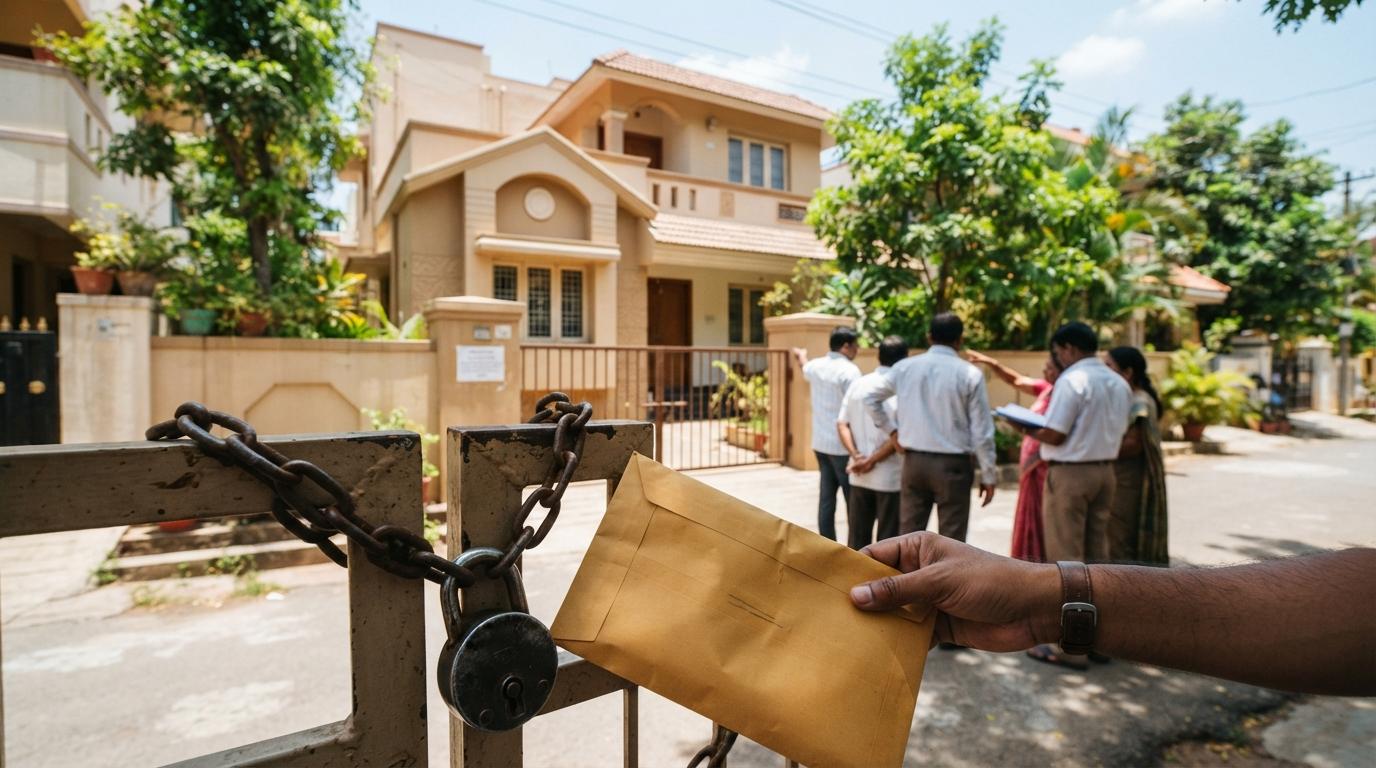
The Karnataka High Court held in its November 13, 2026 judgment that a court auction sale fails where the auction purchaser does not deposit the full purchase money before the court closes on the fifteenth day from the date of sale.
Where payment is not made within that period, the bench said, both the sale and any sale certificate issued on it stand as a complete nullity.
Full payment rule held mandatory
The Court described Order XXI Rule 85 of the Code of Civil Procedure, 1908 as mandatory. That provision under Order XXI CPC governs the court auction sale process and fixes the obligation of the purchaser to bring the price into court. The judgment makes legal validity turn on deposit of the entire amount before closing hours on the day the rule fixes. Strict adherence to the procedural requirement was said to be necessary to sustain a court-ordered auction.
Non-compliance defeats the transaction itself, the bench held. It also held that a sale certificate granted without timely payment has no effect in law. Both the sale and the certificate were described as void where that limit is missed. The reading places procedural discipline at the centre of execution sales.
Under the judgment, banks pursuing recovery through court sales must reckon with a title that collapses if the buyer defaults on the timeline. Decree-holders seeking satisfaction of decrees through auction face the same consequence under the same reading. Auction buyers relying on court titles acquire nothing where the full price has not reached the court in time, as stated in the order.
The judgment requires the purchaser to arrange funds so the entire sum is available for deposit within the period the rule allows. Payment after the court has closed on the last permitted day was treated as non-payment for purposes of validity. The Court tied that result to the language of the rule, which fixes the deposit with reference to closure of the court.
Comments
Sign in to read the discussion and share your thoughts.
Latest from LawWorld
News
View all- Supreme Court Bars Customs Refund Without Challenge to Self-Assessment15 Nov 2026
- Karnataka High Court Restores GST Appeal Dismissed for 226-Day Delay15 Nov 2026
- Karnataka High Court Holds Adulterer Is Proper But Not Necessary Party in Divorce Plea15 Nov 2026
- Karnataka High Court Quashes SC/ST Act Complaint Against Bharat Forge Chairman Over 11-Year Delay15 Nov 2026
- Karnataka High Court Directs Review of Mental Health Policies for Armed Personnel While Quashing Suicide-Attempt Case15 Nov 2026
Articles
View all- Article 22(2) Clock Starts at Curtailment of Liberty, Not Formal Arrest: Supreme Court in NDPS Bail Case15 Nov 2026
- Supreme Court Upholds Bihar Special Intensive Revision of Electoral Rolls14 Nov 2026
- Seven-Judge Constitution Bench Holds Decades-Old State Sales Tax Surcharge Reference Academic After GST6 Nov 2026