Protest Plan Triggers Immigration Action
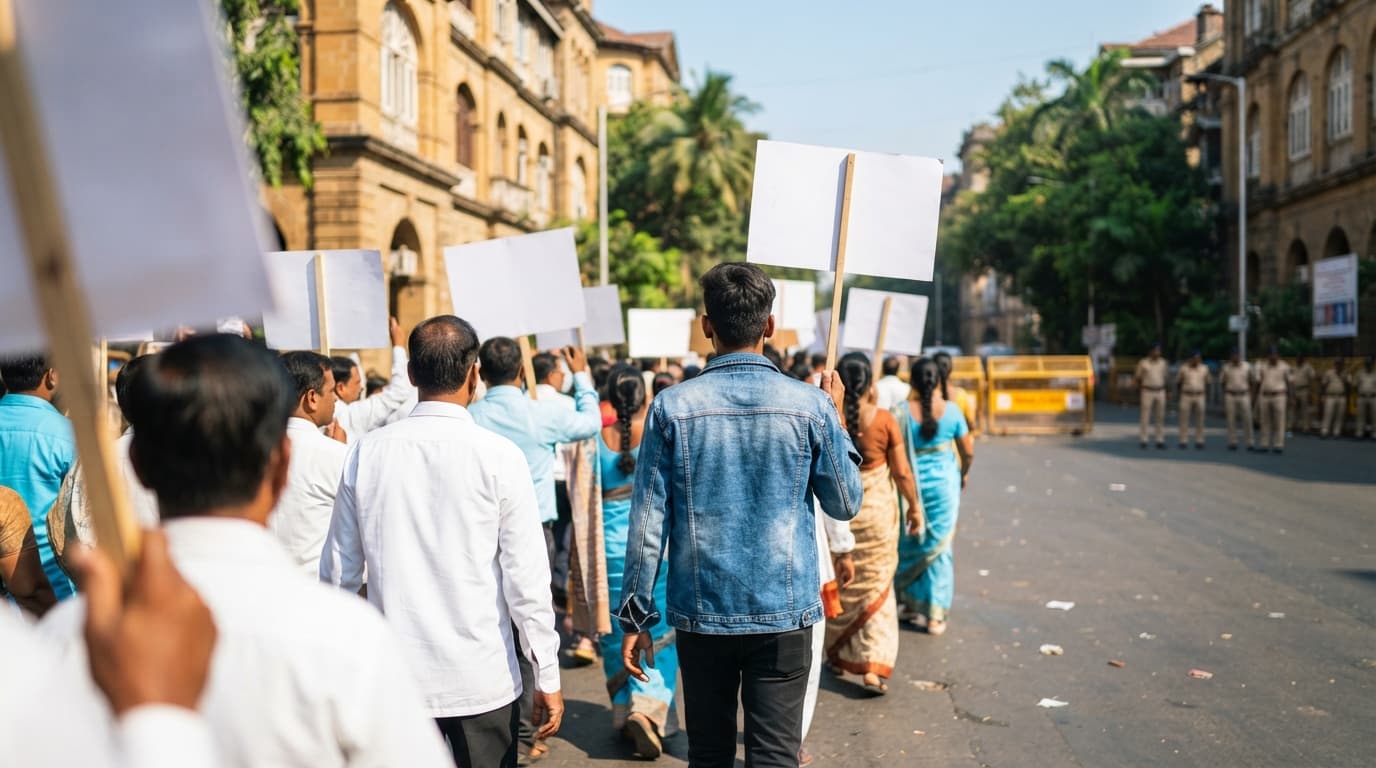
As placed before the court, the trigger was narrow. Khan had sought to attend a protest connected to the Special Intensive Revision of electoral rolls, an exercise that has drawn public debate over verification procedures and voter-list changes. The petition did not describe the protest as violent or disorderly. The question is whether trying to attend such a gathering can support action under the 2025 Act against an OCI cardholder.
What was on file on October 14 will matter. The authorities will have to show what material was before the officer, how the protest was described in that record, and why Section 7(2)(c) read with Section 29 was invoked. Khan will have to show what he did, what he intended to do, and whether any restriction on his presence had been communicated to him beforehand.
Courts in India have treated mere presence at a peaceful gathering differently from conduct that threatens public order. That distinction turns on facts. Attendance alone, without more, has rarely been treated as enough for grave civil consequences. The record here will be tested against that approach when the case is heard on merits.
No Hearing, No Reasons, Petition Says
At the centre of the petition are two procedural complaints. Khan said he received no prior hearing. He said the notice was non-speaking, in that it did not set out the grounds on which he was asked to leave India.
A person facing an adverse order with serious civil consequences must know the case against him and get a chance to answer it. That demand grows stronger where the order affects residence, livelihood, family life and freedom of movement. An OCI cardholder lives in India on a long-term status that allows residence and work. A direction to leave disrupts that life at once.
A speaking order has a related function. It tells the affected person why the authority acted. It also lets a court check whether the reasons are relevant, backed by material, and linked to the provision cited. An order that cites a section but gives no facts leaves nothing to test. The petition says the October 14 notice suffers from that defect.
For the authorities, the answer may be that prior hearing is not always required in immigration matters, or that urgency or the statutory scheme allows a post-decisional remedy. That argument will have to be measured against the text of the 2025 Act, the rules and instructions framed under it, and the guarantee of fair procedure under Article 14 and Article 21. The court kept the notice in abeyance instead of rejecting the complaint outright, so the procedural challenge will get a full hearing.
What An OCI Card Protects
OCI status is not citizenship. It gives no political rights such as voting or contesting elections. It gives a stable permission to live, work and travel in India without repeated visa applications. Courts have treated cancellation or withdrawal of that permission as a serious measure, requiring statutory ground and fair process.
Under the Citizenship Act, 1955, OCI registration can be cancelled on specified grounds under Section 7D, after giving the cardholder an opportunity of being heard. Courts have enforced that hearing requirement strictly. They have also insisted that the ground cited must fall within the statute and be supported by material.
A Leave India Notice is not a cancellation. It directs departure within a stated time rather than formally cancelling registration. For the person affected, the result can feel similar. He must leave, settle his affairs at short notice, and face uncertainty about return. That is why courts examine whether such a notice is being used in place of a cancellation process that carries procedural safeguards, and whether the statute permits that course.
New Law Faces First Court Test
The Immigration and Foreigners Act, 2025 replaces an older framework and consolidates powers on entry, stay, movement and removal of foreigners. Section 7 deals with obligations and conditions of stay. Section 29 provides for enforcement consequences. The scope of Section 7(2)(c) and its interaction with Section 29 will now be argued in detail for the first time in this context.
Early cases under a new statute tend to test three things: the threshold for invoking power, the procedure before action, and the standard of judicial review. This petition raises all three. The court will have to decide how much deference is owed to the officer's assessment, what record must support it, and whether protest-related conduct by a long-term resident falls within the provision cited.
Lawyers advising OCI holders will read the next order closely. If the court lays down that a notice under these provisions must record brief reasons and be preceded by a show cause notice except in defined emergencies, that will shape future files. If it accepts a lower procedural threshold, it will still have to explain what remedy remains for a person who says the facts were misunderstood.
Madras Ruling Shows Parallel OCI Limits
Two days after the Bombay interim order, on October 30, 2026, the Madras High Court upheld cancellation of OCI registration of United States citizen John Daniel for engaging in missionary activities without prior permission. Justice D. Bharatha Chakravarthy held in John Daniel v. Union of India that special permission is required even where religious conversion is not established, and that preaching and work to spread religious doctrine fall within missionary activity.
That case turned on Section 7D of the Citizenship Act, 1955 read with notification S.O. 1050(E) dated March 4, 2021 issued under Section 7B. The court accepted that OCI cardholders who wish to undertake missionary work must obtain special permission. The ruling rested on breach of a clear condition attached to OCI status.
Here the allegation is different. The Bombay case does not concern missionary activity or breach of a notified permission regime. It concerns attempted participation in a public protest over electoral rolls and the use of Leave India powers under the 2025 Act. The Madras decision shows courts will uphold OCI action where breach of a stated condition is proved after due process. The Bombay case will test what rigour applies when the ground is protest-related conduct and the order gives no detailed reasons.
What The Court Will Examine Next
When the case returns after November 2, the court is expected to call for the original file. It will want the note that led to the October 14 notice, any reports relied upon, and proof of service on Khan. It will ask whether a show cause notice was issued, whether Khan was heard in person or in writing, and whether any emergency justified departure from that course.
Proportionality will also be in issue. Even if some concern existed, the court will consider whether a direction to leave India was the appropriate response, or whether a warning, restriction on movement, or time-bound inquiry would have served the purpose. Length of stay, family ties, work and lack of prior adverse record often weigh in that assessment where long residence and fundamental rights are involved.
The Union and the FRRO will get a chance to justify the notice with material, and Khan will get a chance to answer it and press his argument that peaceful protest activity by a resident cannot by itself attract removal powers. The interim stay preserves the court's ability to grant effective relief if the challenge succeeds and the state's ability to act in accordance with law if it fails. The stay operates only till November 2 unless extended by a fresh order.