
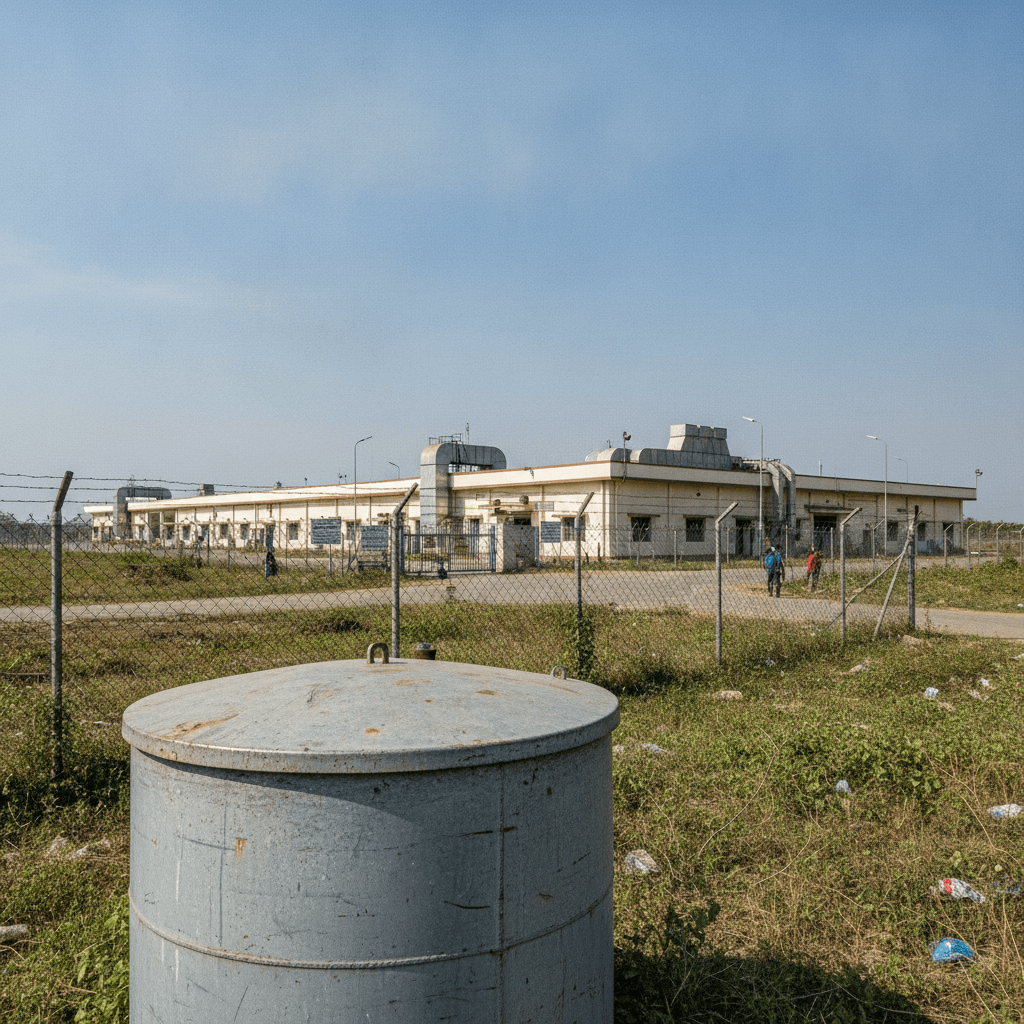
The Supreme Court of India has affirmed that the Revised Guidelines for Common Bio-Medical Waste Treatment and Disposal Facilities, 2016 are mandatory and constitute enforceable standards governing the establishment and operation of waste treatment infrastructure. On September 7, 2026, a bench comprising Justices J B Pardiwala and Manoj Misra set aside an order passed by the National Green Tribunal and restored the Environmental Clearance and Consent to Establish that had been granted to M/s Punahchakran Private Limited for its common bio-medical waste treatment facility at Babrala, Sambhal, Uttar Pradesh.
The decision resolves a dispute over whether environmental and regulatory authorities had properly complied with statutory requirements when approving the facility. The court examined whether the National Green Tribunal was correct in quashing the clearances on the grounds that certain procedures had not been followed or that irrelevant factors had influenced the decision. After reviewing the record, the bench found that the statutory conditions had been fulfilled and that the administrative decision was not vitiated by consideration of an irrelevant factor.
Compliance with mandatory requirements
The Supreme Court held that an administrative decision is not vitiated merely because an authority considered an irrelevant factor where the statutory conditions were fulfilled, the competent authority applied its mind to the relevant requirements, and the decision was supported by consultation and safeguards. The court found that the mandatory requirements under Clause 7 of the guidelines had been complied with by the approving authority. This distinction proved critical: the presence of an irrelevant consideration does not automatically invalidate an administrative decision if the core statutory obligations have been met and the decision-making process has been otherwise sound.
The bench also addressed an allegation concerning a misstatement about earlier clearances that had been granted to the facility. The court determined that this alleged misstatement did not affect the actual decision to grant the land relaxation or the validity of the clearance itself. The tribunal had placed significant weight on this issue, but the Supreme Court's analysis showed that the factual error, even if established, did not undermine the substantive compliance with the 2016 guidelines.
Environmental law in India and the 2016 framework
The 2016 guidelines represent the regulatory framework for managing bio-medical waste at the national level. Bio-medical waste—which includes used syringes, contaminated materials from hospitals, diagnostic laboratories, blood banks, and other healthcare facilities—poses significant public health and environmental risks if not treated and disposed of properly. The guidelines establish mandatory standards for the design, operation, and management of common bio-medical waste treatment facilities, which serve multiple healthcare institutions in a region.
These facilities are essential infrastructure in environmental law in India because they centralise waste treatment and reduce the burden on individual hospitals to manage hazardous waste on-site. By consolidating waste streams, common facilities achieve better operational efficiency, more rigorous compliance with safety protocols, and improved environmental protection. The 2016 revision updated the earlier framework to reflect evolving best practices and stricter environmental standards.
The Supreme Court's affirmation that these guidelines are mandatory—not merely advisory—establishes that state environmental authorities, local bodies, and regulatory tribunals cannot treat them as optional or subject to discretionary interpretation. This clarity is important for facility operators, healthcare providers, and environmental regulators who must all work within a uniform national standard.
The tribunal's order and the court's reasoning
The National Green Tribunal had set aside the Environmental Clearance and Consent to Establish on July 5, 2024. The tribunal's reasoning appears to have focused on procedural irregularities or the consideration of factors outside the scope of the statutory framework. However, the Supreme Court took a more nuanced view of administrative law principles.
The bench recognised that while procedural fairness and adherence to relevant considerations are important, the presence of an extraneous factor does not automatically vitiate an entire administrative decision if the core requirements have been satisfied. This approach balances the need for strict compliance with the reality that administrative processes are complex and may occasionally include peripheral considerations that do not affect the ultimate outcome.
In restoring the clearance, the court essentially held that the approving authority—presumably the state environmental authority or the Consent to Establish granting body—had done its job correctly. The facility at Babrala had met the mandatory requirements of the 2016 guidelines, the authority had applied its mind to the relevant statutory obligations, and the decision-making process had included appropriate consultation and safeguards. Those facts were sufficient to sustain the clearance.
Implications for facility operators and regulators
The judgment provides clarity to operators of common bio-medical waste treatment facilities across India. Once a facility has obtained Environmental Clearance and Consent to Establish in compliance with the 2016 guidelines, that approval is not easily overturned merely because a tribunal or court identifies a peripheral procedural flaw or an extraneous consideration in the decision-making file. The focus remains on whether the statutory requirements themselves have been met.
For environmental authorities and state regulators, the decision reinforces that the 2016 guidelines must be applied consistently and cannot be treated as flexible or discretionary. When granting clearances, authorities must ensure that they address all mandatory requirements, document their consideration of relevant factors, and follow prescribed consultation processes. If they do so, their decision will likely withstand judicial scrutiny.
The ruling also clarifies the scope of review available to the National Green Tribunal and courts when examining such clearances. While procedural compliance remains important, the courts will not set aside a clearance based solely on the identification of an irrelevant factor if the substantive statutory conditions have been fulfilled and the decision-making process has otherwise been sound.
The broader context
Bio-medical waste management remains a critical challenge in India's healthcare system. With thousands of hospitals, diagnostic centres, and blood banks operating across the country, the proper treatment and disposal of hazardous medical waste is essential for protecting public health and preventing environmental contamination. Common bio-medical waste treatment facilities are a key part of the infrastructure that makes this possible at scale.
The Supreme Court's affirmation that the 2016 guidelines are mandatory and enforceable means that these facilities must meet uniform national standards regardless of which state they operate in. This consistency is vital because bio-medical waste does not respect state boundaries, and substandard treatment in one location can have ripple effects across regions.
For the facility at Babrala, the restoration of its Environmental Clearance and Consent to Establish means it can now proceed with or continue its operations without the legal cloud created by the tribunal's order. The facility operator, M/s Punahchakran Private Limited, can rely on a valid, court-affirmed clearance that meets all statutory requirements under the 2016 guidelines. Healthcare institutions in the region that depend on this facility for waste disposal can do so with confidence that the facility has been properly approved and must operate in compliance with the mandatory standards established by the Supreme Court of India.
Comments
Sign in to read the discussion and share your thoughts.
Latest from LawWorld
News
View all- Supreme Court Refers SARFAESI Priority Dispute With Depositor Law To Larger Bench27 Nov 2026
- Supreme Court Rules Mere Objections In Protest Petition Are Not A Complaint27 Nov 2026
- Supreme Court Quashes Bihar Remission To Anand Mohan In IAS Officer Murder Case27 Nov 2026
- Supreme Court Acquits Rape Accused For Lack Of Medical Evidence27 Nov 2026
- Supreme Court Mandates Separate Hexagonal Warnings For Fat, Sugar, Salt26 Nov 2026