
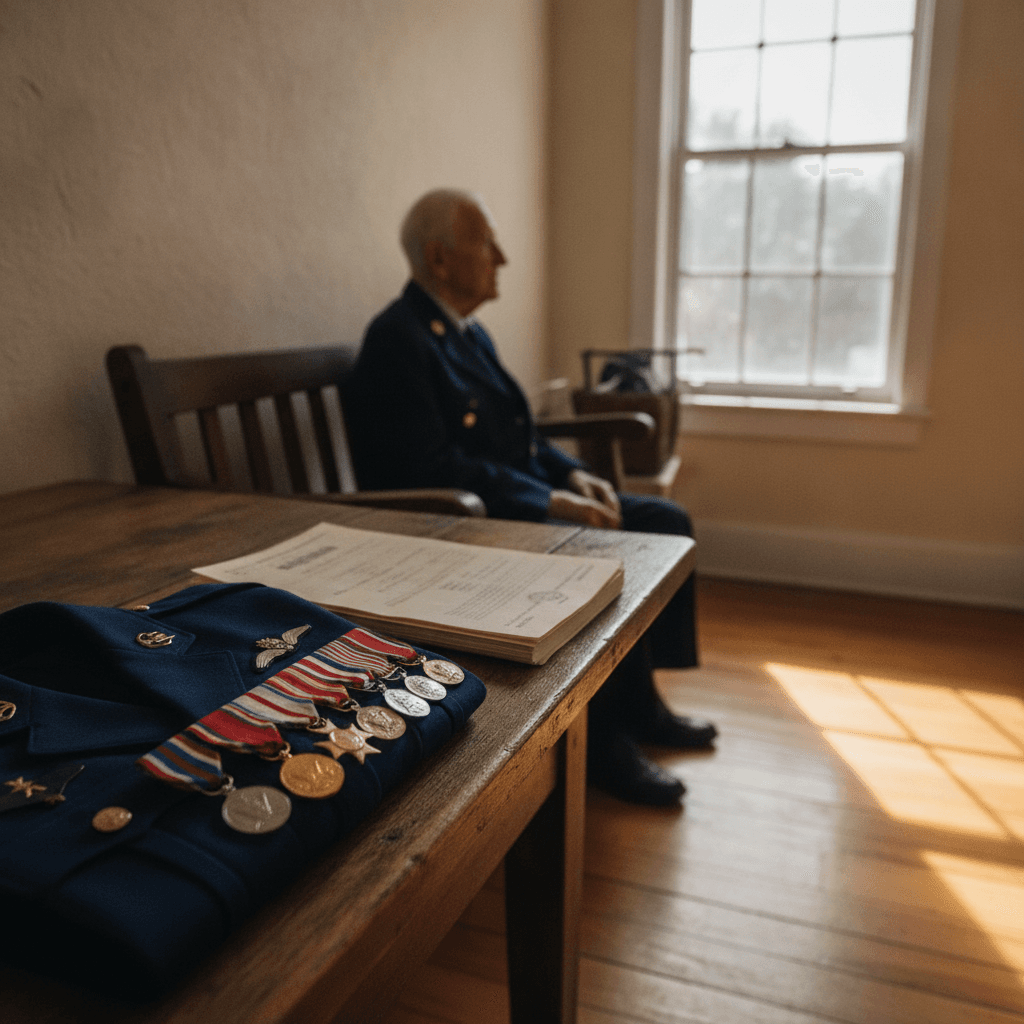
Supreme Court Shifts Burden of Proof in Armed Forces Disability Pension Claims
The Supreme Court of India delivered a ruling on September 15, 2026, that restructures how disability pension claims by armed forces personnel are assessed. Under the court's decision, the burden of proof now rests with the defence department to disprove the connection between a service member's injury and their military service, rather than requiring the claimant to prove the link exists. This reversal applies to all claims filed within 15 years of discharge or injury, fundamentally altering the evidentiary landscape for veterans seeking disability benefits.
The ruling addresses a longstanding procedural imbalance in how the armed forces have processed disability claims. Previously, veterans bore the responsibility of establishing that their medical condition arose from or was aggravated by service duties. The department's approach often required extensive documentation, medical evidence, and witness testimony to overcome administrative skepticism. Many claims were rejected or delayed because claimants lacked access to service records or faced difficulty proving causation years after discharge.
Under the new framework, the department must actively demonstrate that a claimant's disability is not service-related. This represents a shift from passive assessment to active disproof. Once a veteran establishes they served in the armed forces and have a disability, the department cannot simply deny the claim without presenting evidence that the condition existed before service or arose from a cause unrelated to military duties.
The 15-Year Boundary
The Supreme Court of India imposed one significant boundary on this new standard: the reversal of burden applies only to claims filed within 15 years of the relevant date. For veterans who file disability pension claims after 15 years have elapsed, the original burden framework remains in place. They must prove the service connection themselves.
This temporal limit reflects judicial concern about the reliability of evidence over extended periods. Service records deteriorate, witnesses become unavailable, and medical causation becomes harder to establish as time passes. The court appears to have concluded that a 15-year window provides a reasonable period during which service connection can be meaningfully investigated and verified, while also protecting the department from claims based on degraded or incomplete evidence filed decades after discharge.
Veterans filing within the 15-year window gain a substantial procedural advantage. A former soldier who develops a disability within this period and applies for a pension need only show that the condition exists and that they served in the armed forces. The defence department then bears the responsibility of investigating whether the disability is service-related. If the department cannot produce evidence that the condition predates service or arose independently, the claim must be approved.
Practical Impact on Claimants
The decision directly benefits serving and recently discharged personnel. Many military injuries do not manifest immediately as disabling conditions. A soldier injured in combat may continue service for months or years before the injury becomes debilitating enough to require medical discharge or pension application. Occupational diseases common in military service—noise-induced hearing loss, spinal injuries from heavy lifting, respiratory conditions—often develop gradually and may not be fully apparent until after discharge.
Under the previous framework, a veteran might struggle to prove that a condition diagnosed five years after discharge originated in service. Medical records from the time of injury might be incomplete, and the causal chain between service activities and the eventual diagnosis could be complex. The department could simply assert that the condition was pre-existing or unrelated, placing the burden back on the claimant to disprove this assertion through expensive medical expert evidence.
The Supreme Court's ruling eliminates this disadvantage for claims filed within 15 years. A veteran applying for disability pension can now present their service record and medical diagnosis, and the department must investigate whether the disability is service-connected. This shifts the investigative burden to the agency with superior access to service records, medical files, and institutional knowledge.
Evidentiary Standards and Departmental Obligations
The decision does not eliminate the department's ability to deny disability claims. Rather, it requires the department to substantiate its denial. The defence establishment must now produce credible evidence that a claimed disability is not service-related. This might include medical records showing a pre-existing condition, expert evidence that the disability arose from a cause unrelated to service, or documentation that the claimant did not serve in a capacity that would typically result in the claimed injury.
The ruling implicitly recognizes the informational asymmetry between the armed forces and individual claimants. The department maintains comprehensive service records, medical files, deployment histories, and institutional data about occupational hazards. Individual veterans often lack access to these records and cannot reasonably be expected to prove negative facts—that their condition did not exist before service, for instance. By placing the burden on the department, the court aligns the burden of proof with the party best positioned to gather and present evidence.
This approach also reflects established principles of administrative law. When a government agency makes a decision affecting an individual's rights or entitlements, courts have long held that the agency should justify its decision with evidence. The burden of proof doctrine ensures that administrative power is exercised rationally and not arbitrarily.
Claims Filed After 15 Years
Veterans who file disability pension claims more than 15 years after discharge or the date of injury face a different standard. For these claimants, the original burden remains: they must prove the service connection. The Supreme Court's reasoning appears to be that evidence becomes unreliable or unavailable over such extended periods, and allowing old claims to be processed under a reversed burden would impose an unmanageable investigative burden on the department.
This exception creates a practical deadline for veterans. Those with disabilities that develop after discharge should file claims as soon as the condition becomes apparent or disabling, rather than waiting. A veteran who delays filing for 16 or 20 years will find themselves unable to benefit from the reversed burden framework and must instead gather historical evidence to prove service connection—a significantly more difficult task.
The 15-year limit also provides the department with a clear temporal boundary for record retention and investigation. The armed forces can establish protocols ensuring that service records relevant to claims filed within 15 years are preserved and accessible, while not being required to maintain or investigate claims based on events decades past.
Effects for Veterans' Welfare Administration
The September 15, 2026 ruling addresses a critical gap in how the state supports those who have served. Armed forces personnel accept significant risks to health and safety as part of their service. When those risks materialize as disabilities, the state's obligation to support them is fundamental. The Supreme Court's decision recognizes that this obligation includes ensuring fair and accessible processes for claiming benefits.
Many veterans lack the resources to hire lawyers, obtain medical expert reports, or navigate complex administrative procedures. By reversing the burden of proof within 15 years, the court has made the disability pension process more accessible to ordinary veterans without specialized knowledge or significant financial means. A veteran can now file a straightforward application and expect the department to investigate fairly, rather than facing an insurmountable evidentiary burden.
The ruling should also accelerate processing times. When veterans must gather extensive evidence to prove service connection, applications often languish for years while claimants attempt to locate witnesses, obtain medical records, or secure expert opinions. By placing the investigative burden on the department, the decision allows the defence establishment to complete investigations using its own resources and records, reducing delays that have plagued disability pension processing.
Defence personnel and veterans' organizations have long advocated for such a reversal, citing the special nature of military service and the inherent difficulty of proving causation for conditions that develop gradually or years after discharge. The Supreme Court's decision validates these concerns and establishes a framework that balances fairness to claimants with the department's legitimate need for reliable evidence.
The ruling takes effect immediately and applies to all pending claims filed within 15 years of the relevant date. The defence department must now revise its disability pension assessment procedures to comply with the reversed burden standard, ensuring that existing claims are re-evaluated under the new framework where appropriate.
Comments
Sign in to read the discussion and share your thoughts.
Latest from LawWorld
News
View all- Karnataka High Court Permits Continuation of Corruption Case Against Siddhartha Vihar Trust Despite Lokayukta Closure12 Oct 2026
- Karnataka High Court Quashes Land Acquisition for Housing Project in Bannerghatta National Park, Prioritizes Wildlife Protection12 Oct 2026
- Karnataka High Court Imposes ₹1 Lakh Cost for Inappropriate Plea Against ED Officer Marked to CJI12 Oct 2026
- Karnataka High Court Rules Daughter-in-Law Not Automatically Liable for Mother-in-Law Maintenance After Son's Death12 Oct 2026
- Karnataka High Court Orders Psychological Assessment of Parents in Child Custody Battle12 Oct 2026
Articles
View all- Supreme Court Refers DPDP Act Constitutional Challenge to Five-Judge Bench: RTI vs. Privacy Rights at Stake12 Oct 2026
- Supreme Court Disposes PIL on Doxxing and Deepfakes; Directs Union Ministries to Implement Remedial Measures8 Oct 2026
- Supreme Court Issues Notice on Constitutional Challenge to GST Input Tax Credit Denial Provision7 Oct 2026
Blogs
View all- Supreme Court Orders Priority Hearing for Pension Cases: A Decade-Long Wait Deemed 'Grave Injustice'12 Oct 2026
- Supreme Court Clarifies Gratuity Calculation: Monthly Wages Divided by 26 Working Days, Not 3011 Oct 2026
- Supreme Court Affirms Damages Recovery for Delayed Provident Fund Contributions Without Time Limit10 Oct 2026