
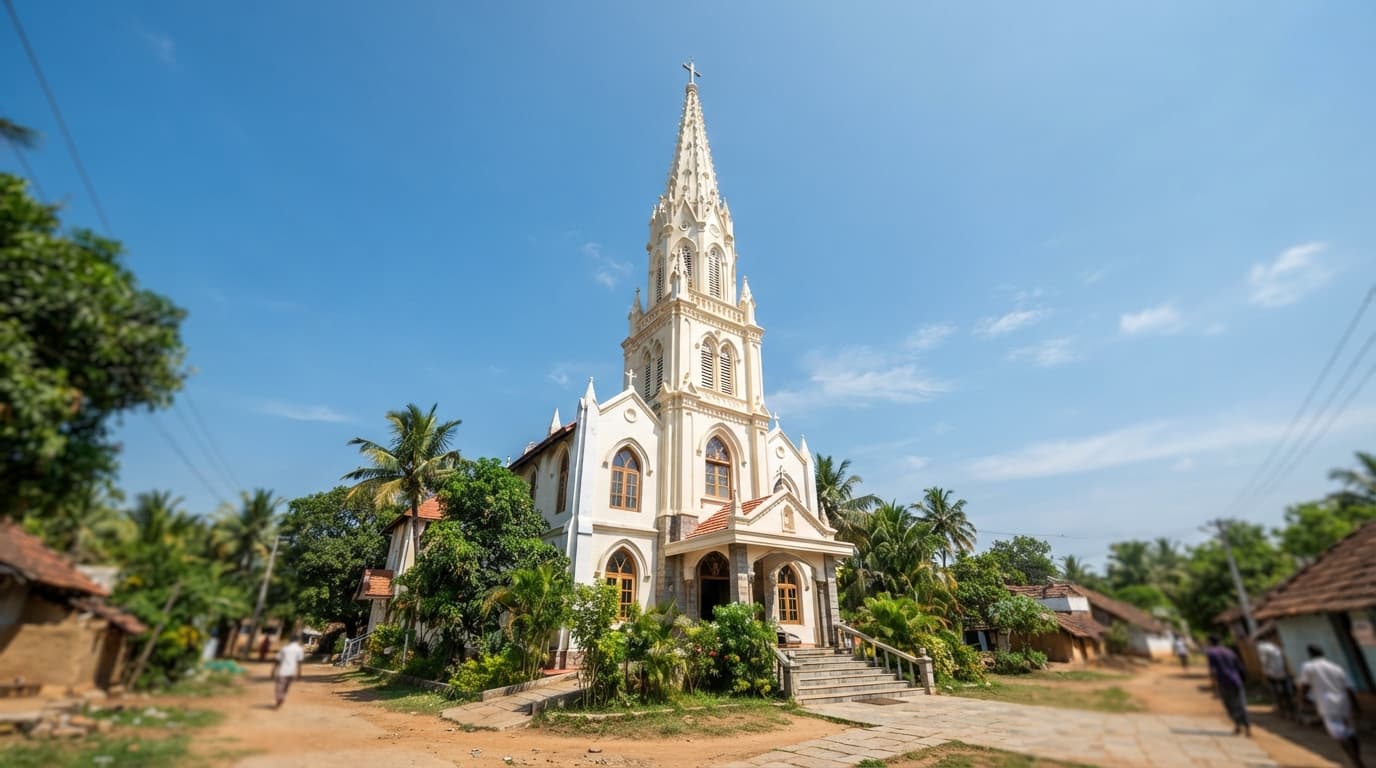
Supreme Court Halts Demolition of CSI Church in Tamil Nadu, Issues Notice to State
India's Supreme Court on October 16, 2026, ordered a halt to the demolition of a Church of South India building located in Thippanampatti village, Tenkasi district, Tamil Nadu. A bench comprising Justices Vikram Nath, R. Mahadevan, and Aparesh Kumar Singh issued the stay order while hearing a special leave petition filed by the Tirunelveli Diocesan Trust Association. The court's decision temporarily sets aside a Madras High Court ruling that had directed the demolition of the church's 97-foot spire and the conversion of the building into a community hall.
The bench issued notice to the Tamil Nadu government and other respondents on the petition, staying all demolition directions pending the full hearing of the appeal. The case is listed as Tirunelveli Diocesan Trust Association v. District Collector, SLP(C) No. 37197/2026. This intervention by the apex court represents a significant development in a dispute over the future use and status of the religious structure, which has become the subject of competing claims between the church community and local administrative authorities.
Background to the High Court's Decision
The Madras High Court's order, which the Supreme Court has now stayed, was based partly on demographic considerations of Thippanampatti village. According to the High Court's assessment, the village is home to approximately 450 Hindu families and 10 Christian families. This demographic composition appears to have influenced the High Court's reasoning in directing that the church building be repurposed as a community facility rather than retained as a place of worship. The decision effectively prioritised the majority community's interests over the minority religious group's claim to the structure.
The Tirunelveli Diocesan Trust Association, which represents the interests of the Church of South India in the region, challenged this order before the Supreme Court. The association argued that the High Court's decision violated the rights of the Christian community to maintain and use their place of worship. The special leave petition raised questions about the proper balance between secular community interests and the religious rights of minorities, particularly in matters concerning established places of worship.
Supreme Court's Protective Intervention
By staying the demolition and issuing notice to the state government, the Supreme Court has signalled that the matter warrants careful examination at the highest judicial level. The stay order is not a final decision on the merits but rather a protective measure to preserve the status quo while the court considers the substantive issues raised in the petition. This approach allows the Supreme Court to hear arguments from all parties before determining whether the High Court's order should be upheld, modified, or overturned.
The stay is significant because it prevents irreversible action during the pendency of the appeal. Once a structure is demolished, it cannot be restored to its original state. By halting the demolition proceedings, the court has ensured that the Christian community's interests remain protected until a final determination is made. The issuance of notice to the Tamil Nadu government means that the state will have the opportunity to present its position and justify the High Court's order before the Supreme Court.
The bench's composition—three judges rather than the standard two—suggests that the court may have considered the matter of sufficient importance or complexity to warrant a larger bench. This is often an indication that the issues involved touch upon matters of constitutional significance or require careful balancing of competing rights and interests.
Constitutional and Religious Rights Dimensions
The case touches upon fundamental constitutional questions regarding the protection of religious minorities and their right to maintain places of worship. India's Constitution guarantees freedom of religion under Article 25, which protects the right of individuals and communities to profess, practise, and propagate religion. Article 26 further provides religious denominations with the right to manage their own affairs in matters of religion, subject to public order, morality, and health.
The demolition of an established place of worship and its conversion into a secular community facility raises questions about whether such actions comply with these constitutional protections. The Supreme Court's decision to stay the demolition suggests that the bench believes these constitutional dimensions merit serious consideration. The court will likely examine whether the High Court properly balanced the rights of the religious minority against the interests of the local community and municipal authorities.
The demographic argument employed by the High Court—that the village has far more Hindu families than Christian families—may itself require scrutiny. Courts have generally held that the constitutional protection of religious rights does not depend on the numerical strength of a religious community. Minority rights are particularly important in a constitutional democracy and are not meant to be overridden by majority preferences alone.
Procedural and Substantive Issues
The special leave petition before the Supreme Court raises both procedural and substantive issues. Procedurally, the court will examine whether the High Court followed proper legal procedures in directing the demolition. Substantively, it will consider whether the High Court's reasoning was sound and whether the order violated any constitutional or statutory protections.
The Tirunelveli Diocesan Trust Association's petition will likely argue that the church building is a protected religious structure and that its demolition violates the rights of the Christian community. The association may contend that the High Court erred in prioritising demographic composition over constitutional protections for religious minorities. The state government and other respondents, when they file their response, may argue that the building poses safety concerns, that it is not a registered religious structure, or that community interests justify its conversion to a public facility.
The Supreme Court's role will be to examine these competing claims and determine where the balance should lie. This is not merely a matter of property rights or administrative convenience but a question about the scope and limits of state power in relation to religious structures and communities.
Next Steps in the Litigation
With the stay order in place and notice issued to the Tamil Nadu government, the case will proceed through the normal appellate process. The state government and other respondents will file their written submissions responding to the petition. The Tirunelveli Diocesan Trust Association will have the opportunity to file reply submissions. The Supreme Court will then schedule a hearing on the substantive merits of the appeal.
During this process, the church building in Thippanampatti village will remain intact, and the demolition directions will remain suspended. The outcome of the Supreme Court's decision will have implications not only for this particular church but potentially for how courts approach similar disputes involving minority religious structures and community interests elsewhere in the country.
The case demonstrates the continuing importance of judicial review in protecting constitutional rights, particularly those of religious minorities. As the litigation proceeds, the Supreme Court will have the opportunity to provide clarity on how courts should balance religious freedom and minority rights against secular community interests and the powers of local authorities to regulate land use and public facilities.
Comments
Sign in to read the discussion and share your thoughts.
Latest from LawWorld
News
View all- Karnataka High Court Quashes Criminal Case Against Wife and Son of Rape Accused18 Oct 2026
- Karnataka High Court Directs Authorities to Protect Residents from Farmer Protests in Hubballi18 Oct 2026
- Karnataka High Court Sets Aside Government Order Taking Over Anjanadri Mandir, Upholds Puja Rights18 Oct 2026
- Karnataka High Court Issues Notice on RTE Quota Reimbursement for Private Unaided Schools18 Oct 2026
- Five-Judge Bench Rules Consumer Forums Cannot Extend 45-Day Written Statement Deadline18 Oct 2026
Articles
View all- Supreme Court Issues Notice on Constitutional Validity of BNSS Section 172: Police Powers and Peaceful Assembly Rights at Stake17 Oct 2026
- Supreme Court Refers DPDP Act Constitutional Challenge to Five-Judge Bench: RTI vs. Privacy Rights at Stake12 Oct 2026
- Supreme Court Disposes PIL on Doxxing and Deepfakes; Directs Union Ministries to Implement Remedial Measures8 Oct 2026
Blogs
View all- Supreme Court Directs Allahabad High Court to Prioritize Pension Dispute Cases18 Oct 2026
- Supreme Court Directs MEA to Publicize Compensation for Indians Killed in Russia-Ukraine War17 Oct 2026
- Contract Workers Cannot Claim Automatic Employment Despite Non-Compliance: Supreme Court Clarifies16 Oct 2026