
Karnataka High Court Orders Protection for Hubballi Residents Amid Farmer Protest Concerns
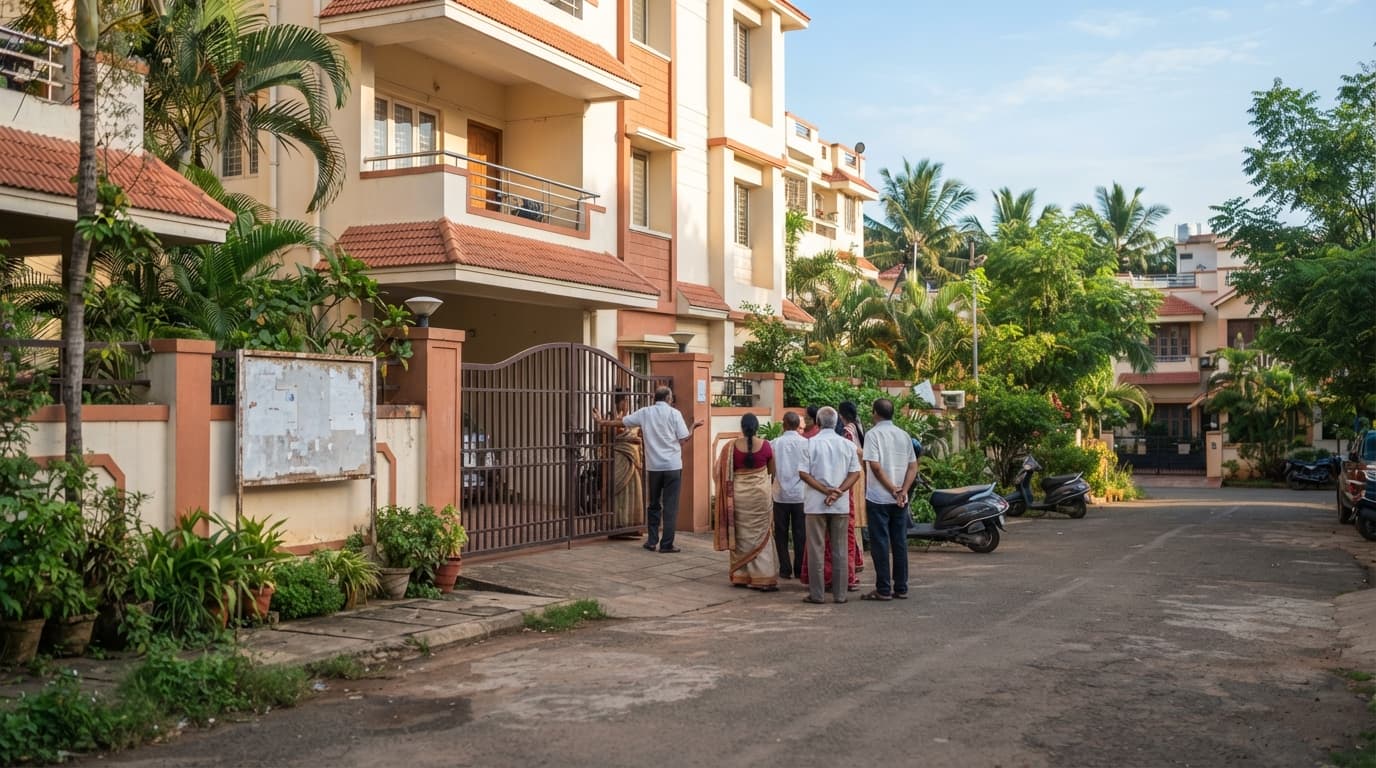
The Karnataka High Court on Saturday, October 17, directed Dharwad district authorities to take appropriate steps to ensure the safety of residents and their property in Mayuri Estate, Keshwapur, Hubballi, as concerns mount over apprehended protests by farmer organizations demanding higher sugarcane prices.
A Division Bench comprising Justices Anu Sivaraman and K.S. Bharath Kumar issued the directions while disposing of a writ petition filed by Sangamnath Hanji and other residents of the locality. The court attempted to reconcile two competing constitutional interests: the right of farmers to protest and the right of residents to live peacefully in their homes without disruption.
The Residents' Petition and Constitutional Claims
The petitioners approached the High Court alleging that protests, rallies, and dharnas were being conducted within their residential locality, thereby infringing upon their rights under Article 19(1)(d) and Article 21 of the Constitution. Article 19(1)(d) guarantees freedom of movement throughout the territory of India, while Article 21 protects the right to life and personal liberty. Large-scale agitations in their neighbourhood posed a threat to both their physical safety and their ability to go about their daily lives without fear or obstruction.
The petitioners sought a mandamus directing the district administration to consider their representations and ensure that agitations are held only at designated places. They relied on prior court orders from 2002 and an order from August 1, 2022, which had already established protocols for regulating public protests in the district.
The Court's Approach to Balancing Rights
The bench recognized that while citizens have the constitutional right to protest and seek redressal of grievances, the exercise of that right cannot be unlimited or conducted in a manner that violates the rights of others. Fundamental rights are not absolute and must be exercised responsibly, with due regard for the rights and safety of others.
The Division Bench instructed Dharwad district authorities to regulate the agitations in accordance with the designated places framework established by earlier court orders. This approach avoids an outright ban on protests—which would curtail the farmers' right to free speech and assembly under Article 19(1)(a)—while simultaneously protecting the residents from the direct impact of such agitations within their residential area.
State's Assurance and Compliance Framework
During the hearing, an Additional Advocate General appeared on behalf of the State and assured the bench that appropriate steps would be taken to regulate the protests. Recording this assurance on the court record, the bench disposed of the petition. By doing so, the court converted the Additional Advocate General's undertaking into an enforceable obligation. If the authorities fail to comply with the directions, the residents or the court itself could take action against the officials responsible for non-compliance.
Context of Farmer Protests in Karnataka
Sugarcane farmers in Karnataka have periodically organized protests demanding higher prices for their produce and better terms from sugar mills. These agitations are a legitimate exercise of democratic rights, yet they can cause significant disruption to residential areas when conducted there, particularly in localities like Mayuri Estate where families, elderly persons, and children reside.
The tension between agricultural interests and residential peace is not new to Karnataka. The state has experienced multiple instances where farmer agitations have affected urban residential zones, leading to complaints about noise, traffic obstruction, and safety concerns. The High Court's order attempts to address this recurring problem by reinforcing the requirement that protests be confined to designated areas.
Earlier Court Orders and Regulatory Framework
The petitioners' reference to court orders from 2002 and August 1, 2022, indicates that Dharwad district already has an established framework for managing public agitations. These earlier orders likely designated specific spaces—such as public grounds, parks, or protest zones—where demonstrations can be held without affecting residential neighbourhoods. By directing authorities to enforce these existing orders, the High Court was ensuring compliance with established norms rather than creating new law.
The reliance on prior orders reflects a common judicial practice: courts prefer to reinforce existing regulatory frameworks rather than create new ones, as this ensures consistency and allows authorities to work within familiar procedures. The bench's approach suggests that the problem was not the absence of rules but rather their non-enforcement or inadequate implementation on the ground.
Implications for Residents and Authorities
For residents of Mayuri Estate and similar residential localities, the order provides legal protection and recourse. Should protests occur in violation of the court's directions, residents can approach the court again or seek contempt proceedings against the officials responsible for non-compliance. This creates an additional layer of accountability for the district administration.
For Dharwad district authorities, the order clarifies their responsibility. They must actively monitor the situation, ensure that farmer organizations are informed of the designated protest areas, and take preventive measures to redirect any agitations away from the residential zone. This may involve liaison with farmer leaders, issuance of notices under Section 144 of the Code of Criminal Procedure if necessary, and deployment of police personnel to manage crowds.
Constitutional Balance in Practice
The High Court's order exemplifies how Indian courts attempt to balance competing constitutional rights in practice. Neither the right to protest nor the right to peaceful residence is absolute. Both must coexist within the framework of law and order. By directing authorities to use designated areas, the bench enabled farmers to voice their demands while protecting residents from unwanted disruption.
This approach reflects the principle of proportionality: the restriction on where protests can be held is narrowly tailored to address the specific harm to residents and is not a blanket prohibition on protest. Farmers retain the right to demonstrate; they must simply do so in appropriate locations.
Enforcement and Future Compliance
The success of the High Court's order depends on the willingness and capacity of the Dharwad district administration to enforce it. The Additional Advocate General's assurance suggests official commitment, but ground-level implementation remains crucial. District officials, police, and administrative staff must work together to ensure that the designated areas framework is respected and that residents are not subjected to protests in their neighbourhood.
Should the authorities fail to comply or should disputes arise regarding the implementation of the order, the matter could return to the High Court. The bench has disposed of the petition on the basis of the state's assurance, but this does not preclude fresh petitions if the assurance is breached. Managing democratic rights requires coordination between the judiciary, the executive, and the public. The court has provided the legal framework; the authorities must now ensure its implementation on the ground to protect both the constitutional rights of farmers to protest and the rights of residents to live safely and peacefully in their homes.
Comments
Sign in to read the discussion and share your thoughts.
Latest from LawWorld
News
View all- Karnataka High Court Quashes Criminal Case Against Wife and Son of Rape Accused18 Oct 2026
- Karnataka High Court Sets Aside Government Order Taking Over Anjanadri Mandir, Upholds Puja Rights18 Oct 2026
- Karnataka High Court Issues Notice on RTE Quota Reimbursement for Private Unaided Schools18 Oct 2026
- Five-Judge Bench Rules Consumer Forums Cannot Extend 45-Day Written Statement Deadline18 Oct 2026
- Supreme Court Clarifies Section 17A PC Act Does Not Protect Officials Demanding Bribes18 Oct 2026
Articles
View all- Supreme Court Issues Notice on Constitutional Validity of BNSS Section 172: Police Powers and Peaceful Assembly Rights at Stake17 Oct 2026
- Supreme Court Refers DPDP Act Constitutional Challenge to Five-Judge Bench: RTI vs. Privacy Rights at Stake12 Oct 2026
- Supreme Court Disposes PIL on Doxxing and Deepfakes; Directs Union Ministries to Implement Remedial Measures8 Oct 2026
Blogs
View all- Supreme Court Directs Allahabad High Court to Prioritize Pension Dispute Cases18 Oct 2026
- Supreme Court Directs MEA to Publicize Compensation for Indians Killed in Russia-Ukraine War17 Oct 2026
- Contract Workers Cannot Claim Automatic Employment Despite Non-Compliance: Supreme Court Clarifies16 Oct 2026