
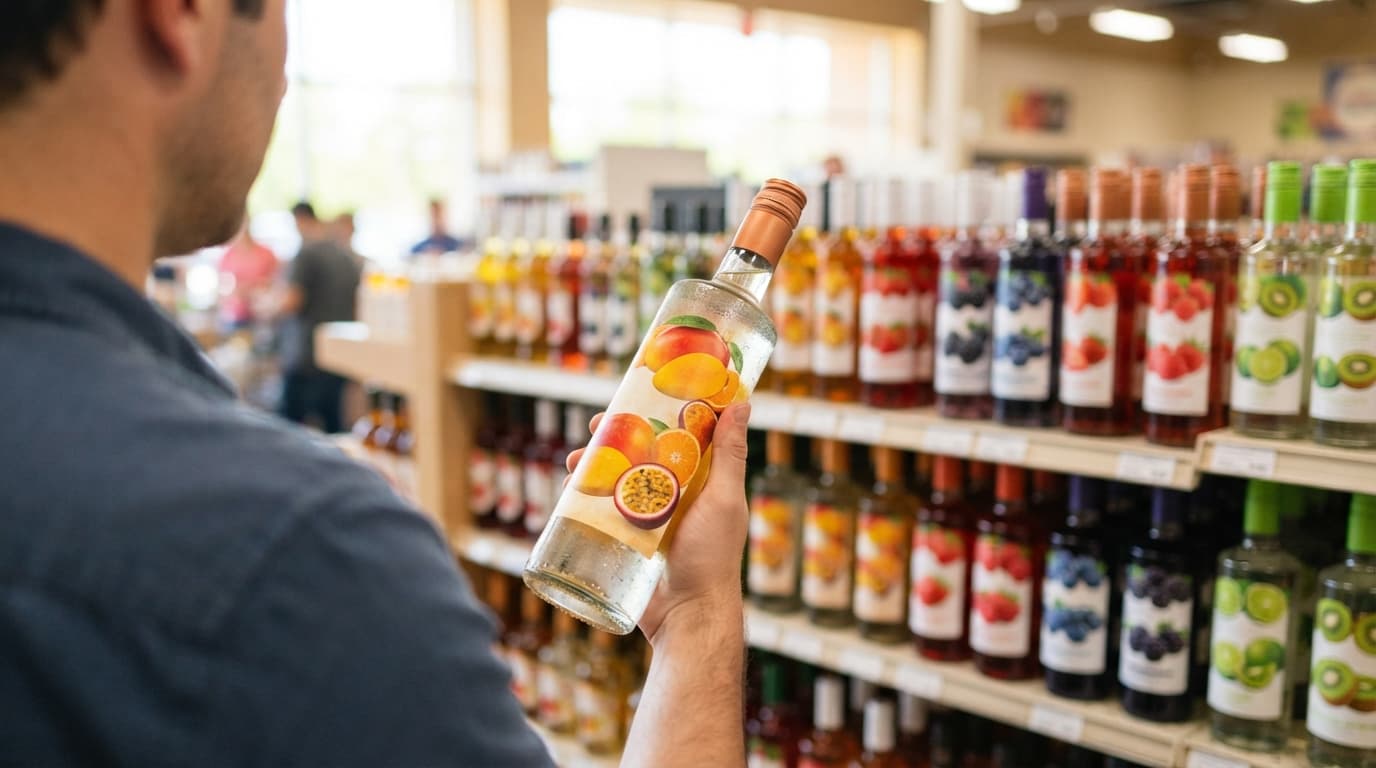
The Supreme Court has called on the Union of India to explain why alcoholic beverages packaged with prominent fruit imagery and minimal disclosure of alcoholic content remain legal. A public interest petition argues such packaging deliberately appeals to minors and young people in violation of consumer protection principles.
Justices Vikram Nath, R. Mahadevan, and Aparesh Kumar Singh granted the Union four weeks to file a counter-affidavit. All other respondents must submit their counter-affidavits within the same timeframe. The petitioner, Community Against Drunken Driving (CADD), will have two weeks after that to file a rejoinder.
The petition focuses on a specific concern: alcoholic products sold in packaging that prominently features fruit imagery—mangoes, berries, and similar fruits—while displaying minimal information about actual alcoholic content. Advocate Vipin Nair, representing the petitioners, highlighted a critical gap in regulatory oversight. Alcoholic beverages lack the statutory warnings mandated for tobacco products, despite their potential harm to vulnerable populations.
Alcohol versus tobacco: the regulatory gap
Tobacco products must carry pictorial health warnings, graphic imagery, and explicit messages about health risks under Indian law. Alcoholic beverages, which can cause severe intoxication, liver disease, and other serious health complications, face far less rigorous disclosure requirements. This inconsistency forms the core of CADD's argument: the current regulatory framework fails to protect consumers, especially young people who may be misled by fruit-themed packaging into believing they are purchasing soft drinks or low-alcohol beverages.
The concern about packaging design targeting minors is not new to the Court. In May, the bench had previously issued notice on a related petition seeking a complete ban on alcohol sales in inconspicuous packages—including tetra packs and sachets. These formats are often difficult to identify as alcoholic products and are sold at price points accessible to schoolchildren and teenagers. The current petition builds on this earlier concern by focusing specifically on the deceptive visual appeal created by fruit imagery.
Underage drinking and verification gaps
The petition also connects to a broader concern about underage drinking in India. In a separate but related matter, the Court had previously questioned the Union government's failure to respond to another PIL filed by CADD seeking mandatory age-verification mechanisms at liquor outlets. During that hearing, the bench expressed concern over the Union's absence despite being served notice. Senior Advocate PB Suresh, appearing for CADD, noted that while states regulate alcohol sales by age, they lack effective verification mechanisms to prevent underage purchases. The absence of such safeguards, combined with misleading packaging, creates a compounding risk of alcohol reaching minors.
The regulatory framework governing alcohol in India is fragmented. The Alcohol (Prohibition of Advertisement) Rules, 2004, restrict the advertisement of alcoholic beverages and impose certain labeling requirements, but the rules are often criticized as inadequate. Unlike tobacco, which faces a near-total ban on advertising, alcohol advertising is permitted under specific conditions. Packaging requirements for alcohol are minimal: typically, a simple statement of the alcohol percentage and health warnings that are often small and easily overlooked.
The fruit-themed packaging issue raises questions about whether current regulations adequately address the intent and effect of marketing practices. If a beverage is packaged to visually resemble a fruit juice or soft drink, with prominent fruit imagery and minimal visible alcohol content disclosure, does the current regulatory framework consider this deceptive marketing? The petition argues it does, and that such practices violate the Consumer Protection Act, 2019, which prohibits unfair trade practices and protects consumers from being misled.
What the government must address
The Court's decision to seek a detailed counter-affidavit from the Union suggests the bench is taking the allegations seriously. The four-week timeline indicates the Court expects substantive engagement from the government. The Union's counter-affidavit will likely need to address several key questions: whether the government has data on the appeal of fruit-themed alcohol packaging to minors; whether current labeling and packaging regulations are adequate to protect young consumers; why alcohol is exempt from the stringent warning requirements applied to tobacco; and what measures, if any, are being considered to address misleading packaging practices.
The petitioner's rejoinder period will allow CADD to respond to the government's arguments and potentially present additional evidence of harm or misleading marketing practices. This staged process gives the Court a comprehensive record before deciding whether to grant interim relief or issue final directions.
If the Court accepts the argument that fruit-themed alcohol packaging with minimal content disclosure constitutes deceptive marketing, it could trigger a review of packaging standards across the entire alcoholic beverage industry. Manufacturers might be required to redesign labels, reduce or eliminate fruit imagery, and display alcohol content and health warnings more prominently. Such changes would align alcohol regulation more closely with tobacco regulation and reflect international best practices in consumer protection.
India has been increasingly attentive to public health concerns around alcohol consumption. States have experimented with various regulatory measures, from restricting outlet density to limiting operating hours. The Supreme Court's engagement with packaging and marketing issues suggests a judicial willingness to examine whether existing regulations adequately protect vulnerable populations, particularly minors.
The next phase of this litigation will depend heavily on the Union's response. If the government argues that current regulations are sufficient, the Court may seek expert evidence on the effectiveness of existing warnings and labeling. If the Union acknowledges gaps in the regulatory framework, the litigation could move toward remedial orders requiring legislative or administrative action.
The four-week deadline for the Union's counter-affidavit marks the beginning of substantive engagement on an issue that touches on public health, consumer protection, and the regulation of a significant commercial industry.
Comments
Sign in to read the discussion and share your thoughts.
Latest from LawWorld
News
View all- Supreme Court Grants Absolute Protection from Arrest to Journalist Reporting Ayodhya Temple Allegations14 Oct 2026
- CJI Surya Kant Declines Meeting with Opposition Leaders on Electoral Commission Allegations14 Oct 2026
- Supreme Court Advances Delhi Electoral Roll Petition Hearing to October 2814 Oct 2026
- Supreme Court Seeks Union Response on Mandatory Age Verification at Liquor Outlets14 Oct 2026
- Supreme Court Mandates Insurance Coverage for All Offline Train Tickets from October 2714 Oct 2026
Articles
View all- Supreme Court Refers DPDP Act Constitutional Challenge to Five-Judge Bench: RTI vs. Privacy Rights at Stake12 Oct 2026
- Supreme Court Disposes PIL on Doxxing and Deepfakes; Directs Union Ministries to Implement Remedial Measures8 Oct 2026
- Supreme Court Issues Notice on Constitutional Challenge to GST Input Tax Credit Denial Provision7 Oct 2026
Blogs
View all- Supreme Court Awards Compensation for Delayed Wages of Daily-Wage Workers14 Oct 2026
- Supreme Court Orders Priority Hearing for Pension Cases: A Decade-Long Wait Deemed 'Grave Injustice'12 Oct 2026
- Supreme Court Clarifies Gratuity Calculation: Monthly Wages Divided by 26 Working Days, Not 3011 Oct 2026