
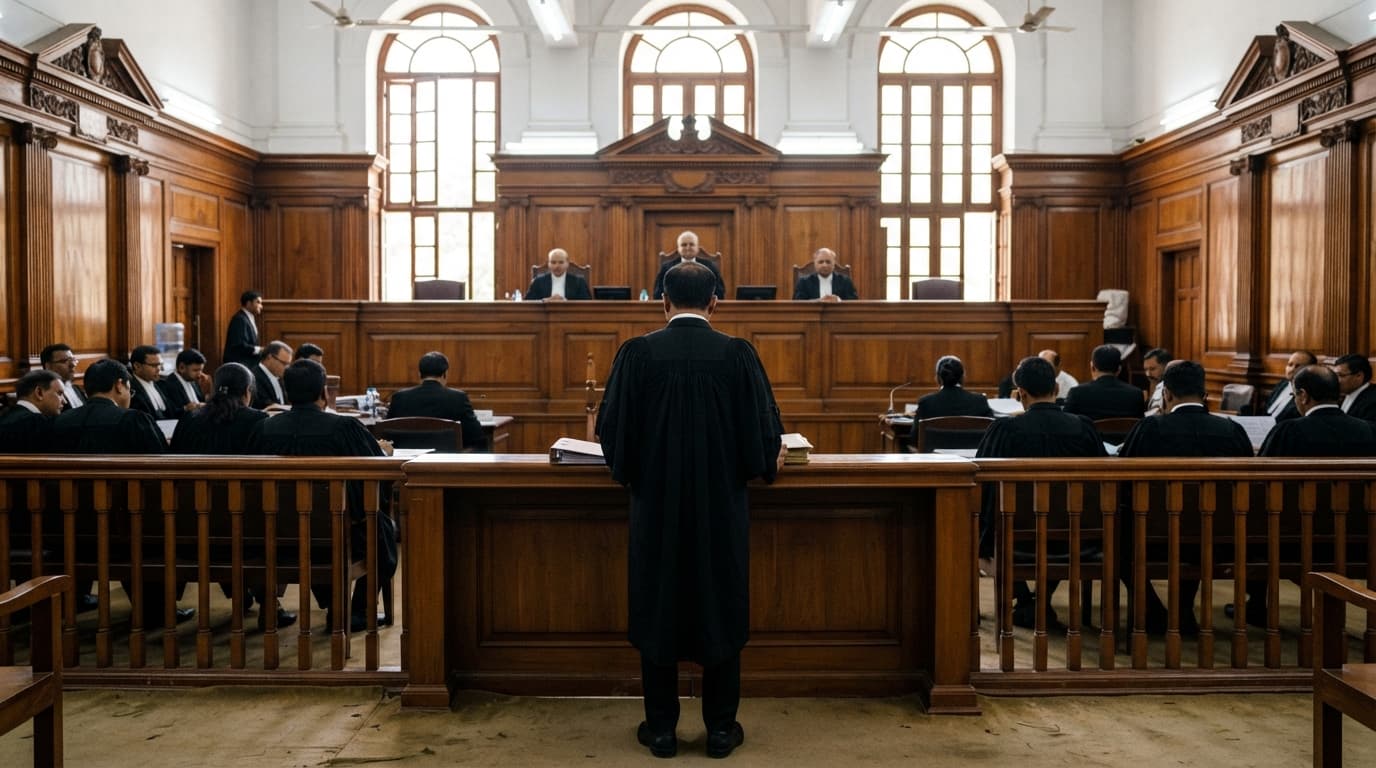
The Supreme Court has provisionally entertained a petition filed by Sanjay Raut, who is among the INDIA bloc leaders challenging the Election Commission's Special Intensive Revision, but has made his petition's admission conditional on him furnishing a written explanation for his public remarks about the Chief Justice of India and other judges. A bench comprising Chief Justice of India Surya Kant and Justice Joymalya Bagchi recorded this order on Thursday, October 15, 2026.
The court's conditional admission reflects growing judicial concern over public statements made by litigants and political figures that the bench viewed as critical of the judiciary's functioning and reputation. The Attorney General had informed the bench that Raut's claims about judges were false and had lowered the dignity of the judiciary. Chief Justice Kant noted that judges are fully aware of statements made outside the courtroom and that such remarks do not escape their notice.
The provisional nature of the admission means the petition remains before the court, but its final acceptance depends on Raut's explanation satisfying the bench that his conduct warrants the court's continued attention.
The INDIA Bloc's Challenge to Election Commission Action
Raut's petition forms part of a broader legal challenge mounted by opposition leaders against the Election Commission's Special Intensive Revision. The SIR process has been a point of contention, with opposition parties arguing that it was deployed selectively or in violation of established electoral procedures. The challenge involves multiple petitioners from the INDIA bloc, a coalition of opposition parties that has been critical of the government's electoral and administrative decisions.
The Election Commission's Special Intensive Revision is a mechanism used to revise electoral rolls, typically to add new voters or remove those who are ineligible. Opposition leaders have questioned whether the SIR was applied uniformly across constituencies or whether it was used as a tool to influence electoral outcomes. The Supreme Court's decision to hear the petition, even conditionally, means the court will examine the legal and constitutional validity of how the revision was conducted.
Judicial Response to Public Criticism
The bench's insistence on an explanation from Raut before finally admitting his petition reflects how Indian courts respond to public criticism of judicial decisions and judges. The judiciary has repeatedly expressed concern that statements made by litigants, political figures, and media outside the courtroom can undermine public confidence in the legal system and affect the independence of judges.
Chief Justice Kant's remark that judges are aware of statements made outside the courtroom conveyed that the court does not operate in isolation from public discourse but remains cognisant of what is said about it. The condition imposed on Raut suggests that the court expects litigants to maintain a certain standard of conduct and language when engaging with or critiquing the judiciary.
The Attorney General's submission that Raut's claims were false and lowered judicial dignity placed the matter squarely within the court's purview to regulate. The government's role in bringing the remarks to the court's attention also reflects the political sensitivity surrounding the case. The INDIA bloc's challenge to the Election Commission is inherently political, and the court's handling of it has become intertwined with questions of judicial propriety and public conduct.
Conditional Admission as a Procedural Tool
The device of provisional or conditional admission is not uncommon in Indian Supreme Court practice. It allows the court to signal its willingness to hear a matter while imposing conditions that the petitioner must satisfy before the petition is formally admitted. In Raut's case, the condition is that he provide a written explanation for his public remarks about the judiciary.
This approach serves multiple purposes. First, it places the onus on the petitioner to demonstrate that despite his public criticism, he remains a proper party before the court and that his petition merits consideration. Second, it creates an opportunity for the petitioner to clarify or retract statements that the court finds problematic. Third, it allows the court to maintain standards of decorum and respect without summarily dismissing a petition that may have substantive legal merit.
For Raut, the conditional admission means he must now decide whether to comply with the court's requirement. If he provides a satisfactory explanation, the petition will likely proceed to the merits stage, where the court will examine the substantive challenge to the Election Commission's Special Intensive Revision. If he refuses or if the explanation is deemed unsatisfactory, the court may dismiss the petition or take further action.
Public Figures and Judicial Scrutiny
The court's action sends a message to litigants and public figures that public statements critical of the judiciary can have consequences in pending litigation. While the right to free speech and the right to petition the court are constitutionally protected, the court has signalled that these rights do not insulate a person from judicial scrutiny if their public conduct is deemed to violate norms of respect and decorum.
Political figures and opposition leaders, in particular, may find themselves in a difficult position. Their role often requires them to critique government actions and policies, which may include decisions made by courts or actions taken by the Election Commission. However, if such criticism is framed in language that the court views as disrespectful or false, it can affect their standing in pending litigation.
The bench's approach also reflects a tension between the judiciary's need to maintain its dignity and the democratic imperative to allow public criticism of state institutions. Courts have a legitimate interest in ensuring that they are not subjected to false or scurrilous attacks. Democracy requires that institutions, including courts, remain open to public scrutiny and criticism. The court's conditional admission of Raut's petition attempts to navigate this tension by allowing the petition to proceed while requiring the petitioner to account for his public conduct.
Next Steps in the Proceedings
The immediate question now is whether Raut will comply with the court's condition. He must file a written explanation addressing his remarks about the Chief Justice and other judges. The explanation must be framed in a way that satisfies the bench that Raut has either clarified his position, retracted false statements, or provided a legitimate basis for his earlier remarks.
Once the explanation is filed, the bench will review it and decide whether to formally admit the petition. If admitted, the case will proceed to the substantive stage, where the court will examine the legal questions surrounding the Election Commission's Special Intensive Revision. This will likely involve detailed arguments about the procedure followed, the legality of the revision, and whether it complied with constitutional and statutory requirements.
The court's decision to conditionally entertain the petition suggests that the bench believes the underlying challenge to the Election Commission's action has merit and deserves to be heard. For Raut and other INDIA bloc leaders, the path forward requires not only presenting strong legal arguments but also ensuring that their conduct outside the courtroom meets the standards of propriety that the judiciary expects.
Comments
Sign in to read the discussion and share your thoughts.
Latest from LawWorld
News
View all- Karnataka Government to Challenge High Court's 56% Reservation Ruling in Supreme Court16 Oct 2026
- Karnataka High Court Mandates Hearing Before Drug License Suspension Under Drugs and Cosmetics Rules16 Oct 2026
- Karnataka High Court Rules Unsubstantiated Mental Disorder Claims Constitute Legal Cruelty in Matrimonial Disputes16 Oct 2026
- Supreme Court Agrees to Hear Application Alleging Rahul Gandhi Pushed Pregnant Journalist in Court Premises16 Oct 2026
- Supreme Court Declines Urgent Hearing on Central Park Closure Plea Ahead of Political March16 Oct 2026
Articles
View all- Supreme Court Refers DPDP Act Constitutional Challenge to Five-Judge Bench: RTI vs. Privacy Rights at Stake12 Oct 2026
- Supreme Court Disposes PIL on Doxxing and Deepfakes; Directs Union Ministries to Implement Remedial Measures8 Oct 2026
- Supreme Court Issues Notice on Constitutional Challenge to GST Input Tax Credit Denial Provision7 Oct 2026