
Supreme Court Proceeds with Habeas Corpus Petitions Despite Detainee Releases in CEC Protests
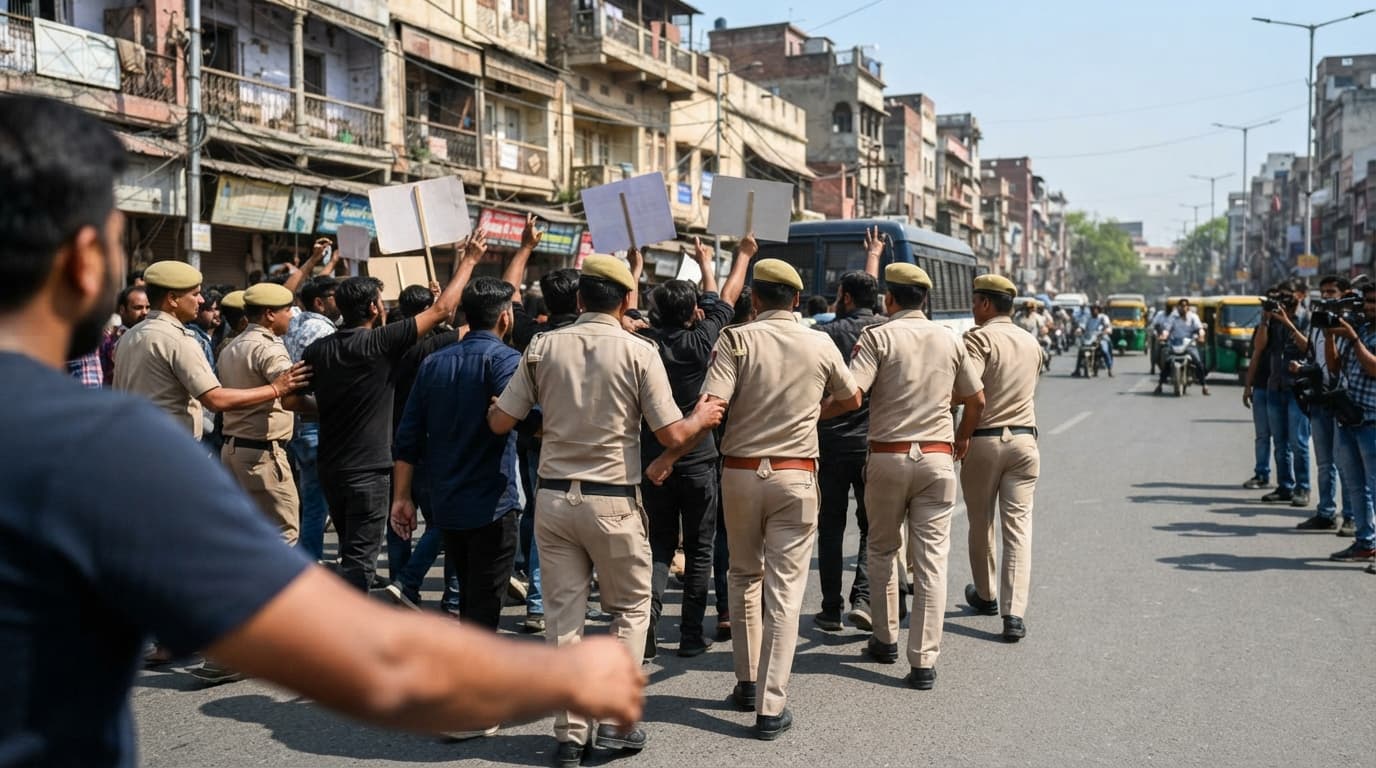
The Supreme Court issued notice on habeas corpus petitions filed following the detention of multiple persons in Delhi during October 10-12 protests against Chief Election Commissioner Gyanesh Kumar, proceeding with the matter even after the Solicitor General submitted that all named detainees had been released. The Court's decision to continue hearing the petitions despite their technically infructuous status reflects judicial attention to time-sensitive liberty cases and examination of state action during periods of civil unrest.
The petitions emerged from a series of demonstrations in the capital against the Election Commission of India's Special Intensive Revision of electoral rolls and calls for the Chief Election Commissioner's resignation. During the three-day protest period, Delhi Police detained a large number of persons, sparking multiple filings in the apex court. At least 15 separate petitions have been filed by individuals and civil society groups, including the Lawyers Association for Constitution and the Network of Women in Media, alleging police excesses during detention operations.
Allegations of Police Excesses
The petitions allege illegal detention, physical assault, and manhandling of protesters, including women and journalists. Petitioners sought an independent inquiry into police action, preservation of CCTV footage and bodycam recordings from the protest period, and the return of seized belongings. The allegations describe an aggressive police response to what organisers characterised as peaceful demonstrations against the electoral revision exercise.
When the matter came before the Supreme Court bench, Solicitor General Tushar Mehta submitted that the habeas corpus petitions had become infructuous because the persons named in the petitions had already been released from police custody. Ordinarily, such a submission would render a habeas corpus petition moot, as the remedy sought—the production and release of the detained person—has already been achieved. However, the bench chose to issue notice on the petitions regardless, signalling that the Court's interest extended beyond the immediate question of detention to broader issues of state conduct during the protest period.
Indian courts have long held that even when the person named in a habeas corpus petition has been released, the Court may proceed to examine the legality of the detention itself, the manner in which it was carried out, and whether procedural safeguards were observed. The Court's decision to issue notice despite the Solicitor General's submission suggests the bench intended to examine the circumstances and legality of the detentions, not merely their current status.
Writ Petitions Challenging Electoral Revision
Parallel to the habeas corpus petitions, the Supreme Court also issued notice on a series of writ petitions challenging the Special Intensive Revision exercise itself. On October 14, 2026, the Court issued notice on a writ petition filed by Rahul Gandhi and ten other Opposition leaders challenging the Election Commission of India and its three members regarding the conduct of the revision. The petition questions whether decisions allegedly taken by Chief Election Commissioner Gyanesh Kumar alone complied with Article 324 of the Constitution, which governs electoral matters, and invokes Section 18 of the 2023 law on Election Commissioners, which stipulates that the majority view of the commission prevails in decision-making.
The petitioners sought judicial examination of the ECI's files on the revision since June 2025, an audit of voter deletions by a committee headed by a retired judge, and an interim suspension of the revision process. The filing of this petition by senior Opposition figures added a constitutional dimension to the protests, transforming the street demonstrations into a multi-layered challenge spanning detention legality, police conduct, and the administrative process underlying the electoral revision.
Court Orders on Public Movement and Services
During the same period, the Supreme Court issued orders addressing practical restrictions imposed on Delhi during the protests. On October 15, 2026, the Court directed authorities to ensure normal metro and rail services across all stations in Delhi, subject to public order conditions under Article 19(2) of the Constitution. The bench also mandated free movement of people and traffic in the city, subject to traffic regulations, and ordered a review of barricades that had been erected.
These directions came in response to allegations that mass detentions and restrictions on public transport had been imposed during the protests. The Court further ordered that internet facilities throughout the city should remain undisturbed and that advocates, journalists, and professionals should not be impeded from discharging their duties. The orders represented an attempt to balance the state's interest in maintaining public order with citizens' constitutional rights to freedom of movement and expression.
Petition Against Denotification of Jantar Mantar
The Supreme Court issued notice to the Central government on petitions challenging the Ministry of Home Affairs' standing order denotifying Jantar Mantar as an authorised protest venue. Petitioner counsel demanded the immediate quashing of the order, citing restrictions on constitutional rights to peaceful assembly. The Delhi Police informed the Delhi High Court on October 13, 2026, that the decision to de-notify Jantar Mantar followed a Supreme Court order dated October 9, 2026, and that three alternative protest locations had been identified.
This sequence revealed the complex interplay between police action, executive orders, and judicial oversight during the protest period. The denotification of a historically significant protest site raised questions about the scope of restrictions on assembly rights and whether alternative venues adequately preserved the substance of the right to protest.
Contempt and Court Security Issues
The Supreme Court also heard a petition filed by four advocates seeking a uniform framework to regulate political processions and demonstrations around the Supreme Court and High Courts, including an absolute prohibition on political protests inside court premises. The petition sought preservation of CCTV footage, visitor and access-control records, and security reports related to an October 12, 2026 march towards the Supreme Court during the protest period.
A bench comprising Chief Justice Surya Kant and Justice Joymalya Bagchi issued notice to the Union government, the Congress party, Rahul Gandhi, Mallikarjun Kharge, the Kerala Pradesh Congress Committee, Mahua Moitra, and Akhilesh Yadav on this petition. The Court declined to issue a contempt notice at that stage, stating it would decide after reviewing the responses from the parties. This measured approach suggested the bench was still gathering information about the events of October 12 before determining whether contempt proceedings were warranted.
What Remains Pending
The matter remains pending before the Supreme Court, with the bench awaiting responses from the respondent authorities and other parties named in the various petitions. The outcome will likely shape the legal framework governing police response to mass protests and the scope of permissible restrictions on citizens' fundamental rights during periods of civil unrest. Responses are due within the timeframe set by the Court's notice orders.
Comments
Sign in to read the discussion and share your thoughts.
Latest from LawWorld
News
View all- Karnataka High Court Upholds Diageo's Priority in Vijay Mallya UBL Shares Dispute, Sets Aside DRT Orders16 Oct 2026
- Karnataka High Court Upholds BDA Land Acquisition, Issues Strict Compliance Warning to Authority16 Oct 2026
- Karnataka High Court Quashes Aviation Safety Communications for Non-Compliance with Aircraft Rules Procedure16 Oct 2026
- Karnataka High Court Upholds Finality of K-RERA Orders, Clears Path for Property Attachment in Homebuyer Dues Recovery16 Oct 2026
- Karnataka High Court Rules Against Sub-Delegation of Temple Mismanagement Inquiry Authority16 Oct 2026
Articles
View all- Supreme Court Refers DPDP Act Constitutional Challenge to Five-Judge Bench: RTI vs. Privacy Rights at Stake12 Oct 2026
- Supreme Court Disposes PIL on Doxxing and Deepfakes; Directs Union Ministries to Implement Remedial Measures8 Oct 2026
- Supreme Court Issues Notice on Constitutional Challenge to GST Input Tax Credit Denial Provision7 Oct 2026