
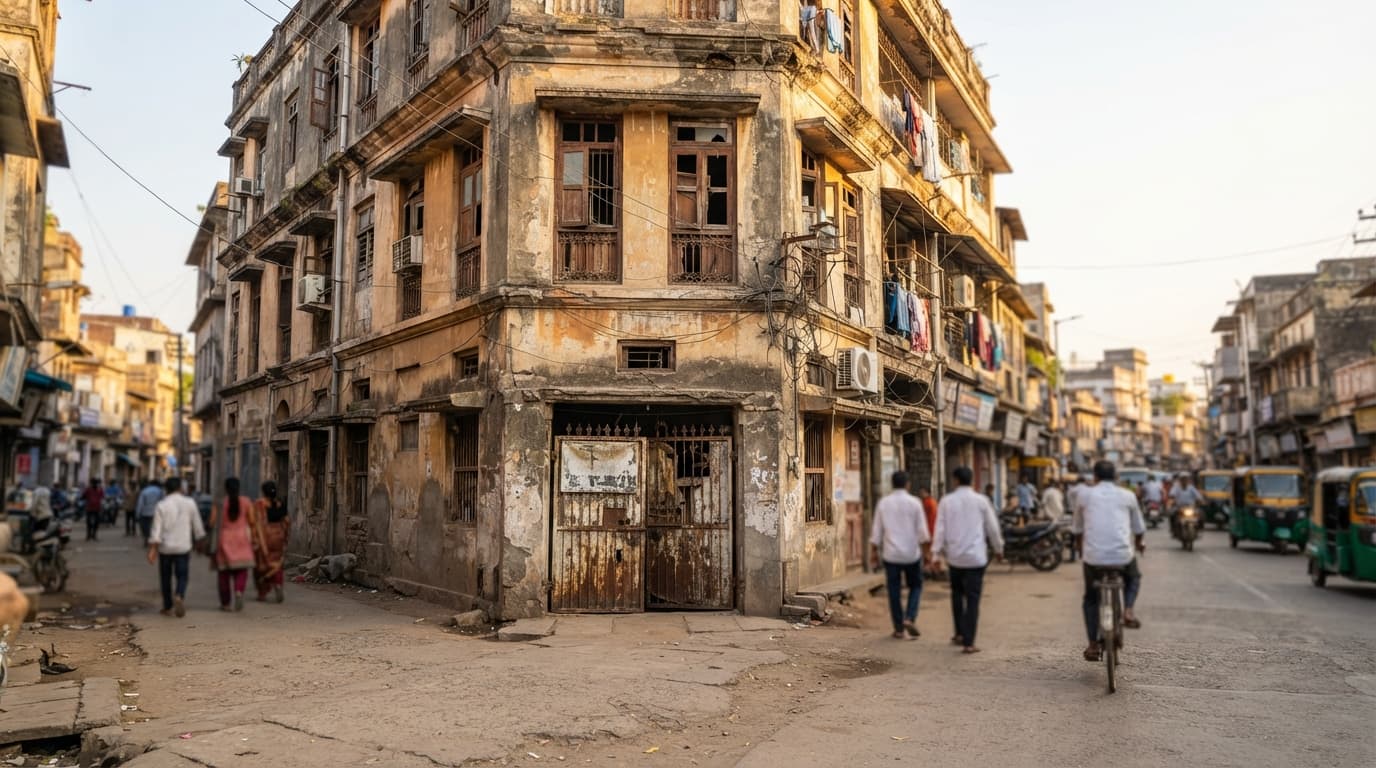
The Supreme Court has directed the University Grants Commission and other regulatory authorities to issue public advisories to protect prospective students from fraudulent educational institutions. The directive emerged after the discovery of a fake medical college operating from a dilapidated building in Etah, Uttar Pradesh, reportedly run by an illiterate tea seller posing as the institution's chairman.
Thousands of students remain vulnerable to exploitation by unaccredited colleges offering degrees with no legitimate academic standing. The bench aims to create an accessible information channel that warns citizens before they invest time and money in fraudulent institutions.
The Supreme Court has requested affidavits from all states and union territories within six weeks. These submissions must detail the admission procedures followed by private universities, the mechanisms for question paper setting, answer sheet evaluation protocols, and the role of management in institutional oversight. The court also sought information on teachers' assigned teaching hours compared to their actual teaching time over the preceding year. This granular inquiry reflects the bench's determination to expose gaps in regulatory compliance that enable fake colleges to operate.
The Etah discovery
The fake college had managed to attract students despite lacking any legitimate accreditation or recognition from the UGC. The individual leading the institution had no formal educational qualification, yet successfully misrepresented himself as an educational administrator. This case exemplifies how regulatory loopholes and inadequate public awareness create conditions for large-scale fraud in the education sector.
Private universities in India operate under a framework of regulatory oversight involving the UGC, state education departments, and statutory bodies. However, enforcement remains inconsistent across states, and many institutions operate in grey areas where verification is minimal. Students often lack reliable means to verify an institution's legitimacy before admission. They depend on word-of-mouth recommendations, marketing materials, or incomplete online searches. A fake institution can exploit this information asymmetry for years before authorities intervene.
Public advisories as a safeguard
The Supreme Court's directive to issue public advisories addresses this gap directly. Such advisories would list recognised institutions, explain how to verify accreditation, warn against common red flags used by fraudulent colleges, and provide complaint mechanisms. By placing this responsibility on the UGC and regulatory authorities, the court ensures that warnings come from official sources with credibility and reach.
Digital platforms can provide searchable databases of recognised institutions. Print materials can be distributed through schools and colleges. Radio and television spots can reach communities with limited internet access. Advisories should include practical guidance: how to check a university's UGC recognition status, how to verify faculty credentials, what questions to ask during campus visits, and how to report suspected fraud.
Standardising oversight across states
The bench's request for state and union territory affidavits signals a move toward centralised oversight. Currently, private universities operate under state regulations that vary significantly. Some states maintain stricter scrutiny; others have weaker enforcement mechanisms. By collecting standardised information on admission procedures, question paper setting, answer sheet evaluation, and teaching hours, the court can identify which jurisdictions have robust safeguards and which remain vulnerable to fraud.
Question paper setting and answer sheet evaluation are critical indicators of institutional legitimacy. A genuine university maintains academic standards through rigorous internal and external examination processes. Fake institutions often skip these steps entirely, issuing degrees based on nominal fees without any genuine assessment. By mandating disclosure of these procedures, the court forces institutions to either comply with academic norms or reveal their fraudulent nature.
Teaching hours represent another crucial metric. Legitimate universities employ qualified faculty who deliver structured courses. Fake colleges often employ no teachers at all or hire unqualified individuals for token appearances. The court's request for data comparing assigned versus actual teaching hours will expose institutions where faculty are listed on paper but absent from classrooms.
What happens next
The next hearing is scheduled for November 19. By that date, states and union territories must file their affidavits. The court will then review this data to assess the adequacy of existing regulatory frameworks and identify areas requiring strengthened oversight. This timeline reflects the urgency the bench perceives in addressing educational fraud.
Once affidavits reveal which institutions maintain weak admission procedures or inadequate oversight, enforcement action becomes necessary. Simply collecting information without follow-up action would render the directive ineffective. The November 19 hearing will likely address not only the affidavits received but also the enforcement steps regulatory bodies intend to take.
The cost of fraud
Fake educational institutions cause tangible harm to students and families. Students invest years pursuing degrees that hold no value in the job market. Families deplete savings on tuition fees that vanish without delivering education. Graduates discover their qualifications are worthless only after completing their courses, losing both time and money. Some students face social stigma when employers reject their credentials.
Beyond individual harm, fake institutions damage the reputation of legitimate private universities. When fraudulent colleges operate unchecked, public trust in the entire private higher education sector erodes. Students and parents become suspicious of all private institutions, even those maintaining genuine academic standards. This generalised distrust harms quality institutions and creates barriers for legitimate private universities to attract capable students.
The Supreme Court's directive recognises that prevention through public awareness is more effective than punishment after fraud occurs. Once a student has enrolled in a fake institution and lost money, recovery is often impossible. Preventing enrolment in the first place protects both individuals and the integrity of the education system.
Governance and accountability
The court's request for information on management's role in private universities also signals scrutiny of governance structures. Legitimate institutions maintain clear lines of accountability, with governing bodies overseeing academic and administrative functions. Fake institutions typically have no meaningful governance, with decisions made arbitrarily by individuals seeking profit. By requesting information on management structures and their actual functions, the court can identify institutions lacking proper governance.
As the November 19 hearing approaches, states and union territories face the task of compiling detailed information on private universities within their jurisdictions. This exercise itself may expose gaps in regulatory records. Some states may discover they lack basic information about institutions operating within their borders, revealing the need for stronger registration and monitoring systems. The affidavits will serve both as evidence for the court and as a diagnostic tool for regulators to assess their own capacity.
Comments
Sign in to read the discussion and share your thoughts.
Latest from LawWorld
News
View all- Officials Committee to Be Formed for Establishing Karnataka High Court Bench for Coastal Development12 Oct 2026
- Karnataka High Court Grants Bail to Two Accused in Money Laundering Case, Citing Investigation Completion and Trial Delays12 Oct 2026
- Karnataka High Court Sets Aside Tax Revision Proceedings Against Mukesh Bansal in ESOP Classification Case12 Oct 2026
- Supreme Court Launches 'Jan Soochna Seva' Initiative for Public Access to Judgments12 Oct 2026
- Supreme Court to Hear Petition on Lawyers' Difficulties During Delhi Protests12 Oct 2026
Articles
View all- Supreme Court Refers DPDP Act Constitutional Challenge to Five-Judge Bench: RTI vs. Privacy Rights at Stake12 Oct 2026
- Supreme Court Disposes PIL on Doxxing and Deepfakes; Directs Union Ministries to Implement Remedial Measures8 Oct 2026
- Supreme Court Issues Notice on Constitutional Challenge to GST Input Tax Credit Denial Provision7 Oct 2026
Blogs
View all- Supreme Court Orders Priority Hearing for Pension Cases: A Decade-Long Wait Deemed 'Grave Injustice'12 Oct 2026
- Supreme Court Clarifies Gratuity Calculation: Monthly Wages Divided by 26 Working Days, Not 3011 Oct 2026
- Supreme Court Affirms Damages Recovery for Delayed Provident Fund Contributions Without Time Limit10 Oct 2026