
Supreme Court Orders Independent Inquiry Into Police Action During CEC Protests
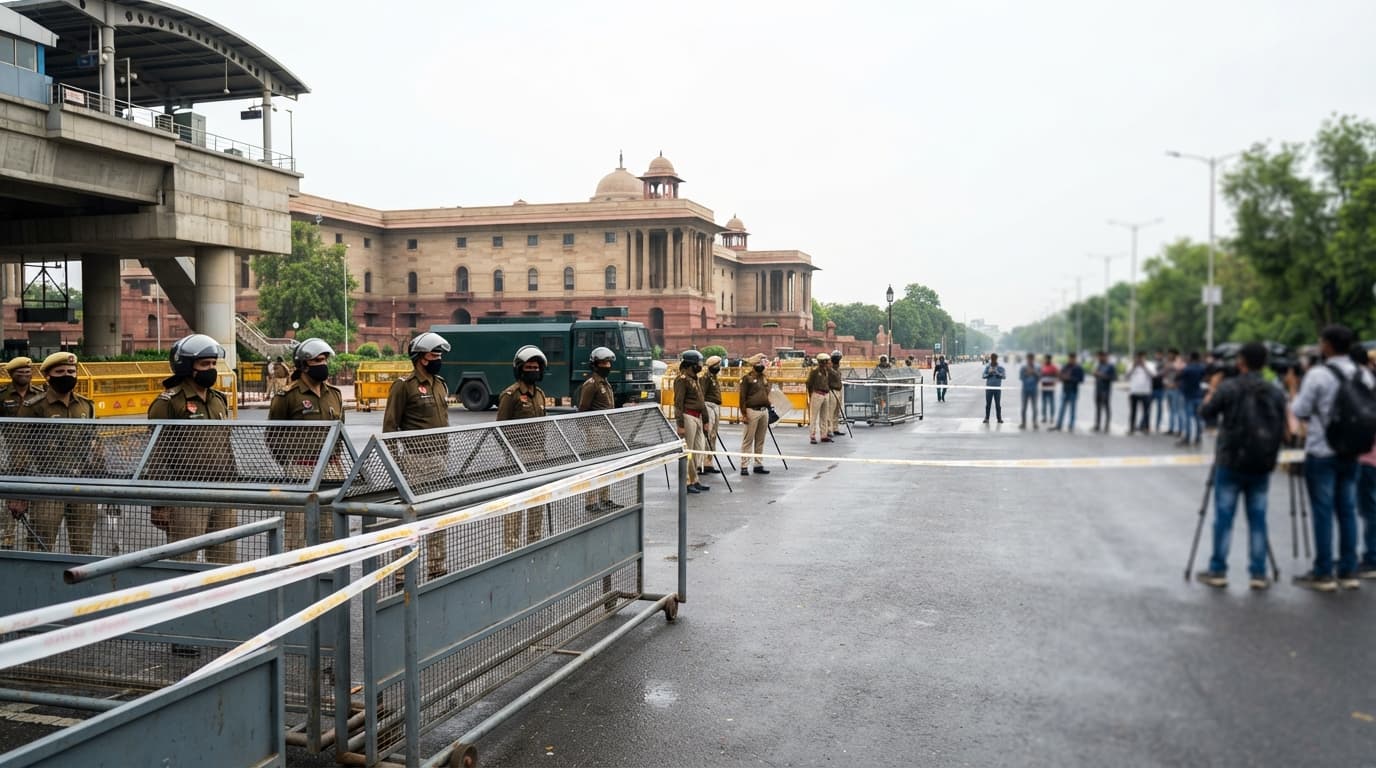
The Supreme Court of India has directed an independent inquiry into allegations of police excesses during protests held in Delhi on October 10, 11, and 12, 2026, against Chief Election Commissioner Gyanesh Kumar. At least 15 petitions have been filed raising serious concerns about illegal detention, physical assault, manhandling of protesters, and restrictions imposed on journalists and ordinary citizens during the demonstrations.
The Lawyers Association for Constitution and the Network of Women in Media separately filed petitions seeking a thorough investigation into police conduct. The petitioners have requested preservation of CCTV footage and bodycam recordings as evidence, return of seized belongings, and measures to prevent future excesses. The Supreme Court issued notice on these petitions during an extraordinary Sunday sitting on October 11, 2026, signalling the bench's commitment to examining the allegations despite claims by the Solicitor General that some detainees had already been released.
The protests centred on the Election Commission of India's Special Intensive Revision of electoral rolls, which Opposition leaders and civil society groups have challenged as potentially flawed and unilaterally decided. The detentions and police action during these demonstrations have sparked broader concerns about the exercise of police powers and restrictions on constitutional freedoms during public protests.
Detention Legality Remains Justiciable After Release
Solicitor General Tushar Mehta submitted to the Court that habeas corpus petitions filed by detained persons had become infructuous because the individuals had since been released. Despite this submission, the bench proceeded to issue notice on the petitions, indicating judicial concern about the circumstances of detention and the need for accountability even after release. The Court's decision reflects established jurisprudence that habeas corpus petitions remain justiciable to determine whether detention was lawful and whether compensation or other remedies are warranted.
This approach recognises that the legality and propriety of detention cannot be overlooked simply because a person is no longer in custody. The Court's stance signals that it will not treat mass detentions during protests as matters that can be dismissed merely because the detainees are now free.
Restoration of Services and Public Freedoms
The Supreme Court has issued comprehensive directions to restore normal functioning of the city following the protests. On October 15, 2026, the Court directed authorities to ensure normal metro and rail services across all stations in Delhi, subject only to public order conditions permitted under Article 19(2) of the Constitution. The bench also mandated free movement of people and traffic throughout the city, subject to traffic regulations, and ordered a review of barricades that had been erected during the unrest.
Further, the Court ordered that internet facilities throughout Delhi should remain undisturbed and that advocates, journalists, and professionals should not be impeded from discharging their duties. These directions address allegations that mass detentions and restrictions on public transport had severely limited citizens' freedom of movement and access to essential services during the protest period. Restrictions on liberty and services, if imposed, must be proportionate and temporary, not indefinite or arbitrary.
Challenge to De-notification of Jantar Mantar
The Supreme Court issued notice to the Central government on petitions challenging the Ministry of Home Affairs' standing order de-notifying Jantar Mantar as an authorized protest venue. Petitioner counsel argued that the de-notification violates constitutional rights to peaceful assembly. The Delhi Police had informed the Delhi High Court on October 13, 2026, that the decision to de-notify Jantar Mantar followed a Supreme Court order dated October 9, 2026, and that three alternative protest locations had been identified.
The challenge raises questions about the permanence and scope of restrictions on protest sites. Petitioners contend that removing an established and historically significant venue for peaceful assembly amounts to an unjustified curtailment of fundamental rights. The Court's issuance of notice suggests it will examine whether the de-notification was proportionate and whether alternative venues adequately serve the purpose of protecting the right to protest.
Electoral Revision Process Under Scrutiny
Parallel to the police excess allegations, the Supreme Court has issued notice on writ petitions filed by Rahul Gandhi and ten other Opposition leaders challenging the conduct of the Election Commission's Special Intensive Revision. The petitioners question whether decisions allegedly taken by Chief Election Commissioner Gyanesh Kumar alone complied with Article 324 of the Constitution and invoked Section 18 of the 2023 law on Election Commissioners, which stipulates that the majority view of the commission should prevail.
The petitioners seek judicial examination of the Election Commission's files on the revision since June 2025, an independent audit of voter deletions by a committee headed by a retired judge, and interim suspension of the revision exercise. These petitions suggest that the underlying cause of the protests—concerns about the electoral revision process itself—remains contested and subject to judicial review.
Framework for Regulating Political Protests
The Supreme Court has also issued notice on a petition filed by four advocates seeking a uniform framework to regulate political processions and demonstrations around the Supreme Court and High Courts. The petition requests an absolute prohibition on political protests inside court premises and seeks preservation of CCTV footage, visitor and access-control records, and security reports related to the October 12, 2026 march towards the Supreme Court.
The bench, comprising Chief Justice Surya Kant and Justice Joymalya Bagchi, declined to issue a contempt notice at this stage, stating it would decide after reviewing responses from the Union government, the Congress party, Rahul Gandhi, Mallikarjun Kharge, the Kerala Pradesh Congress Committee, Mahua Moitra, and Akhilesh Yadav. This petition raises separate questions about the balance between allowing political expression and maintaining the dignity and functioning of judicial institutions.
Evidence Preservation and Investigation
The core relief sought by petitioners—an independent inquiry into police excesses—remains pending before the Court. The petitions have specifically requested that CCTV footage and bodycam recordings be preserved to provide objective evidence of police conduct during the demonstrations. Such evidence is critical for determining whether detention was lawful, whether force was used proportionately, and whether protocols were followed.
The preservation orders sought also aim to prevent destruction or tampering with evidence, a concern that arises in cases involving allegations against law enforcement. The Court's willingness to issue notice on these requests suggests recognition of their importance to a fair and credible investigation.
What Comes Next
The Supreme Court's issuance of notices on multiple petitions indicates that detailed hearings will follow. The bench will examine evidence of police conduct, consider the justifications offered by law enforcement, and determine whether an independent inquiry is warranted. The restoration of normal services and freedoms already ordered by the Court addresses the immediate impact of the protests and restrictions, but the substantive question of police accountability remains to be resolved through the ongoing proceedings.
Comments
Sign in to read the discussion and share your thoughts.
Latest from LawWorld
News
View all- Karnataka High Court Upholds Diageo's Priority in Vijay Mallya UBL Shares Dispute, Sets Aside DRT Orders16 Oct 2026
- Karnataka High Court Upholds BDA Land Acquisition, Issues Strict Compliance Warning to Authority16 Oct 2026
- Karnataka High Court Quashes Aviation Safety Communications for Non-Compliance with Aircraft Rules Procedure16 Oct 2026
- Karnataka High Court Upholds Finality of K-RERA Orders, Clears Path for Property Attachment in Homebuyer Dues Recovery16 Oct 2026
- Karnataka High Court Rules Against Sub-Delegation of Temple Mismanagement Inquiry Authority16 Oct 2026
Articles
View all- Supreme Court Refers DPDP Act Constitutional Challenge to Five-Judge Bench: RTI vs. Privacy Rights at Stake12 Oct 2026
- Supreme Court Disposes PIL on Doxxing and Deepfakes; Directs Union Ministries to Implement Remedial Measures8 Oct 2026
- Supreme Court Issues Notice on Constitutional Challenge to GST Input Tax Credit Denial Provision7 Oct 2026