
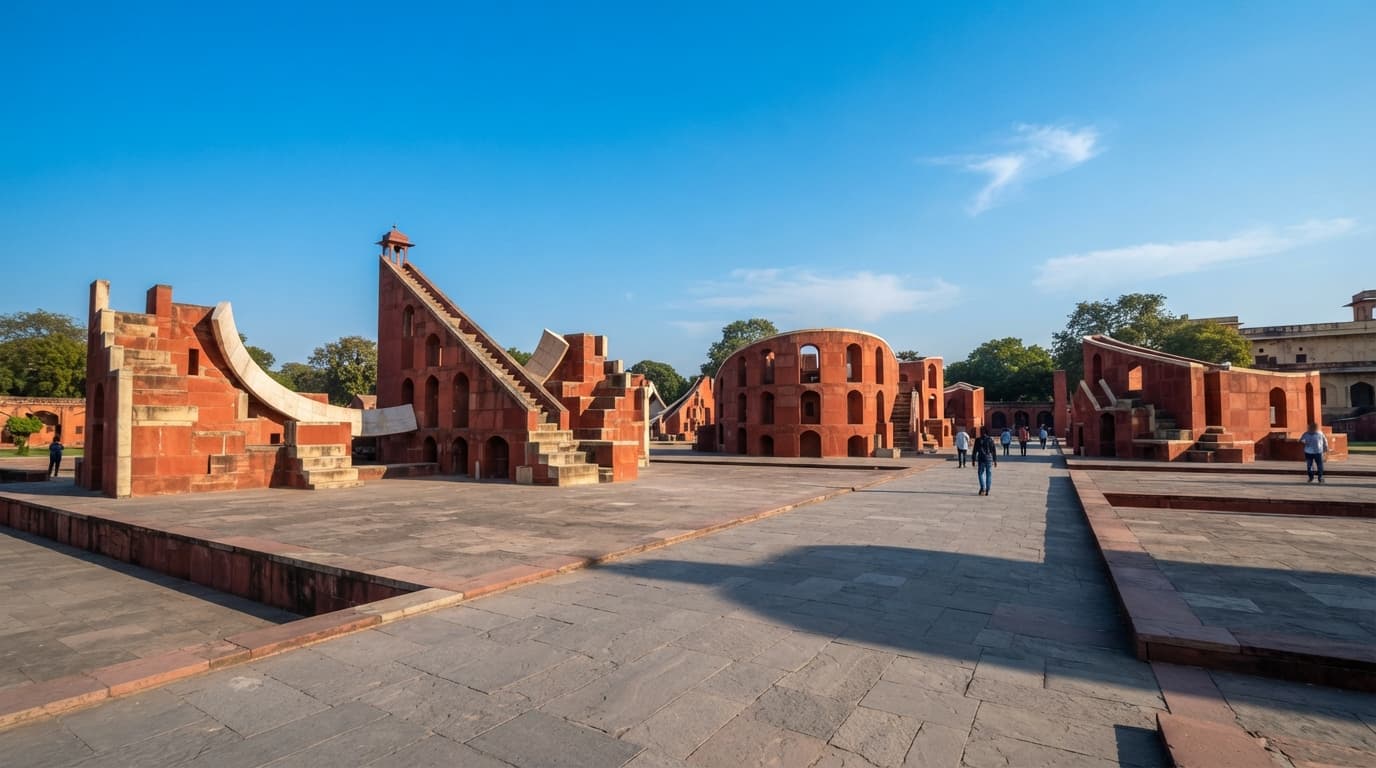
The Supreme Court has issued notice to the Central government on petitions challenging the Ministry of Home Affairs' order denotifying Jantar Mantar as an authorized protest venue. The case reopens a fundamental debate about the constitutional right to peaceful assembly and the scope of state restrictions on public demonstration in the nation's capital.
Petitioner counsel demanded the immediate quashing of the denotification, arguing that it violates the constitutional right to peaceful assembly guaranteed under Article 19 of the Constitution of India. The petitions, heard during an extraordinary sitting, directly contest the MHA's standing order removing Jantar Mantar from the list of designated protest locations. The case touches on a critical intersection of public order management and fundamental rights, with the Court now examining whether the MHA's action was constitutionally permissible.
Police cite Supreme Court order
According to submissions made before the Delhi High Court on October 13, 2026, the Delhi Police attributed the denotification decision to the Supreme Court's October 9, 2026, order. Following that order, three alternative protest locations had been identified for demonstrators. This attribution raises a procedural question: whether the police correctly interpreted the Supreme Court's direction and whether the identification of alternative sites adequately addresses the constitutional concerns raised by the petitioners.
The denotification occurred during a period of significant civil unrest in Delhi. Multiple petitions have been filed in the Supreme Court by individuals detained during protests on October 10, 11, and 12, 2026, alleging police excesses including illegal detention, physical assault, and manhandling of protesters. The Lawyers Association for Constitution and the Network of Women in Media also filed separate petitions raising concerns about police action against those protesting the Special Intensive Revision of electoral rolls. At least 15 such petitions have been filed, indicating the scale of police action during this period.
Electoral dispute and timing
The protests were directed against the Chief Election Commissioner and the Election Commission of India's conduct of the Special Intensive Revision exercise. Opposition leaders, including Rahul Gandhi and ten other Opposition members, had filed a writ petition on October 12, 2026, challenging the Election Commission's decisions and seeking judicial examination of the revision process. The denotification of Jantar Mantar thus occurred within a larger constitutional crisis concerning electoral administration and the separation of powers.
Jantar Mantar has historically served as Delhi's primary venue for political protest and civil demonstration. Located in the heart of New Delhi, it has hosted countless demonstrations by citizens, activists, and political leaders exercising their constitutional right to petition the government for redress of grievances. The denotification therefore represents a significant curtailment of a long-established space for public expression and assembly.
Article 19 and reasonable restrictions
The petitioners' challenge rests on Article 19 of the Constitution, which guarantees the right to assemble peaceably and without arms. Article 19(2) permits the state to impose reasonable restrictions on this right in the interests of public order, security of the state, and other specified grounds. The central legal question before the Supreme Court is whether the MHA's blanket denotification of Jantar Mantar constitutes a reasonable restriction or an excessive curtailment of constitutional rights.
The identification of three alternative protest locations by the Delhi Police attempts to demonstrate that the state has not eliminated the right to protest but merely redirected it elsewhere. However, petitioner counsel has contested this position, arguing that the alternative sites do not serve the same constitutional function as Jantar Mantar. The specific location of a protest venue can carry political and symbolic significance, and the restriction to alternative locations may effectively diminish the impact and visibility of public demonstration.
The Court's issuance of notice signals that the petitions raise substantial constitutional questions requiring full adjudication. The notice indicates that the Court will examine both the legality of the denotification itself and the adequacy of the alternative arrangements proposed by the state. The Central government now has an opportunity to justify the MHA's order through detailed submissions explaining the public order rationale for the denotification.
Broader orders on assembly and movement
This case must be understood within the broader context of the Court's recent orders on public order and assembly rights. During the same period, the Supreme Court directed authorities to ensure normal metro and rail services across all stations in Delhi and mandated free movement of people and traffic in the city. The Court also ordered that internet facilities throughout the city should remain undisturbed and that advocates, journalists, and professionals should not be impeded from discharging their duties. These orders suggest the Court's concern that restrictions imposed during the protest period may have exceeded permissible bounds.
The Supreme Court also issued notice on habeas corpus petitions filed after a large number of persons were detained in Delhi during protests against the Chief Election Commissioner. Although the Solicitor General submitted that many of these petitions had become infructuous as the named persons had been released, the Bench issued notice all the same, indicating the Court's intention to examine the legality of the detention process itself.
Proportionality and precedent
The denotification of Jantar Mantar raises practical questions about the administration of protest venues and the mechanics of state regulation of assembly rights. If the Supreme Court upholds the petitioners' challenge, the MHA would be required to restore Jantar Mantar's status as an authorized protest venue. If the Court upholds the denotification, it would establish a precedent permitting the state to unilaterally remove traditional protest sites during periods of civil unrest, subject only to the requirement that alternative sites be identified.
The case also engages with the principle of proportionality in constitutional law. Even if the state demonstrates a legitimate public order concern, the Court must examine whether the denotification of an entire venue is a proportionate response to that concern. Less restrictive measures, such as crowd management protocols or temporary restrictions on specific dates, might achieve the state's objectives without eliminating the right to assemble at a historically significant location.
The petitions challenge not merely the specific denotification order but the broader authority of the MHA to unilaterally designate or denotify protest venues without procedural safeguards or judicial oversight. The petitioners appear to argue that such decisions must comply with constitutional principles of reasonableness and proportionality and that affected parties must have an opportunity to be heard before their assembly rights are restricted.
As the Supreme Court proceeds with the examination of these petitions, it will need to balance the state's legitimate interest in maintaining public order during periods of significant civil unrest against the fundamental constitutional right of citizens to assemble peacefully and petition their government. The outcome will determine not only whether Jantar Mantar is restored as a protest venue but also the framework governing protest regulation in India's capital and potentially across the country.
Comments
Sign in to read the discussion and share your thoughts.
Latest from LawWorld
News
View all- Karnataka High Court Seeks Explanation for 16-Year Delay in Issuing Caste Validity Certificate to KIMS Staff Nurse16 Oct 2026
- Karnataka High Court Orders Restoration of BJP Spokesperson's Facebook Account, Excludes Deleted Content16 Oct 2026
- Karnataka High Court Denies Quashing of Assault FIR, Upholds Criminal Proceedings Despite Civil Property Dispute16 Oct 2026
- Supreme Court Issues Notice on Opposition Leaders' Challenge to Election Commission's Special Intensive Revision16 Oct 2026
- Supreme Court Directs Restoration of Normal Metro Services and Free Movement in Delhi16 Oct 2026
Articles
View all- Supreme Court Refers DPDP Act Constitutional Challenge to Five-Judge Bench: RTI vs. Privacy Rights at Stake12 Oct 2026
- Supreme Court Disposes PIL on Doxxing and Deepfakes; Directs Union Ministries to Implement Remedial Measures8 Oct 2026
- Supreme Court Issues Notice on Constitutional Challenge to GST Input Tax Credit Denial Provision7 Oct 2026