
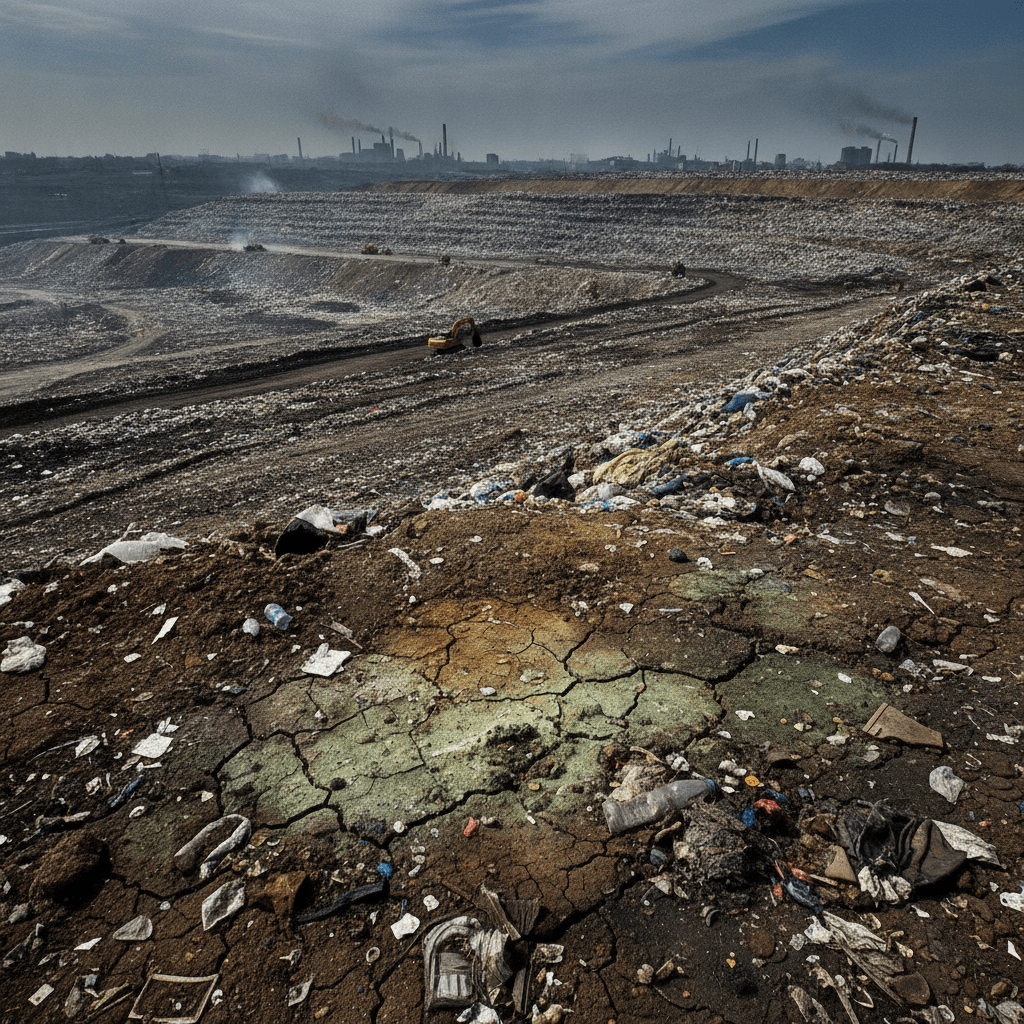
Supreme Court Directs Centre to Frame Environmental Compensation Guidelines Under Solid Waste Management Rules 2026
The Supreme Court of India has issued a significant directive to the Central Government requiring it to frame detailed guidelines on environmental compensation under the Solid Waste Management Rules 2026. This judicial intervention marks an important development in India's regulatory approach to municipal solid waste management and represents a critical step toward establishing enforceable accountability mechanisms for environmental violations at the local governance level.
The Supreme Court's direction emerges from its ongoing supervisory jurisdiction over municipal solid waste management and pollution-control compliance nationwide. By mandating the creation of environmental compensation guidelines, the apex court has effectively integrated a financial deterrent and remedial framework into the existing regulatory structure governing local bodies' waste-management obligations. This move is expected to significantly impact how municipal corporations, local authorities, and waste management operators approach their statutory responsibilities under the Solid Waste Management Rules 2026.
Strengthening the Regulatory Framework
The Solid Waste Management Rules 2026 represent India's comprehensive legislative attempt to address the mounting challenges posed by municipal solid waste across urban and semi-urban areas. These rules establish detailed protocols for waste segregation, collection, transportation, processing, and disposal, placing substantial obligations on local bodies to ensure compliance with environmental and public health standards. However, the effectiveness of any regulatory framework depends not merely on the existence of rules but on the presence of credible enforcement mechanisms and meaningful consequences for non-compliance.
The Supreme Court's directive to frame environmental compensation guidelines addresses a critical gap in the existing framework. Environmental compensation serves dual purposes: it acts as a deterrent against violations by imposing financial consequences on non-compliant entities, and simultaneously, it creates a fund or mechanism through which environmental damage can be remedied or mitigated. By requiring the Centre to develop specific guidelines, the Supreme Court has acknowledged that general regulatory provisions alone are insufficient to ensure sustained compliance and environmental protection.
Judicial Oversight and Environmental Protection
The Supreme Court of India has consistently demonstrated its commitment to environmental protection through its exercise of public interest jurisdiction and suo moto powers. This directive on environmental compensation guidelines under the Solid Waste Management Rules 2026 reflects the court's recognition that municipal solid waste management directly impacts environmental quality, public health, and the fundamental right to a clean environment—a right that Indian courts have derived from the constitutional guarantee of the right to life under Article 21 of the Indian Constitution.
By directing the Centre to frame these guidelines, the Supreme Court is not merely making a suggestion but issuing a binding directive that reflects its supervisory role over environmental compliance. The court's intervention ensures that the compensation framework will be developed with judicial scrutiny and public accountability, rather than being left entirely to executive discretion. This approach strengthens the rule of law and ensures that environmental protection remains a priority in waste management policy implementation.
Implications for Local Bodies and Waste Management Operators
The framing of environmental compensation guidelines will have far-reaching implications for municipal corporations, local bodies, and private waste management operators across India. These guidelines will likely specify the circumstances under which environmental compensation becomes payable, the methodology for calculating compensation amounts, the process for assessment and recovery, and the utilization of compensation funds for environmental remediation.
Local bodies that fail to comply with waste segregation requirements, improper disposal practices, or inadequate treatment of hazardous waste components will face financial liability under the compensation framework. This creates a strong financial incentive for compliance and encourages investment in proper waste management infrastructure. For waste management operators contracted by local authorities, the guidelines will establish clear standards of accountability and may include provisions for recovery of compensation from contractors responsible for breaches.
The guidelines are also expected to address the calculation of environmental damage, which presents a complex technical and legal challenge. The Centre will need to develop methodologies that account for soil contamination, groundwater pollution, air quality degradation, and impacts on biodiversity resulting from improper waste management. These methodologies must be scientifically sound, administratively implementable, and capable of withstanding legal scrutiny.
Alignment with Constitutional Environmental Jurisprudence
India's constitutional framework places significant emphasis on environmental protection. Article 48-A of the Indian Constitution mandates that the State shall endeavour to protect and improve the environment and safeguard forests and wildlife. Additionally, Article 51-A imposes a duty on every citizen to protect and improve the natural environment. The Supreme Court's directive to frame environmental compensation guidelines aligns with this constitutional mandate and reinforces the principle that environmental degradation must be accompanied by accountability and remediation.
The concept of environmental compensation also reflects the "polluter pays principle," which has been consistently endorsed by Indian courts. This principle holds that the entity responsible for pollution should bear the costs of managing it to prevent damage to human health or the environment. By mandating compensation guidelines, the Supreme Court is operationalizing this principle within the specific context of solid waste management.
Procedural and Implementation Considerations
The framing of environmental compensation guidelines under the Solid Waste Management Rules 2026 will require coordination among multiple stakeholders. The Central Government will need to consult with the Ministry of Housing and Urban Affairs, the Ministry of Environment, Forest and Climate Change, state governments, municipal bodies, and environmental experts. The guidelines must be practical enough for implementation by local authorities while remaining rigorous enough to serve their intended purpose of ensuring compliance and environmental protection.
The guidelines will also need to address procedural questions such as who has authority to assess and recover environmental compensation, what appeals mechanisms are available to affected parties, and how disputes regarding compensation amounts will be resolved. These procedural safeguards are essential to ensure that the compensation framework operates fairly and transparently.
Broader Context in India's Environmental Governance
This Supreme Court directive must be understood within the broader context of India's environmental governance challenges. With rapid urbanization and population growth, municipal solid waste generation has become one of India's most pressing environmental problems. Improper waste management leads to severe consequences including landfill leachate contamination of groundwater, air pollution from waste burning, and health hazards in communities adjacent to waste disposal sites.
The framing of environmental compensation guidelines represents the judiciary's response to the inadequacy of existing enforcement mechanisms in ensuring compliance with waste management standards. By integrating financial accountability into the regulatory framework, the Supreme Court is attempting to shift the cost-benefit calculation for local bodies from one where non-compliance is economically advantageous to one where compliance becomes the rational choice.
Conclusion
The Supreme Court's directive to the Centre to frame guidelines on environmental compensation under the Solid Waste Management Rules 2026 constitutes a landmark intervention in India's environmental governance. It transforms the regulatory framework from one based primarily on administrative requirements to one that incorporates meaningful financial accountability for environmental violations. For municipal authorities, waste management operators, environmental practitioners, and legal professionals tracking Supreme Court case status in India, this directive represents a significant development with substantial practical implications for waste management compliance and environmental protection across the nation.
Comments
Sign in to read the discussion and share your thoughts.