
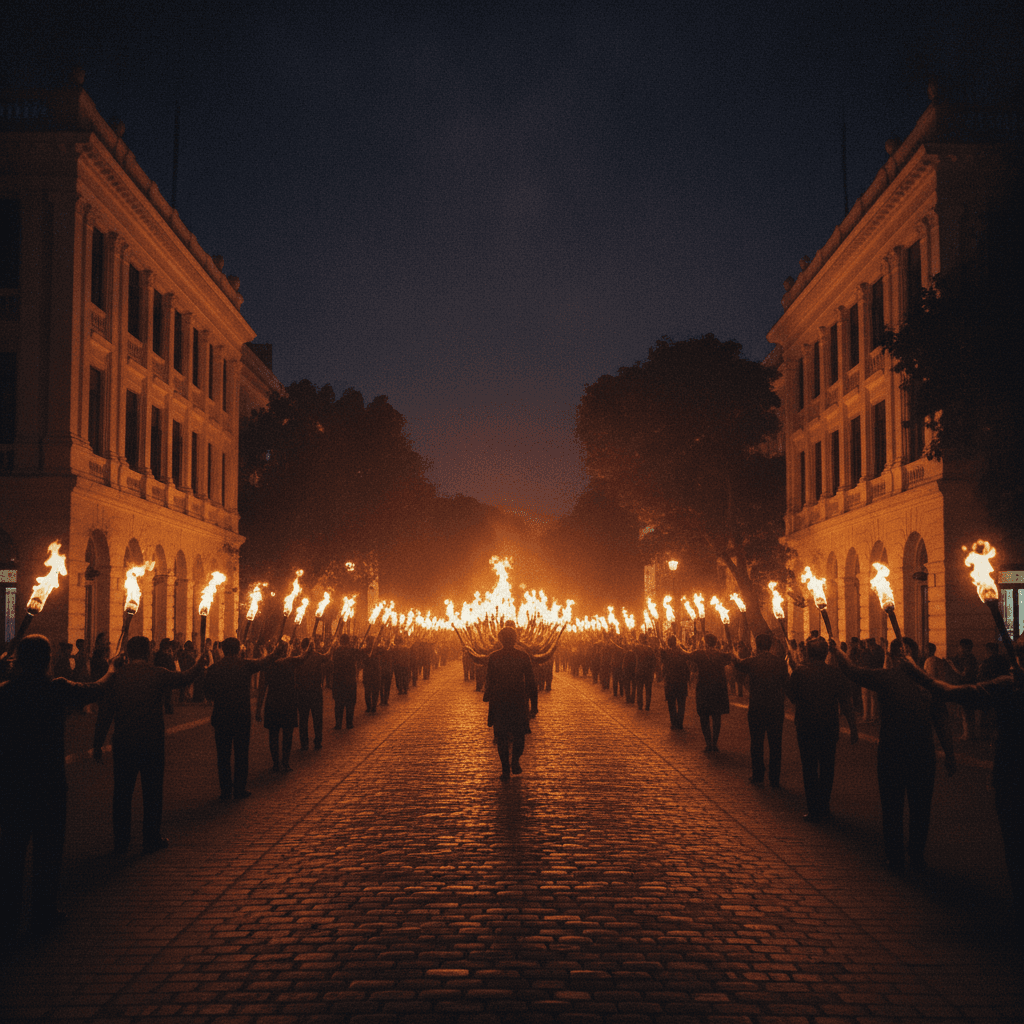
Karnataka High Court Affirms Right to Peaceful Assembly: Quashes Police Ban on Independence Day Torchlight March
The Karnataka High Court has delivered a significant ruling on the constitutional right to peaceful assembly, quashing a police refusal to permit a torchlight march scheduled for Independence Day celebrations in Mysuru. Justice Suraj Govindaraj's order on Friday, 14 August 2026, establishes an important precedent on the threshold that law enforcement authorities must meet before denying permission for public processions and demonstrations.
The case arose when police authorities declined to grant permission for the proposed torchlight march, citing vague concerns about potential communal disturbances. The organisers approached the High Court seeking a mandamus to compel the police to reconsider their refusal and permit the event to proceed. Justice Govindaraj examined both the police reasoning and the statutory framework governing such permissions, ultimately finding the refusal unjustifiable under constitutional and administrative law principles.
Threshold for Refusing Assembly Permissions
The judgment clarifies a critical distinction in constitutional law of India regarding the exercise of police discretion. While authorities possess legitimate powers to regulate public assemblies in the interest of public order and safety, these powers are not unfettered. The court emphasised that a generalised apprehension of law and order trouble cannot serve as the sole basis for outright refusal of permission.
Instead, Justice Govindaraj held that any refusal must be grounded in specific, material facts that demonstrate a genuine and identifiable risk. The authority must articulate the precise nature of the threat, the evidence supporting that assessment, and why the proposed event would materially exacerbate the risk. This requirement aligns with established constitutional law principles protecting citizens' fundamental right to freedom of assembly, guaranteed under Article 19(1)(b) of the Indian Constitution.
The court further observed that even where specific risks are identified, the appropriate response is not necessarily an outright ban. Instead, authorities should consider whether reasonable conditions—such as enhanced police presence, designated routes, time restrictions, or security measures—could adequately address the identified concerns. Only when conditions cannot sufficiently mitigate genuine risks should refusal be considered proportionate.
Distinguishing Lawful Regulation from Arbitrary Denial
This distinction between regulation and denial represents an important development in Indian constitutional law. The right to peaceful assembly is not absolute; it remains subject to reasonable restrictions in the interest of public order, decency, or morality. However, the burden lies on the authority to demonstrate that such restrictions are necessary and proportionate to an identified harm.
Justice Govindaraj's reasoning reflects principles articulated in landmark constitutional law judgments that have consistently held that vague or speculative fears cannot justify restrictions on fundamental rights. The mere possibility of communal tension, without concrete evidence of a specific threat, falls short of this threshold. This approach protects citizens from arbitrary administrative action while acknowledging legitimate state interests in maintaining public order.
The court's order is particularly significant because it addresses a common pattern in administrative practice: the reflexive denial of permission based on generalised concerns about potential disturbances. By requiring specificity and proportionality, the judgment provides citizens with meaningful recourse against such denials while establishing clearer guidelines for police authorities.
The Court's Critique of Premature Action by Organisers
While the court sided with the organisers on the substantive question of permission, Justice Govindaraj did not hesitate to criticise their conduct. The organisers had put up banners advertising the torchlight march prior to obtaining formal permission from the police. The court viewed this action as presumptive and contrary to proper procedure, noting that petitioners who pre-empt the outcome by acting before permission is granted will find the discretion exercised less generously in future applications.
This aspect of the judgment sends an important signal about the mutual obligations inherent in the assembly permission framework. While authorities cannot arbitrarily deny permission, organisers must also respect procedural requirements and demonstrate good faith compliance with the regulatory process. The court's rebuke suggests that future petitions will be evaluated not only on the merits but also on the applicant's demonstrated respect for lawful procedures.
Practical Guidance for Future Petitions
The judgment provides clear guidance for counsel drafting petitions challenging police refusals of assembly permissions. When approaching the court, petitioners should annex a comprehensive documentary record that includes the original application submitted to police, the formal refusal with its stated reasons, and—critically—a detailed set of proposed conditions that the petitioner is willing to accept.
This last element is particularly important. By proposing specific conditions designed to address identifiable concerns, petitioners demonstrate reasonableness and good faith. Such proposals might include restrictions on the march route, specified timings, coordination with traffic management, or acceptance of police presence and supervision. When authorities cannot articulate how even reasonable conditions would fail to address their concerns, the case for an outright refusal becomes substantially weaker.
Counsel should also ensure that all procedural requirements are strictly observed before approaching the court. This includes submitting applications well in advance, providing complete information about the event, and demonstrating that the organisers have made genuine efforts to engage with police authorities. The court's criticism of the organisers' premature advertising suggests that courts will scrutinise whether petitioners have exhausted reasonable opportunities for administrative resolution before seeking judicial intervention.
Constitutional Protections and the Rule of Law
Beyond its immediate application to the Mysuru torchlight march, Justice Govindaraj's order reinforces fundamental principles of constitutional law in India. The judgment affirms that the right to peaceful assembly is a cornerstone of democratic participation and cannot be subordinated to administrative convenience or speculative concerns.
At the same time, the judgment does not adopt an absolutist position. It acknowledges that public order is a legitimate state interest and that authorities possess genuine discretion to regulate assemblies. The key is ensuring that this discretion is exercised rationally, transparently, and proportionately—with clear articulation of specific concerns and consideration of less restrictive alternatives.
This approach reflects the mature jurisprudence of Indian constitutional law, which seeks to balance competing interests rather than treating fundamental rights as either absolute or wholly subordinate to state concerns. The rule of law requires that restrictions on rights be justified, not merely asserted; specific, not general; and proportionate, not excessive.
Implications for Future Cases
The Karnataka High Court's decision establishes a template for challenging arbitrary refusals of assembly permissions across India. Police authorities in other jurisdictions will likely face increased scrutiny if they rely on generalised apprehensions without identifying specific material facts. Conversely, organisers who wish to challenge such refusals now have clearer guidance on how to structure their petitions and what documentary evidence will strengthen their case.
The judgment also signals that courts will not rubber-stamp police decisions simply because law enforcement has made them. Judicial review remains meaningful, and authorities cannot insulate their decisions from scrutiny by invoking public order concerns without substantiation.
Justice Govindaraj's order thus represents a balanced affirmation of constitutional protections for peaceful assembly while maintaining respect for legitimate regulatory authority. It serves as useful precedent for courts across India in evaluating similar challenges and for authorities in understanding the limits of their discretion. For citizens and civil society organisations, it reaffirms that the right to peaceful assembly remains a protected and enforceable right under Indian constitutional law.
Comments
Sign in to read the discussion and share your thoughts.