
Karnataka High Court Orders Statewide CCTV Audit in Police Stations Following Power Supply Failure
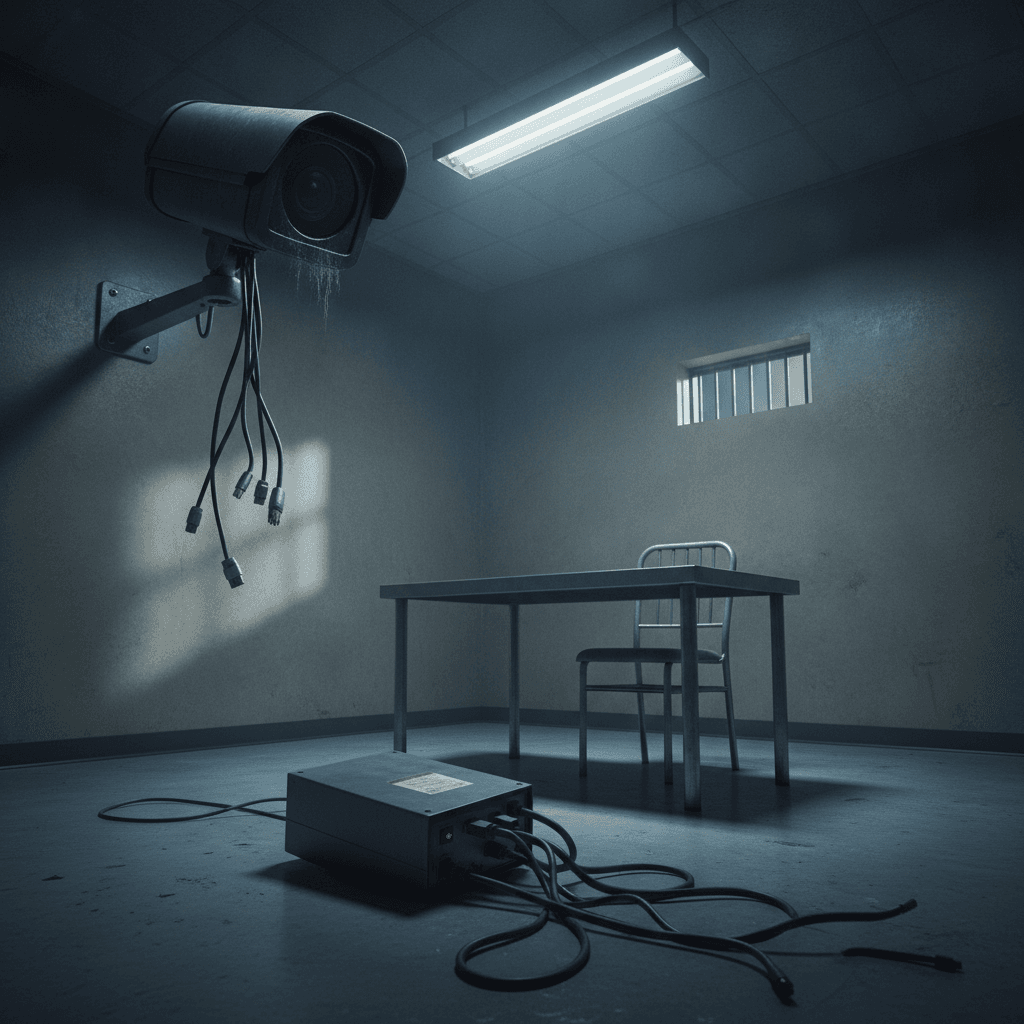
The Karnataka High Court has issued a significant directive requiring a comprehensive statewide audit of closed-circuit television systems at police stations across the state, following judicial criticism of prolonged infrastructure failures that have compromised the evidentiary foundation of custodial procedures. On Thursday, 13 August 2026, Justice Suraj Govindaraj pulled up police authorities over their explanation that an uninterruptible power supply (UPS) at a police station had remained non-functional for nearly eighteen months, directly affecting CCTV camera operations during power outages. The judge described the explanation as "untenable" and ordered the audit as a corrective measure to ensure compliance with constitutional safeguards and procedural law.
The order represents a critical intervention in the intersection of criminal procedure in India and the practical administration of custodial justice. CCTV surveillance in police stations serves as a foundational safeguard against custodial excess, providing an objective, contemporaneous record of arrest, interrogation, and detention. Under the Code of Criminal Procedure (CrPC), the presence of such documentation is essential to the fairness of criminal trial procedure in India. When footage is unavailable due to equipment failure, the accused loses the primary mechanism through which allegations of coercion, torture, or procedural violation can be independently verified. This gap in the evidentiary record creates an asymmetry in the criminal case procedure in India, where the state's narrative becomes difficult to challenge without corroborating evidence.
The Evidentiary Consequence of CCTV System Failures
The implications of prolonged CCTV malfunction extend beyond administrative negligence. Under criminal procedure code India principles, the burden of establishing the legality and voluntariness of a confession or statement lies partially on the prosecution, particularly when custodial conditions are questioned. The absence of video documentation does not automatically render evidence inadmissible, but it significantly weakens the prosecution's ability to demonstrate that proper procedure for criminal trial in India was followed. Defence counsel can argue that the absence of footage itself suggests irregularity, or that the failure to maintain functioning CCTV systems indicates systemic indifference to procedural safeguards.
The Karnataka High Court's intervention acknowledges that the criminal case court procedure in India depends on reliable infrastructure to ensure transparency. When uninterruptible power supplies fail for eighteen months without repair, it suggests either gross administrative oversight or deliberate disregard for the requirement that police stations maintain continuous surveillance. Justice Govindaraj's description of this explanation as "untenable" reflects judicial recognition that such failures cannot be tolerated in a system committed to the rule of law and due process.
For practitioners engaged in criminal trial procedure flowchart India work, the implications are immediate and practical. When a defence counsel is instructed in a case involving custodial interrogation or detention, the first procedural step in criminal cases in India should include a specific application for preservation and production of CCTV footage from the relevant police station. This application should be made at the earliest stage of the proceedings—ideally during the first remand hearing or bail application—to create a contemporaneous record of the request and to preserve the footage before it can be lost to routine overwriting or deletion.
Mandatory Documentation and Preservation Protocols
Where a police station claims that CCTV footage is unavailable due to equipment malfunction, defence counsel must place this fact squarely on record through an application under the Code of Criminal Procedure India. The absence of footage should be explicitly noted in the case file, and the police should be directed to provide an affidavit explaining the reason for the unavailability. This creates a documentary trail that can be summoned in individual cases and serves as evidence of the state's failure to maintain the infrastructure required by law.
The statewide audit ordered by Justice Govindaraj will generate an official record of CCTV system status across all police stations in Karnataka. This audit report can be relied upon by defence counsel in subsequent cases to establish that a particular police station had known, documented deficiencies in its surveillance infrastructure. If a station's UPS was non-functional for eighteen months, and this fact appears in the audit report, defence counsel can argue that any custodial statement recorded during that period is inherently suspect because the objective means of verification was absent.
The criminal procedure act india does not explicitly mandate CCTV installation in police stations, but the Supreme Court has recognized through various judgements that such surveillance is essential to protect fundamental rights under Articles 20 and 21 of the Constitution. The right against self-incrimination and the right to life and personal liberty are compromised when custodial proceedings occur outside the view of objective recording devices. The Karnataka High Court's order aligns with this constitutional framework and reinforces that the criminal court procedure in india must be supported by reliable, functioning infrastructure.
Implications for Pre-Trial Procedure and Bail Applications
The practical impact of this order will be felt most acutely in pre-trial procedure in criminal cases in India. When a person is arrested and produced before a magistrate for remand, the absence of CCTV footage from the police station becomes a live issue. If the footage cannot be produced because the UPS was non-functional, the magistrate is entitled to draw an adverse inference about the reliability of the custodial narrative. This does not automatically result in bail, but it shifts the burden on the prosecution to provide additional corroborating evidence of the legality and propriety of the detention.
Defence counsel should be alert to the fact that the statewide audit will create a contemporaneous record of which police stations had functioning CCTV systems and which did not. This information can be obtained through applications under the Right to Information Act, 2005, or through court-directed disclosure during the course of criminal case procedure steps in India. Once the audit is complete, the burden on police authorities to explain gaps in footage will increase, because they will no longer be able to claim that they were unaware of equipment failures.
The order also signals to police administrations across Karnataka that infrastructure failures affecting CCTV systems will be subject to judicial scrutiny. This creates an incentive for police stations to maintain their surveillance equipment in working order and to report failures promptly. The eighteen-month gap in the case before Justice Govindaraj suggests that no one was monitoring the UPS status or that repairs were not prioritized. The audit will likely establish baselines and timelines for equipment maintenance and repair, which can then be enforced through follow-up orders.
Long-Term Impact on Criminal Procedure Standards
Beyond the immediate case, the Karnataka High Court's order has implications for the broader understanding of criminal procedure code of India compliance. Police stations are not merely places of custody; they are sites where critical evidence is generated and where the first interaction between the state and the accused occurs. The quality of infrastructure at these locations directly affects the fairness of the criminal trial procedure in India. When equipment fails and is not repaired for eighteen months, it reflects a systemic failure that extends beyond individual negligence.
The audit will likely reveal similar failures at other police stations, which may prompt further judicial orders or legislative action to establish minimum standards for CCTV infrastructure. Defence counsel should monitor the audit report once it is published and use its findings to strengthen arguments in individual cases where CCTV footage is unavailable or incomplete.
Justice Govindaraj's intervention demonstrates that the High Court is willing to exercise supervisory jurisdiction to ensure that the criminal case court procedure in India is supported by adequate safeguards and infrastructure. This sets an important precedent for other states and for lower courts, signalling that infrastructure failures affecting custodial transparency will not be tolerated. For practitioners, this order reinforces the importance of routinely seeking CCTV footage and placing its absence on record, as these steps now occur within a judicial framework that recognizes such documentation as essential to fair criminal procedure in India.
Comments
Sign in to read the discussion and share your thoughts.