The 2003 Tamil Nadu Editorial Dispute
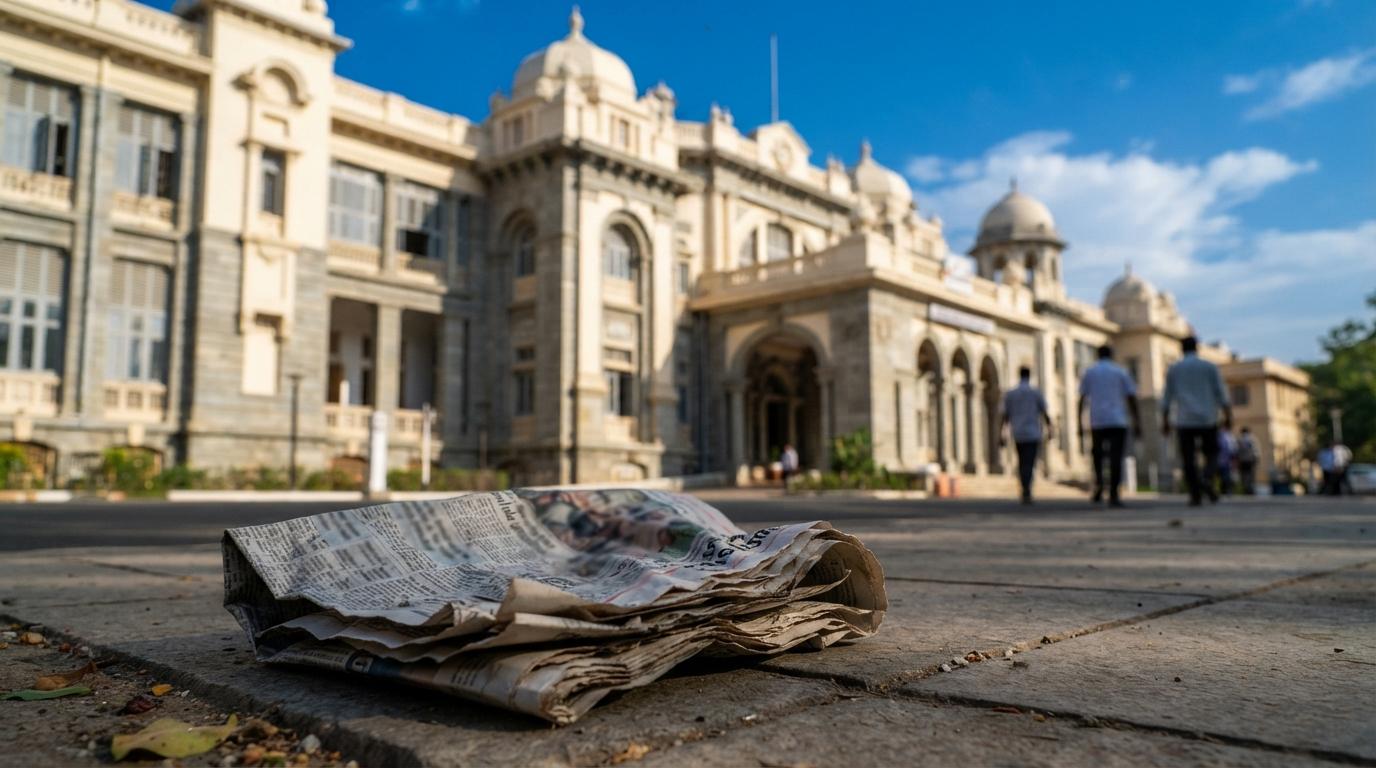
The dispute began when Reports indicate an editorial perceived as criticism of the Chief Minister of Tamil Nadu. The Assembly took exception to the publication, and the matter escalated into a constitutional question about whether members of the legislature could use their privileged status to silence press criticism. Rather than resolving it at the two-judge level, the Supreme Court recognized that the case involved questions of such constitutional importance that only a larger bench could appropriately address them.
The two-decade delay in bringing the matter before a full Constitution Bench reflects the complexity of the issues involved. During this period, journalists, a comedian, and other parties have sought to intervene in the case, indicating the broad public interest in how the court resolves this conflict.
Article 194 and Parliamentary Privilege
Article 194 of the Constitution grants members of state legislatures immunity from civil and criminal liability for statements made in the discharge of their duties within the legislature. The provision reads that no member of a state legislature shall be liable to any proceedings in any court in respect of anything said or any vote given by him in the legislature or any committee thereof, or by reason of any act performed by him in his official capacity.
This privilege serves an important function: it allows legislators to speak freely on matters of public concern without fear of legal harassment. The framers of the Constitution recognized that if legislators could be sued or prosecuted for their parliamentary utterances, they might self-censor and fail to represent their constituents effectively. The question now before the bench is whether this privilege extends so far as to prevent citizens from criticizing or challenging legislative action through the press or other means.
Fundamental Rights at Stake
Article 19(1)(a) guarantees to all citizens the right to freedom of speech and expression. This right is not absolute—it can be restricted on specified grounds such as national security, public order, and decency—but the restriction must be proportionate and justified. The freedom to speak, write, and publish is foundational to a democratic society, enabling citizens to participate in public discourse and hold power to account.
Article 21, which guarantees the right to life and personal liberty, has been interpreted expansively by the Supreme Court of India to include the right to dignity, the right to privacy, and the right to information. The question in this case is whether legislative privilege can be used to infringe these rights by suppressing legitimate criticism or preventing citizens from accessing information about legislative conduct.
The Constitutional Conflict
Both Article 194 and Articles 19 and 21 are constitutional provisions. Neither is subordinate to the other on its face. When two constitutional rights appear to conflict, the court must determine how they interact. Does legislative privilege trump fundamental rights, or are fundamental rights the ultimate expression of constitutional authority?
Previous judgments have not settled this question conclusively, which is why the Supreme Court referred the matter to a larger bench. The conflicting precedents suggest that different judges have weighed the balance differently. Some have emphasized the importance of parliamentary immunity to the functioning of legislatures. Others have stressed that fundamental rights cannot be suspended even in the name of institutional privilege.
Press Freedom and Legislative Accountability
The outcome of this case will have direct consequences for press freedom in India. If the court holds that Article 194 privileges can be used to prevent publication of criticism or investigation into legislative conduct, then journalists and newspapers will face a significant constraint on their ability to report on the activities of state assemblies. The 2003 dispute in Tamil Nadu involved an editorial—a form of expression protected under Article 19(1)(a)—and the question is whether such expression can be suppressed through the use of legislative privilege.
If the court holds that fundamental rights cannot be overridden by legislative privilege, it will establish that no constitutional provision, however important, can be used to silence citizens. This would strengthen the protection available to journalists, activists, and ordinary citizens who wish to criticize or scrutinize the conduct of elected representatives.
Constitutional Supremacy and Conflicting Rights
In resolving this conflict, the bench will likely draw on the doctrine of constitutional supremacy—the principle that the Constitution is the supreme law of the land and all other laws and provisions must be interpreted consistently with it. However, this doctrine does not automatically resolve conflicts between two constitutional provisions. The court must determine the proper scope and application of each right.
The constitutional law of India has developed a framework for resolving such conflicts. Courts have held that when fundamental rights are restricted, the restriction must be justified under the relevant clause of Article 19 or must be a reasonable restriction. Article 194 does not explicitly fall within the restrictions on Article 19, which raises the question of whether legislative privilege can operate as an implied limitation on fundamental rights.
Democracy and Accountability
This case touches on fundamental questions about the nature of democracy and accountability. In a democratic system, elected representatives are accountable to the people. One mechanism of accountability is the ability of citizens and the press to scrutinize, criticize, and investigate the conduct of elected officials. If legislative privilege can be used to suppress such scrutiny, it may insulate legislators from democratic accountability in ways that undermine the democratic process itself.
The court must also recognize that legislators need protection from frivolous or malicious prosecution that could deter them from performing their duties. The balance between these competing concerns is delicate, and the seven-judge bench will need to articulate principles that protect both legislative independence and democratic accountability.
Hearings Begin October 6, 2026
The parties, including The Hindu newspaper, the Speaker of the Tamil Nadu Legislative Assembly, and the intervening journalists and comedian, will present their positions beginning October 6, 2026. The bench will consider the constitutional text, previous judgments, comparative constitutional law, and the practical implications of different possible rulings.
The decision will shape how state assemblies can use their powers, how journalists can report on legislative conduct, and how citizens can exercise their constitutional rights to speak and seek information. The case demonstrates that even after more than two decades, constitutional questions of this magnitude require the most careful consideration.