
On 6 November 2026 the bench of Chief Justice Surya Kant, Justice Joymalya Bagchi and Justice V. Mohana took up In Re: Curbing Air Pollution in the National Capital Region, SMW(C) No. 11/2026, and directed Delhi, Haryana, Uttar Pradesh, Rajasthan, the Municipal Corporation of Delhi and Delhi Police (Traffic) to file reports within two weeks on steps taken and proposals on vehicles, crop residue and construction.
"We hope all of you are enjoying Delhi weather," the Chief Justice said at the start. The bench recorded that the air quality index was touching 400. It called the cycle of temporary winter curbs "old, tried and failed measures" and said statements and suggestions continued while severe levels persisted.
Those authorities must state what action has been taken, reply to the suggestions of the Commission for Air Quality Management and the amici curiae, and set out further measures they propose on their own. The amicus curiae had told the bench that compliance with its earlier orders of 21 January 2026 and 23 February 2026 had not been properly reported.
For vehicular pollution the order sought enforcement details for commercial and private vehicles, including those entering from neighbouring States. The bench asked for the method to identify non-conforming vehicles, including PUC checks, the bar on overage, end-of-life and other non-compliant vehicles, figures for vehicles inspected, challaned and denied entry, inter-State coordination, and short-term and long-term measures with a time-bound roadmap for stronger enforcement.
Vehicles at centre, stubble at 14 percent
Additional Solicitor General Aishwarya Bhati, appearing for the Union and the Commission, cited the Decision Support System estimate that stubble burning contributed about 14 percent of Delhi's load on 5 November. Transport was the largest local source, she said. Farm fires added to pollution already generated inside the city.
Senior advocate Aparajita Singh, as amicus, said crop-residue machines were unviable for small plots and fuel costs were high. Water-conservation rules in Punjab had delayed paddy transplanting and pushed harvest and burning close to wheat sowing, she said, leaving farmers little time.
The Chief Justice suggested supply of machines to gram panchayats for shared use on the ground that "individuals cannot afford" them. He also suggested purchase of stubble at a notified rate announced well in advance, with the Food Corporation of India and other agencies buying and storing residue for commercial use. The Additional Solicitor General agreed to place those suggestions before the Agriculture Ministry.
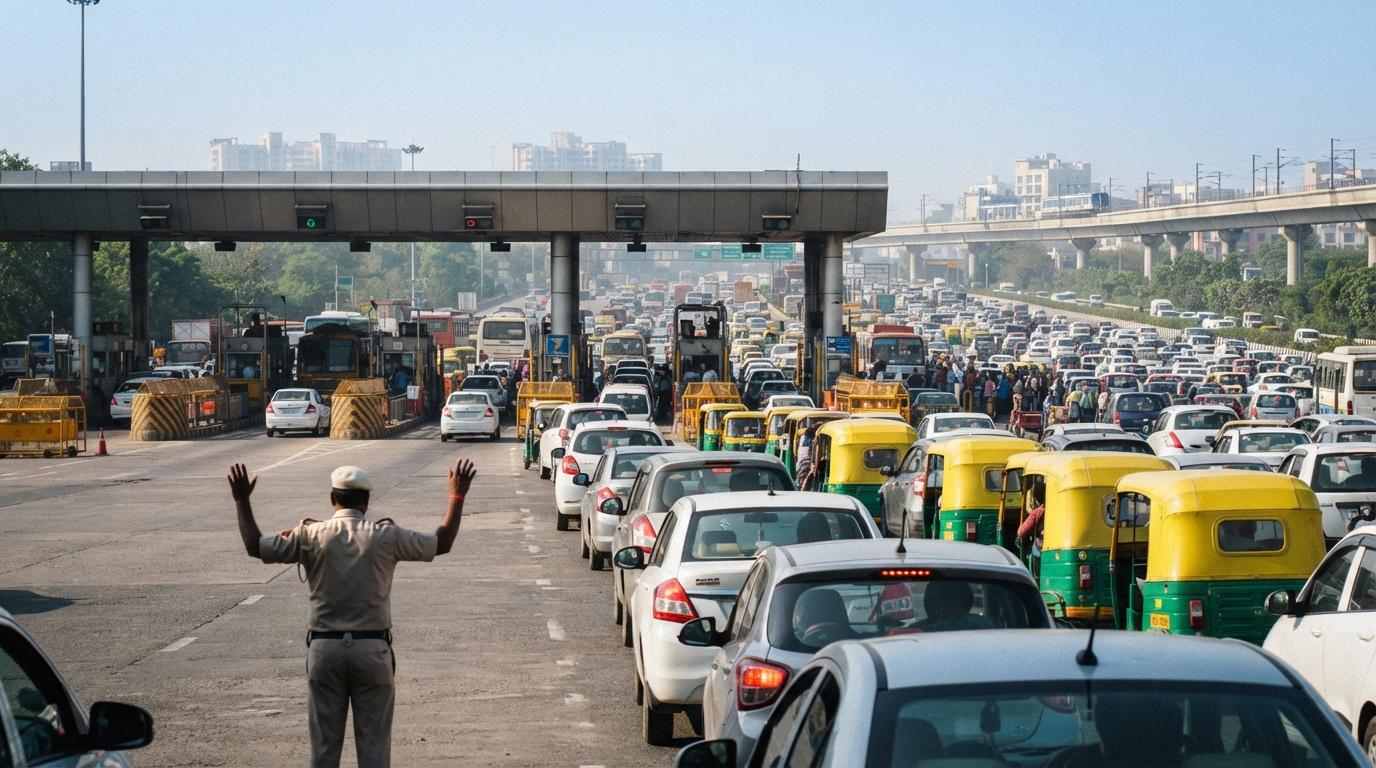
Traffic from Ghaziabad, Greater Noida, Gurugram and Faridabad drew specific attention. "Even if a vehicle enters Delhi for just two hours and then leaves, those two hours are enough to cause damage," the Chief Justice said. The amicus said idling at border toll plazas remained a problem and earlier directions to the National Highways Authority of India and the municipal body had not been fully carried out.
Nine major toll plazas handling about 90 percent of traffic had installed multi-lane free-flow tolling which was under testing, the Centre said. The bench asked the highways authority and the municipal body to act together to stop idling at entry points. It also raised the shift of NCR autorickshaws to CNG or electric by 1 January 2027.
A Commission report placed earlier this year had assessed vehicular emissions as the single largest source in Delhi-NCR at 23 percent in winter and 19 percent in summer. A joint note from the amicus and the Additional Solicitor General recorded a substantial fall in stubble burning across Delhi, Haryana, Uttar Pradesh and Rajasthan between 21 October and 3 November alongside a sharp increase in issues linked to vehicles.
"While this development is certainly laudable, the same data also brings to the fore a converse and equally pressing concern, namely, the sharp increase in issues attributable to vehicular emissions," the bench recorded. It added: "There can be little doubt that the issue warrants urgent and immediate intervention."
On science and schools the bench said it would go by the Commission and the Graded Response Action Plan unless peer-reviewed research showed otherwise. A reported remark by a doctor on children's lungs was treated as anecdotal, and Justice Bagchi said the bench would not second-guess the authority's classification. The amicus asked for primary and secondary pupils to be treated alike, but the bench retained hybrid classes for primary pupils at Stage III and for secondary pupils at Stage IV.
The amicus said the capital was hovering around Stage III levels, while the Chief Justice noted recent rain had given some relief and the Commission invoked Stage 3 the same day. For Diwali the bench favoured awareness over strict orders and suggested pollution awareness as part of celebrations through local councillors and mohalla committees, with the cracker window limited to 7 and 8 November.
The present proceedings follow decades of hearing on Delhi air pollution in the M.C. Mehta litigation, W.P.(C) No. 13029/1985. On 12 March 2026 the Court reshaped that case into five separate suo motu petitions without closing it, with SMW(C) 11/2026 as the lead on regulatory and policy framework, SMW(C) 12/2026 on vehicular emissions, SMW(C) 13/2026 on green cover, SMW(C) 14/2026 on construction, power plants and industries, and SMW(C) 15/2026 on solid waste, crop residue and firecrackers. Ms. Uttara Babbar and Ms. Shibani Ghose are also assisting with Ms. Singh as amici, and the lead matter will be listed with each connected case after short amicus notes filed at least two days before each date.
Hearings will follow on SMW(C) 12/2026 on vehicular emissions on 23 November 2026, SMW(C) 15/2026 on solid waste, crop residue and firecrackers on 25 November, SMW(C) 14/2026 on construction, power plants and industries on 26 November, and SMW(C) 13/2026 on green cover on 30 November, with the two-week deadline for the States falling around 20 November just before the first hearing.
Comments
Sign in to read the discussion and share your thoughts.
Latest from LawWorld
News
View all- Supreme Court Bars Customs Refund Without Challenge to Self-Assessment15 Nov 2026
- Karnataka High Court Restores GST Appeal Dismissed for 226-Day Delay15 Nov 2026
- Karnataka High Court Holds Adulterer Is Proper But Not Necessary Party in Divorce Plea15 Nov 2026
- Karnataka High Court Quashes SC/ST Act Complaint Against Bharat Forge Chairman Over 11-Year Delay15 Nov 2026
- Karnataka High Court Directs Review of Mental Health Policies for Armed Personnel While Quashing Suicide-Attempt Case15 Nov 2026
Articles
View all- Article 22(2) Clock Starts at Curtailment of Liberty, Not Formal Arrest: Supreme Court in NDPS Bail Case15 Nov 2026
- Supreme Court Upholds Bihar Special Intensive Revision of Electoral Rolls14 Nov 2026
- Seven-Judge Constitution Bench Holds Decades-Old State Sales Tax Surcharge Reference Academic After GST6 Nov 2026