
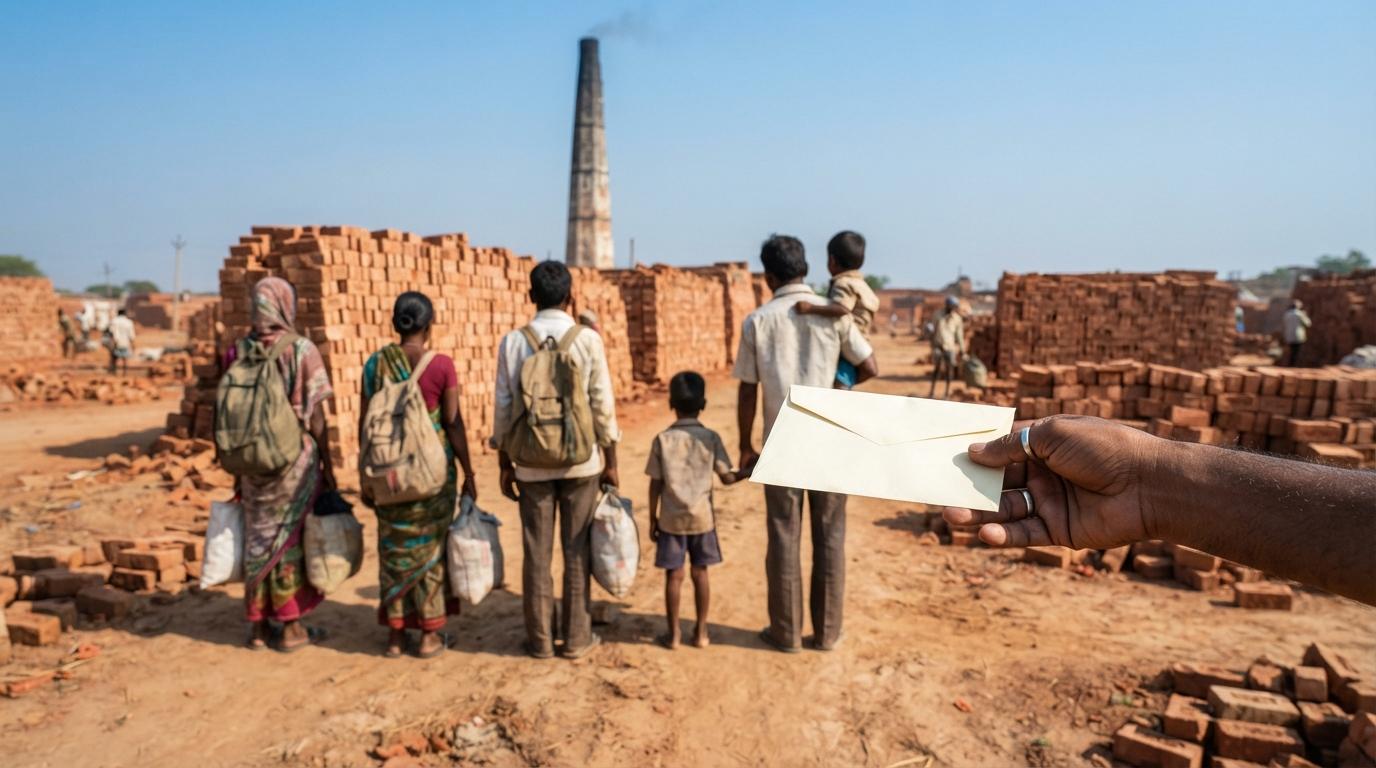
The Supreme Court of India, in its November 2 judgment on bonded labour, directed authorities to issue a uniform release certificate within 24 hours of rescue and to provide financial assistance within seven days for rehabilitation.
The order was grounded, as recorded in the judgment, in Article 23 of the Constitution of India, which the Court cited as prohibiting human trafficking and forced labour, including begar.
The Court also relied, on its own reading, on Article 21, interpreting the protection of life and personal liberty as encompassing the right to live with dignity for persons freed from bondage.
The directions enforce the bonded labour system abolition act of 1976, a statute the order linked to abolition of bonded labour and extinction of debts owed by freed workers.
The Court described the timelines as a response, in its own terms, to the implementation gap in securing timely documentation and support after liberation.
Workers report waits for funds
Workers freed in Telangana, Uttar Pradesh, Chhattisgarh and Maharashtra, in accounts placed before the Court, said rehabilitation money under the Central Sector Scheme had not reached them despite rescue.
Officials, police, lawyers and the National Campaign Committee for Eradication of Bonded Labour traced and rescued more than 200 persons in recent years whose accounts form part of the material before the Court on compliance.
One woman rescued from domestic work in Delhi stated, in her account, that no first information report had been registered more than a month after her rescue.
Some workers sent to a brick kiln in Telangana alleged, in their accounts, that their thumbprints were taken on documents without any explanation offered to them beforehand.
The order places the duty for documentation and payment on authorities handling rescue and rehabilitation, making delay a breach of the Court's direction rather than an administrative lapse.
Comments
Sign in to read the discussion and share your thoughts.
Latest from LawWorld
News
View all- Supreme Court Refers SARFAESI Priority Dispute With Depositor Law To Larger Bench27 Nov 2026
- Supreme Court Rules Mere Objections In Protest Petition Are Not A Complaint27 Nov 2026
- Supreme Court Quashes Bihar Remission To Anand Mohan In IAS Officer Murder Case27 Nov 2026
- Supreme Court Acquits Rape Accused For Lack Of Medical Evidence27 Nov 2026
- Supreme Court Mandates Separate Hexagonal Warnings For Fat, Sugar, Salt26 Nov 2026