
Supreme Court Bars Coercive Steps Against SASTRA
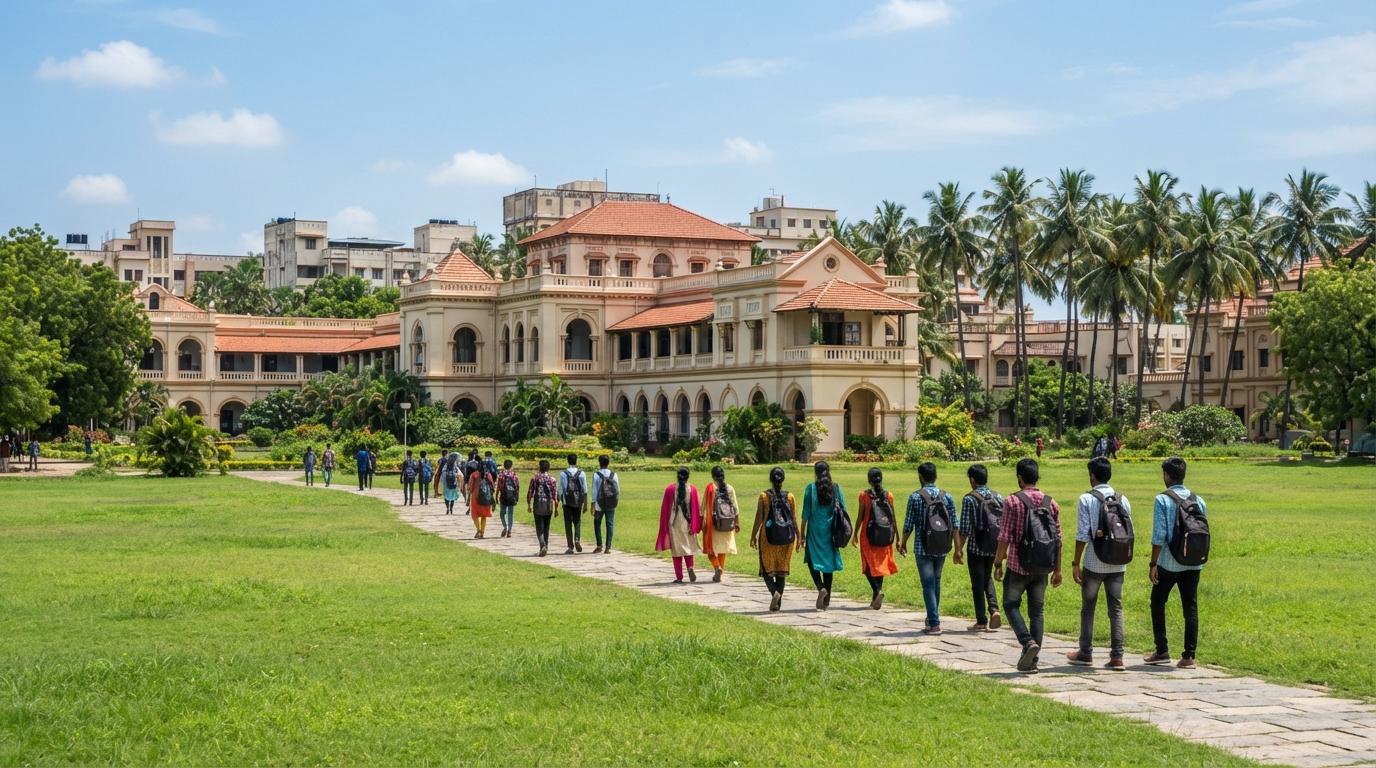
The Supreme Court on November 23, 2026 admitted the appeal filed by Shanmugha Arts Science Technology and Research Academy against a Madras High Court direction to the Tamil Nadu government to evict it from public land in Thanjavur.
Headed by Chief Justice Surya Kant, the Bench with Justices Joymalya Bagchi and V. Mohana made absolute its interim order staying any coercive action against the deemed university over 31.37 acres in its occupation for nearly 40 years.
It also issued rule nisi on the appeal, which requires the State to show cause why it wishes to contest the case instead of accepting substitute land offered by the institution.
The interim protection dates to January 15, 2026, when the Court had stayed eviction and allowed the institution to carry out its activities without hindrance.
At that hearing the university, represented by senior advocate Mukul Rohatgi, placed three options of alternative lands before the Court for consideration by the State in place of the occupied parcel already put to use.
The Bench described those options as “just and fair” and asked the State to consider the offer “sympathetically and take an appropriate decision by ensuring that no loss is caused to the public exchequer”.
It suggested that a high-powered committee of three senior officers of the State government give a personal hearing to the university to “explain all the attending circumstances and also to persuade the authorities to accept one of the three options”.
Swap Offer Fails, Court Seeks Reply
On August 10, 2026 the Court gave the State, represented by senior advocate Jaideep Gupta and Additional Advocate General Haripriya Padmanabhan, a “free hand in determining the actual market value of land” in dispute, with payment to be made by the university.
The August order recorded the university’s offer to pay the sale price of any land the State needed for a public purpose, in this instance establishment of a prison for which the disputed property was wanted.
It then asked the State to take a “reasonably fair decision and apprise this court”.
At the next hearing on September 21, 2026 the State sought more time to “consider the different options”.
The Bench observed at that hearing that the land was used by an educational institution serving a public purpose and asked why the State was so “obstinate” about eviction and demolition.
According to the State, the substitute parcels were inferior in value, accessibility and contiguity and acceptance could put a premium on encroachment.
The Chief Justice responded that the dispute involved an educational institution, saying: “If someone was running a resort there, or running a commercial complex, or having a shopping mall there, or having immoral or illegal activity there, we would have thrown them out.”
On Monday the State leaned against settlement on alternative sites, according to the order.
The State said it would file a response to the rule nisi, and the Bench listed the plea for final hearing with the stay on coercive measures to continue in the meantime.
Comments
Sign in to read the discussion and share your thoughts.
Latest from LawWorld
News
View all- Supreme Court Refers SARFAESI Priority Dispute With Depositor Law To Larger Bench27 Nov 2026
- Supreme Court Rules Mere Objections In Protest Petition Are Not A Complaint27 Nov 2026
- Supreme Court Quashes Bihar Remission To Anand Mohan In IAS Officer Murder Case27 Nov 2026
- Supreme Court Acquits Rape Accused For Lack Of Medical Evidence27 Nov 2026
- Supreme Court Mandates Separate Hexagonal Warnings For Fat, Sugar, Salt26 Nov 2026