
The Supreme Court has held in Government of NCT of Delhi & Anr. Vs BSK Realtors LLP & Anr. that res judicata between co-respondents operates only on proof of an actual conflict of interest. No such bar operated between the Government of NCT of Delhi and the Delhi Development Authority.
At stake was a batch of disputes under Section 24(2) of the Right to Fair Compensation and Transparency in Land Acquisition, Rehabilitation and Resettlement Act, 2013. The Delhi High Court had declared several acquisition proceedings to have lapsed by relying on Pune Municipal Corporation v. Harakchand Misirimal Solanki. That reading treated failure either to take possession or to pay compensation as enough for deemed lapse.
Fresh Pleas After Manoharlal Ruling
In Indore Development Authority v. Manoharlal, the Constitution Bench overruled the Pune Municipal Corporation interpretation. It said deemed lapse under the land acquisition act requires both failure to take possession and non-payment of compensation for the prescribed period. After that change in law, the DDA, the GNCTD, the Land Acquisition Collector and the Land and Building Department filed a second round of challenges against the earlier lapse declarations in acquisition of land cases. Landowners resisted on res judicata, the doctrine of merger, judicial finality and alleged suppression of earlier litigation.
The question was whether dismissal of an earlier appeal by one acquiring authority stopped another authority, earlier impleaded as co-respondent, from filing a later challenge. The Court said res judicata between co-defendants or co-respondents needs an actual conflict of interest, an issue necessary for deciding the original dispute and a final decision on that issue. It found the GNCTD and the DDA had no conflicting interests to be decided between themselves. The earlier proceedings created no such bar.
On the plea of suppression, the Court relied on S.J.S. Business Enterprises (P.) Ltd. v. State of Bihar and Arunima Baruah v. Union of India. It said non-disclosure must relate to facts material to the merits before relief can be refused. On merger, it referred to the principles in Kunhayammed v. State of Kerala. It called the disputes exceptional because conflicting judicial readings had left similarly placed landowners with different outcomes.
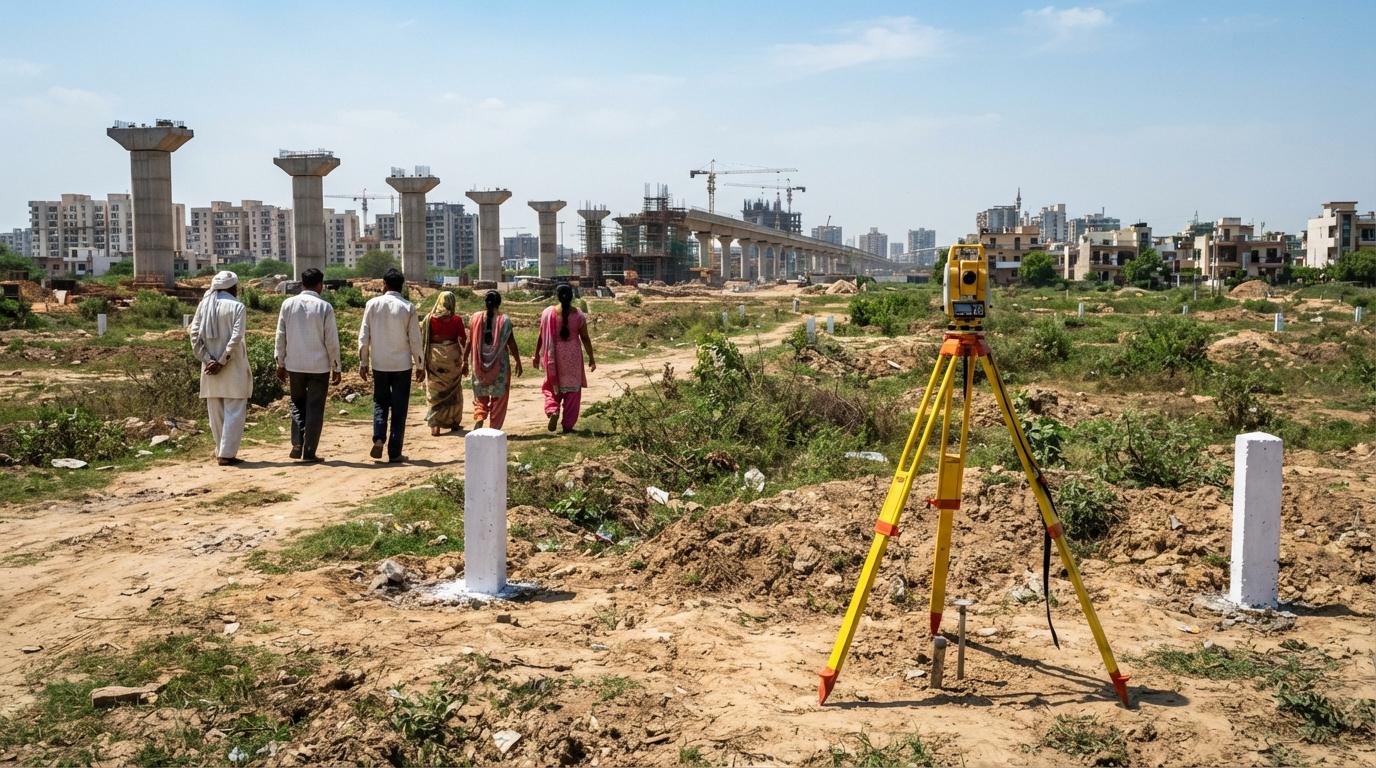
Mechanical use of procedural finality could hold up public projects, including metro corridors, hospitals, schools and roads, the Court said. It invoked Article 142 of the Constitution to balance judicial finality, private property interests and wider public interest, and dealt with different categories of appeals separately.
Comments
Sign in to read the discussion and share your thoughts.
Latest from LawWorld
News
View all- Supreme Court Bars Customs Refund Without Challenge to Self-Assessment15 Nov 2026
- Karnataka High Court Restores GST Appeal Dismissed for 226-Day Delay15 Nov 2026
- Karnataka High Court Holds Adulterer Is Proper But Not Necessary Party in Divorce Plea15 Nov 2026
- Karnataka High Court Quashes SC/ST Act Complaint Against Bharat Forge Chairman Over 11-Year Delay15 Nov 2026
- Karnataka High Court Directs Review of Mental Health Policies for Armed Personnel While Quashing Suicide-Attempt Case15 Nov 2026
Articles
View all- Article 22(2) Clock Starts at Curtailment of Liberty, Not Formal Arrest: Supreme Court in NDPS Bail Case15 Nov 2026
- Supreme Court Upholds Bihar Special Intensive Revision of Electoral Rolls14 Nov 2026
- Seven-Judge Constitution Bench Holds Decades-Old State Sales Tax Surcharge Reference Academic After GST6 Nov 2026