
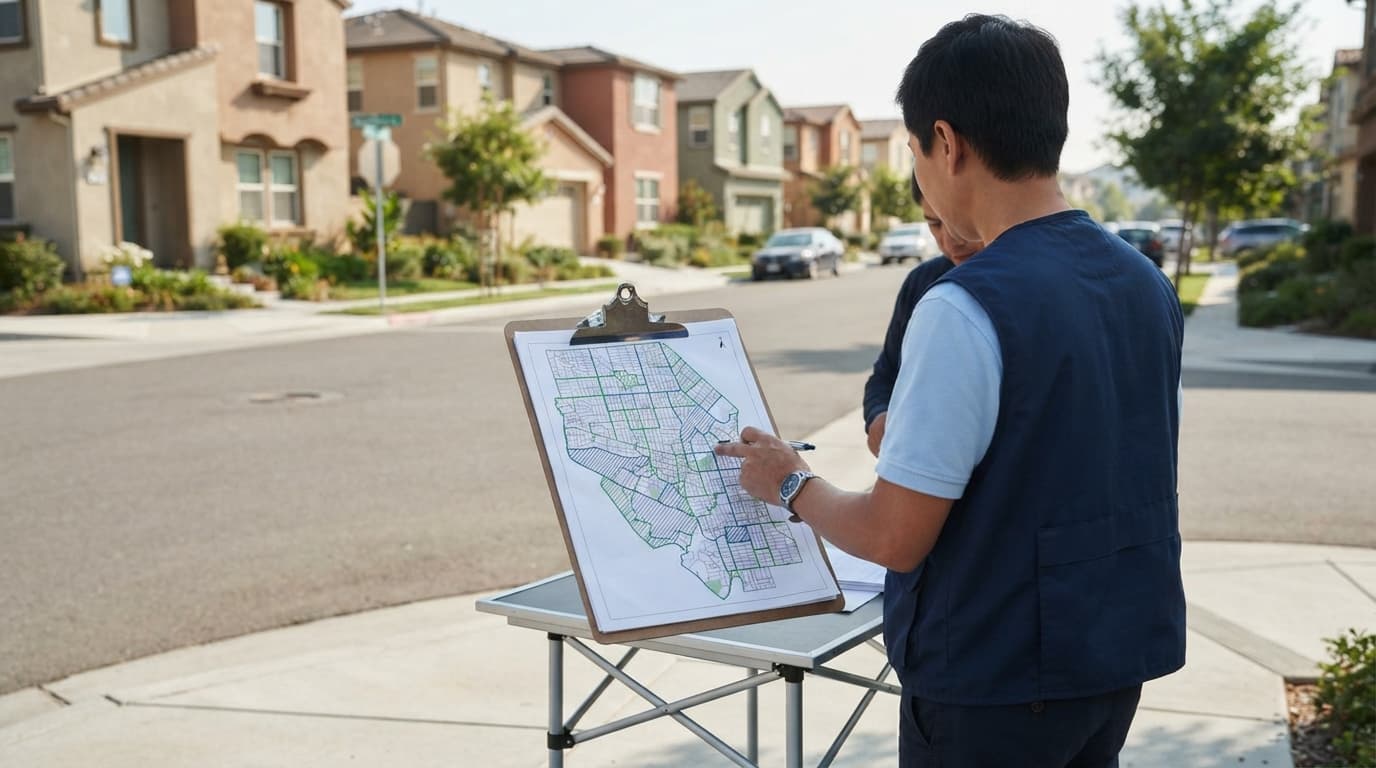
The Supreme Court of India agreed on October 5, 2026, to hear a petition that challenges the power of State governments to undertake fresh delimitation of wards and alter their boundaries while a Census exercise is in progress. A three-judge bench headed by Chief Justice of India Surya Kant scheduled the hearing for October 9, signalling the court's intention to resolve a constitutional question that has divided different High Courts across the country.
The petition, filed by former Mayor Paka Suresh, brings into focus a critical tension between administrative authority and statutory restrictions during the Census period. At the heart of the dispute lies the interpretation of Rule 8(iv) of the 1990 Rules under the Census Act, which is designed to freeze administrative unit boundaries during the Census. Different High Courts have reached conflicting conclusions about what this freezing mechanism actually means and how strictly it binds State governments.
The Core Question Before the Bench
The central issue before the Supreme High Court of India will be whether States retain the discretion to redraw ward boundaries while Census operations are underway, or whether the statutory framework imposes an absolute prohibition on such action. This distinction carries enormous practical implications. If States can proceed with delimitation exercises during Census, the stability of electoral boundaries becomes uncertain, and voters may find themselves in newly redrawn constituencies before Census data is even compiled. Conversely, if the freezing rule is absolute, States must postpone all boundary changes until the Census concludes.
Rule 8(iv) of the 1990 Rules was enacted as part of the Census Act's regulatory framework to ensure that administrative divisions remain stable during the decennial Census exercise. The rule's purpose is to maintain consistency in geographical units so that Census data can be accurately mapped and compared across time. When boundaries shift mid-Census, the statistical integrity of the data becomes compromised, and administrative records may not align with Census findings.
Yet the rule's language has proven susceptible to different readings. Some High Courts have interpreted it as a strict prohibition that prevents any boundary alteration during the Census period. Others have suggested that the rule may not prevent States from initiating delimitation proceedings, provided the actual implementation of new boundaries occurs after the Census concludes. This ambiguity has created legal uncertainty for State governments and local bodies attempting to undertake delimitation exercises.
Why the Conflict Matters
The disagreement between High Courts reflects a deeper tension in Indian federalism. States have constitutional authority over local governance and the demarcation of local bodies. The Census, however, is a Union subject, and the rules governing it are framed under a central statute. When a State's exercise of its local governance powers collides with a central Census rule, the question of which authority prevails becomes acute.
Former Mayor Paka Suresh's petition appears to arise from a concrete situation where a State government proceeded with ward delimitation while Census operations were active. If the State acted lawfully, then the freezing rule may not be as restrictive as some interpret it. If the State exceeded its authority, then the case becomes a test of how strictly the rule should be enforced.
The implications extend beyond the immediate parties. Scores of municipalities and local bodies across India may be contemplating delimitation exercises. Some may have already begun the process. A Supreme Court of India display board ruling will provide definitive guidance on whether such exercises must be halted during Census periods or can proceed in parallel with Census data collection. This clarity is essential for local governance planning and for ensuring that delimitation processes do not inadvertently compromise Census operations.
The Bench and the Hearing
Chief Justice Surya Kant's three-judge bench indicates that the Supreme Court 0f India takes the matter seriously enough to assign judicial resources to a substantive hearing rather than a preliminary consideration. The October 9 date gives the parties limited time to file additional submissions, though the court may have already received the core petition and supporting documents.
The bench will need to examine not only the text of Rule 8(iv) but also the legislative intent behind the Census Act and the constitutional distribution of powers between the Union and States. It may also consider whether there is a middle path—for instance, whether States can initiate delimitation proceedings during Census but must defer implementation until after Census completion, thus respecting both the Census's integrity and the State's autonomy over local boundaries.
The court may also examine whether the rule applies uniformly to all Census periods or whether circumstances in a particular Census year might justify an exception. If a State's population has shifted dramatically, or if existing ward boundaries have become grossly unequal in population, the court might consider whether rigid adherence to the freezing rule serves the rule's underlying purpose or frustrates it.
Broader Constitutional Questions
Beyond the specific question of ward delimitation, this case touches on the constitutional principle of reasonable restrictions on fundamental rights and powers. The right to effective local governance depends partly on electoral boundaries that reflect current population distribution. Conversely, the integrity of the Census—a constitutional exercise under Article 246—requires stable administrative units during the Census period.
The Supreme Court's decision will likely influence how other federal questions are resolved when central and State powers overlap. If the court reads Rule 8(iv) narrowly, it signals that State autonomy in local governance matters carries significant weight even when central statutes appear to restrict it. If read broadly, it affirms that Census operations take precedence over routine State administrative functions.
The ruling may also prompt Parliament to consider whether the 1990 Rules require amendment to provide clearer language, or whether the current framework is sufficient if interpreted correctly. Legislative drafters will be watching to see whether the court identifies genuine ambiguity in the rule or concludes that the language is clear but has been misapplied.
What Comes Next
The October 9 hearing will allow both the petitioner and the respondent State (or States, if multiple States are parties) to present oral arguments. The bench may seek written submissions on specific points of law or ask for factual details about the circumstances that prompted the petition. Depending on the complexity of the issues and the volume of submissions, the court may reserve judgment immediately after hearing or schedule further hearings.
Until the Supreme Court of India delivers its decision, the legal position remains unsettled. State governments and local bodies will need to exercise caution in initiating new delimitation exercises during active Census periods. The court's judgment will either provide a green light for such exercises or require them to be postponed until Census operations conclude. Either way, the decision will bring clarity to a constitutional question that has generated confusion across the country's federal structure.
Comments
Sign in to read the discussion and share your thoughts.
Latest from LawWorld
News
View all- Karnataka High Court Permits Continuation of Corruption Case Against Siddhartha Vihar Trust Despite Lokayukta Closure12 Oct 2026
- Karnataka High Court Quashes Land Acquisition for Housing Project in Bannerghatta National Park, Prioritizes Wildlife Protection12 Oct 2026
- Karnataka High Court Imposes ₹1 Lakh Cost for Inappropriate Plea Against ED Officer Marked to CJI12 Oct 2026
- Karnataka High Court Rules Daughter-in-Law Not Automatically Liable for Mother-in-Law Maintenance After Son's Death12 Oct 2026
- Karnataka High Court Orders Psychological Assessment of Parents in Child Custody Battle12 Oct 2026
Articles
View all- Supreme Court Refers DPDP Act Constitutional Challenge to Five-Judge Bench: RTI vs. Privacy Rights at Stake12 Oct 2026
- Supreme Court Disposes PIL on Doxxing and Deepfakes; Directs Union Ministries to Implement Remedial Measures8 Oct 2026
- Supreme Court Issues Notice on Constitutional Challenge to GST Input Tax Credit Denial Provision7 Oct 2026
Blogs
View all- Supreme Court Orders Priority Hearing for Pension Cases: A Decade-Long Wait Deemed 'Grave Injustice'12 Oct 2026
- Supreme Court Clarifies Gratuity Calculation: Monthly Wages Divided by 26 Working Days, Not 3011 Oct 2026
- Supreme Court Affirms Damages Recovery for Delayed Provident Fund Contributions Without Time Limit10 Oct 2026