
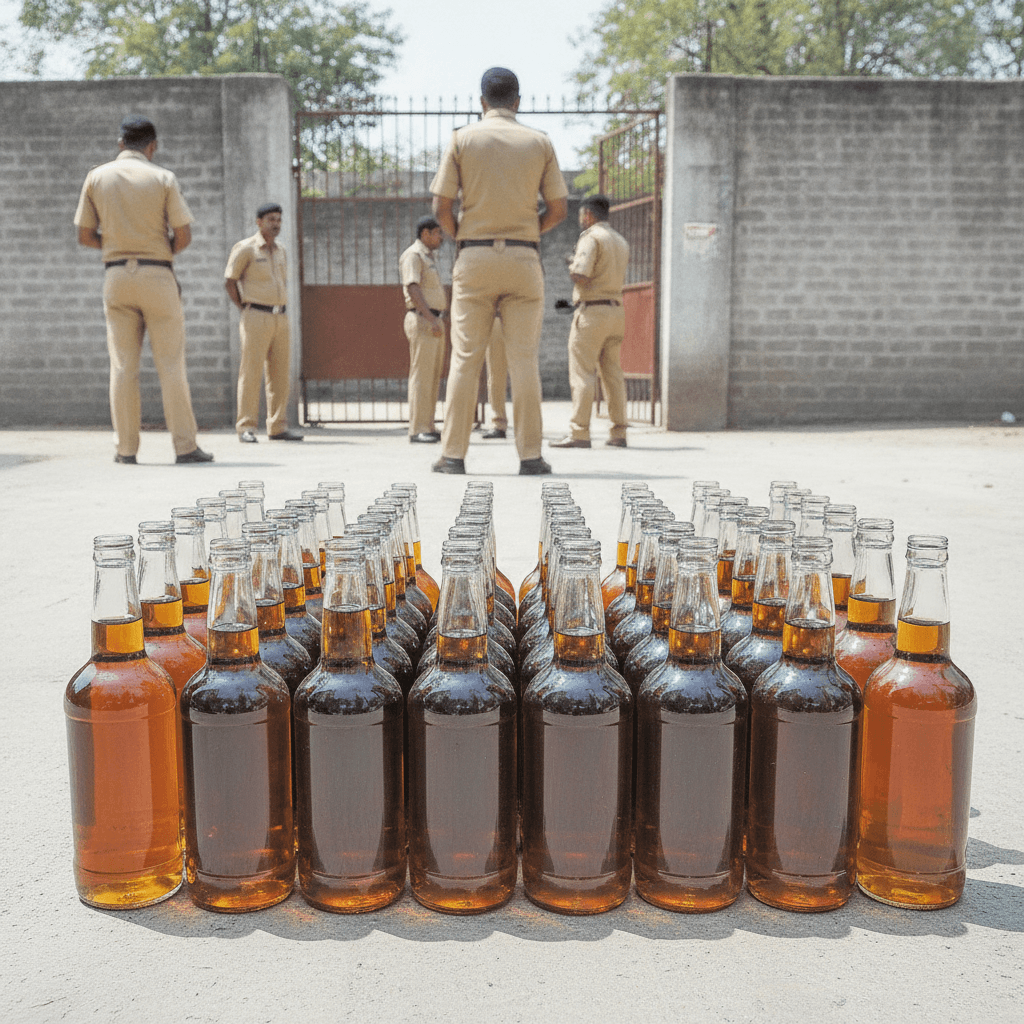
Supreme Court Strikes Down Maharashtra Methanol Rules; Calls for Multi-Department Hooch Prevention Strategy
The Supreme Court of India on September 18, 2026 struck down key provisions of the Maharashtra Poisons Rules that required methanol to be mixed with specified colourants and bitterants before sale to non-drug manufacturers. A bench of Justices J B Pardiwala and K Vinod Chandran found the restrictions violated Articles 14 and 19(1)(g) of the Constitution, while simultaneously urging states and Union Territories to adopt a coordinated, multi-department approach to prevent hooch tragedies and mass poisoning incidents caused by spurious liquor consumption.
The ruling emerged from writ petitions filed by M/s Balaji Formalin Pvt Ltd and others challenging the validity of the amended rules. While invalidating the specific methanol restrictions, the bench did not dismiss the underlying public health concern. Instead, the court suggested that states and UTs pursue comprehensive measures to curb the illegal manufacture, transportation and sale of spurious liquor through coordinated action across multiple government departments.
Constitutional Violation in Methanol Restrictions
The Maharashtra Poisons Rules had imposed mandatory mixing of methanol with colourants and bitterants as a preventive measure against hooch tragedies. The government's intent was clear: making methanol visibly different and unpalatable would deter its illegal diversion into bootleg liquor production. However, the bench held that these restrictions, as framed, violated fundamental rights guaranteed under the Constitution.
Article 14 guarantees equality before law and equal protection of the laws. Article 19(1)(g) protects the right to practice any profession, occupation or trade. The court found that the mandatory mixing requirement imposed unreasonable restrictions on manufacturers and traders of methanol for legitimate industrial and pharmaceutical purposes, without sufficient nexus to the stated objective of preventing hooch tragedies.
The bench's reasoning reflected a familiar constitutional principle: even well-intentioned regulations must be proportionate to their aim and must not burden fundamental rights more than necessary. A blanket requirement affecting all methanol sales, regardless of the purchaser's intended use or risk profile, overreached the state's legitimate regulatory power.
Shifting from Absolute Bans to Coordinated Action
The judgment did not leave states and UTs without guidance. The court acknowledged that absolute bans on methanol or similar substances risk driving the trade underground, expanding the very black market that produces spurious liquor. Instead, the bench called for a shift toward coordinated, multi-department prevention strategies.
Such an approach would involve cooperation between excise departments, police, revenue authorities, and health services. The court suggested that states and UTs should focus on tracking legitimate methanol sales, monitoring suspicious purchases, conducting raids on illegal distilleries, and prosecuting offenders under existing penal and excise laws. This targeted enforcement, combined with public awareness campaigns, offers a more nuanced alternative to blanket restrictions that inadvertently push manufacturers and traders into non-compliance.
Countries and jurisdictions that have moved away from crude bans toward intelligence-led enforcement and supply-chain oversight have achieved better results in reducing spurious liquor deaths.
Hospital Preparedness and Disaster Management
Beyond regulatory reform, the bench identified a critical gap in India's response to hooch tragedies. When mass poisoning incidents occur, hospitals often lack the specialized medicines, equipment and trained personnel needed to treat methanol poisoning or other forms of acute alcohol toxicity. The court observed that "experiences of the past show that these hospitals are hardly equipped with the necessary specialized medicines or equipment required to handle such emergencies."
In response, the bench directed that a comprehensive disaster management system and policy should be put in place for handling such emergencies at the state and national level. This would include stockpiling specific antidotes such as fomepizole for methanol poisoning, training medical teams in acute toxicology, establishing rapid-response protocols, and ensuring coordination between district hospitals and tertiary care centres.
The recommendation addresses a blind spot in public health policy. Prevention of spurious liquor is important, but so is preparation for the inevitable incidents that slip through. A strong medical response system can dramatically reduce mortality and morbidity once a hooch tragedy occurs. Several states have already begun establishing poison control centres and toxicology units; the court's directive may accelerate such initiatives nationwide.
Regulatory Design and Precursor Chemicals
The judgment sends a signal to regulators across India that blanket prohibitions and mandatory mixing or adulteration schemes must clear a high constitutional bar. Restrictions on legitimate industrial or pharmaceutical use of a substance cannot rest solely on the risk that it might be diverted to illicit purposes. There must be evidence of a genuine, substantial nexus between the restriction and the harm it seeks to prevent, and the measure must be the least restrictive means available.
This principle will likely influence how states approach regulation of other precursor chemicals, solvents and industrial materials that have potential for misuse. Excise and health departments will need to work with legal advisors to ensure that any new restrictions are narrowly tailored, supported by evidence, and do not impose unreasonable burdens on legitimate businesses.
The court's emphasis on multi-department coordination and intelligence-led enforcement offers a template for more effective regulation. Rather than relying on a single crude measure, states can deploy a combination of supply-chain monitoring, targeted enforcement, public education and medical preparedness. This approach respects constitutional rights while still advancing public health objectives.
Next Steps for States and Union Territories
The judgment places responsibility on state governments and UTs to develop and implement coordinated strategies. This will require inter-agency task forces involving excise commissioners, police chiefs, health secretaries and district magistrates. Such bodies should map illegal distilleries, track methanol and other precursor chemical sales, share intelligence and coordinate enforcement operations.
States will also need to invest in hospital preparedness. This includes training programs for doctors and nurses in toxicology, procurement of antidotes and diagnostic equipment, and establishment of dedicated poison control units. The Centre may support these efforts through grants under the Centrally Sponsored Scheme for Health and through guidelines issued by the Ministry of Health and Family Welfare.
The Supreme Court of India has not imposed a specific timeline for implementation, but the urgency is clear. Hooch tragedies continue to occur; states like Punjab, Haryana and parts of Maharashtra have experienced recurring incidents. The bench's judgment provides both a constitutional roadmap and a practical framework for reducing these tragedies through smarter regulation and better preparedness rather than through restrictions that violate fundamental rights or push the problem further underground.
Comments
Sign in to read the discussion and share your thoughts.
Latest from LawWorld
News
View all- Karnataka High Court Permits Continuation of Corruption Case Against Siddhartha Vihar Trust Despite Lokayukta Closure12 Oct 2026
- Karnataka High Court Quashes Land Acquisition for Housing Project in Bannerghatta National Park, Prioritizes Wildlife Protection12 Oct 2026
- Karnataka High Court Imposes ₹1 Lakh Cost for Inappropriate Plea Against ED Officer Marked to CJI12 Oct 2026
- Karnataka High Court Rules Daughter-in-Law Not Automatically Liable for Mother-in-Law Maintenance After Son's Death12 Oct 2026
- Karnataka High Court Orders Psychological Assessment of Parents in Child Custody Battle12 Oct 2026
Articles
View all- Supreme Court Refers DPDP Act Constitutional Challenge to Five-Judge Bench: RTI vs. Privacy Rights at Stake12 Oct 2026
- Supreme Court Disposes PIL on Doxxing and Deepfakes; Directs Union Ministries to Implement Remedial Measures8 Oct 2026
- Supreme Court Issues Notice on Constitutional Challenge to GST Input Tax Credit Denial Provision7 Oct 2026
Blogs
View all- Supreme Court Orders Priority Hearing for Pension Cases: A Decade-Long Wait Deemed 'Grave Injustice'12 Oct 2026
- Supreme Court Clarifies Gratuity Calculation: Monthly Wages Divided by 26 Working Days, Not 3011 Oct 2026
- Supreme Court Affirms Damages Recovery for Delayed Provident Fund Contributions Without Time Limit10 Oct 2026