
Seven-Judge Bench to Weigh Legislative Privileges Against Article 19 Freedom of Speech
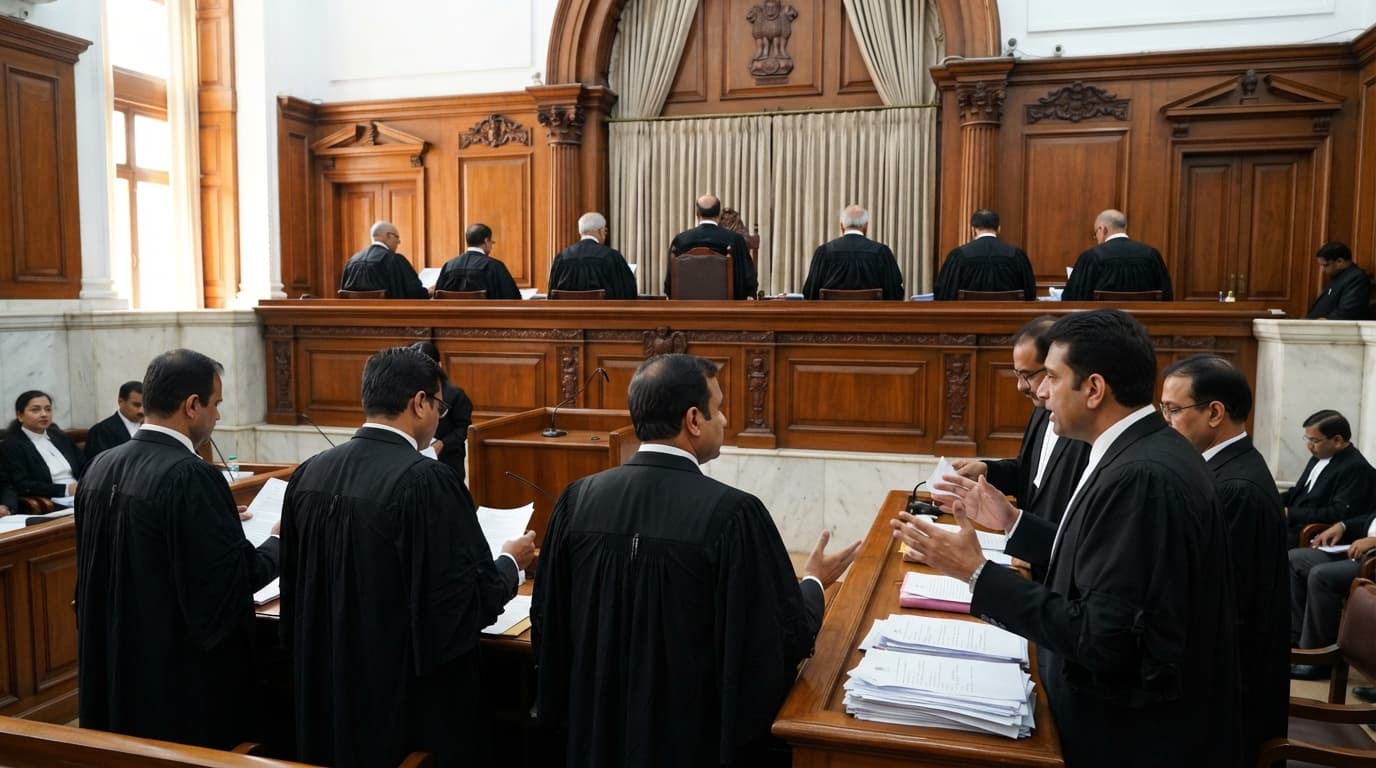
A seven-judge Constitution bench led by Chief Justice Surya Kant commenced hearings on October 6, 2026, to interpret the scope of legislative privileges of Members of Legislative Assemblies and their impact on article 19 freedom of speech. The bench, which also includes Justice Joymalya Bagchi and Justice V. Mohana, will examine the long-standing constitutional conflict between Article 194, which outlines the powers and privileges of the Houses of Legislature, and Article 19(1)(a), which guarantees fundamental rights to free expression.
The case addresses whether legislative immunity granted under Article 194 can override citizens' rights to free expression, or whether both provisions can coexist within the constitutional law of India. The Supreme Court has indicated that the bench will provide an authoritative pronouncement on this conflict, settling questions that have remained contested across multiple High Court decisions and earlier bench rulings.
The Constitutional Question
Article 194 of the Constitution grants Members of Legislative Assemblies certain immunities and privileges while discharging their duties. These protections are designed to enable legislators to speak freely within the legislature without fear of civil or criminal liability. However, article 19 1 a freedom of speech and expression represents one of the Constitution's most fundamental guarantees to all citizens, permitting them to express themselves without government interference, subject only to specified restrictions.
The tension between these two provisions has created practical difficulties. When a legislator makes statements within the House that are protected by Article 194, can citizens challenge those statements as violations of their own rights? If legislative immunity is absolute, does it create a zone where speech cannot be questioned or scrutinised by the public, thereby undermining the democratic principle that all power ultimately derives from the people?
The seven-judge composition itself signals the gravity of the constitutional question. Constitution benches of this size are typically convened only when the issue involves fundamental principles of constitutional interpretation or when earlier bench decisions conflict.
Freedom of Speech and Its Boundaries
The right to article 19 1 a freedom of speech and expression has been understood by Indian courts as extending beyond mere utterance. It encompasses the right to receive information, the right to propagate ideas, and the right to criticise government action. The Supreme Court has held that this right is essential to democratic governance and to the development of individual personality.
The Constitution itself recognises that this right is not absolute. Article 19(2) permits the State to impose reasonable restrictions on freedom of speech and expression in the interests of sovereignty and integrity of India, security of the State, friendly relations with foreign States, public order, decency or morality, contempt of court, defamation, or incitement to an offence. These limitations of freedom of speech and expression in India have been carefully delineated through decades of case law, with courts examining whether any particular restriction is reasonable and proportionate to the legitimate aim it seeks to achieve.
The question before the seven-judge bench is whether Article 194 operates as a separate and additional limitation on this right. If a legislator makes statements protected by Article 194, can those statements be challenged under the framework of Article 19? Or does Article 194 create an exceptional zone where the ordinary rules do not apply?
Legislative Privilege and Accountability
Article 194 reflects a principle inherited from Westminster parliamentary tradition: the need for legislators to speak without fear of legal consequences. The rationale is that legislators must be free to raise matters of public importance, to criticise the executive, and to debate policy without worrying about being sued for defamation or prosecuted for sedition. Without such protection, legislators would self-censor, and the legislature would be weakened as a check on executive power.
Yet this protection has limits. It applies only to statements made within the legislature or its committees. It does not extend to statements made outside the House. Moreover, the privilege is granted to enable the legislator to perform their constitutional function; it is not a personal right but a functional immunity tied to legislative duty.
The bench will need to examine how these principles interact with the broader constitutional law of India, which emphasises the rule of law and equality before the law. If a legislator makes a statement within the House that is false, defamatory, or incites violence, can no remedy be available to a citizen harmed by that statement? The constitutional law of India has generally resisted the idea that any person or institution is entirely above the law or immune from all forms of accountability.
The Scope of the Hearing
The bench's task is to articulate clear principles that govern the relationship between Article 194 and Article 19(1)(a). Several questions appear to be at stake. First, what is the precise scope of Article 194? Does it protect only the statement itself, or does it also protect the legislator from answering questions about the statement's truthfulness or motivation? Second, can a legislator be held accountable through other mechanisms—such as internal House procedures, electoral accountability, or the general law of contempt—even if they cannot be sued civilly for defamation for statements made within the House? Third, how should courts balance the need for legislative independence with the public's right to know whether their representatives are speaking truthfully and responsibly?
These questions affect the ability of citizens to hold legislators accountable for their words. They also affect the ability of individuals to defend their reputations against false statements made in the legislature. The bench's pronouncement will likely shape how lower courts, High Courts, and the Election Commission address disputes involving statements made by legislators.
What Comes Next
The hearings commenced on October 6, 2026. The bench is expected to hear arguments from the parties, including submissions on the text of the Constitution, precedent, comparative constitutional law, and the practical implications of different interpretations. The Court will then reserve judgment and issue a written order that explains the principles governing the relationship between Article 194 and Article 19(1)(a).
Once the bench issues its judgment, it will become binding precedent for all lower courts. Any case involving a challenge to a legislator's statement will be decided in light of these principles. The judgment will also likely clarify what remedies, if any, are available to citizens who believe they have been harmed by false or defamatory statements made by legislators within the House.
Comments
Sign in to read the discussion and share your thoughts.
Latest from LawWorld
News
View all- Karnataka High Court Permits Continuation of Corruption Case Against Siddhartha Vihar Trust Despite Lokayukta Closure12 Oct 2026
- Karnataka High Court Quashes Land Acquisition for Housing Project in Bannerghatta National Park, Prioritizes Wildlife Protection12 Oct 2026
- Karnataka High Court Imposes ₹1 Lakh Cost for Inappropriate Plea Against ED Officer Marked to CJI12 Oct 2026
- Karnataka High Court Rules Daughter-in-Law Not Automatically Liable for Mother-in-Law Maintenance After Son's Death12 Oct 2026
- Karnataka High Court Orders Psychological Assessment of Parents in Child Custody Battle12 Oct 2026
Articles
View all- Supreme Court Refers DPDP Act Constitutional Challenge to Five-Judge Bench: RTI vs. Privacy Rights at Stake12 Oct 2026
- Supreme Court Disposes PIL on Doxxing and Deepfakes; Directs Union Ministries to Implement Remedial Measures8 Oct 2026
- Supreme Court Issues Notice on Constitutional Challenge to GST Input Tax Credit Denial Provision7 Oct 2026
Blogs
View all- Supreme Court Orders Priority Hearing for Pension Cases: A Decade-Long Wait Deemed 'Grave Injustice'12 Oct 2026
- Supreme Court Clarifies Gratuity Calculation: Monthly Wages Divided by 26 Working Days, Not 3011 Oct 2026
- Supreme Court Affirms Damages Recovery for Delayed Provident Fund Contributions Without Time Limit10 Oct 2026