
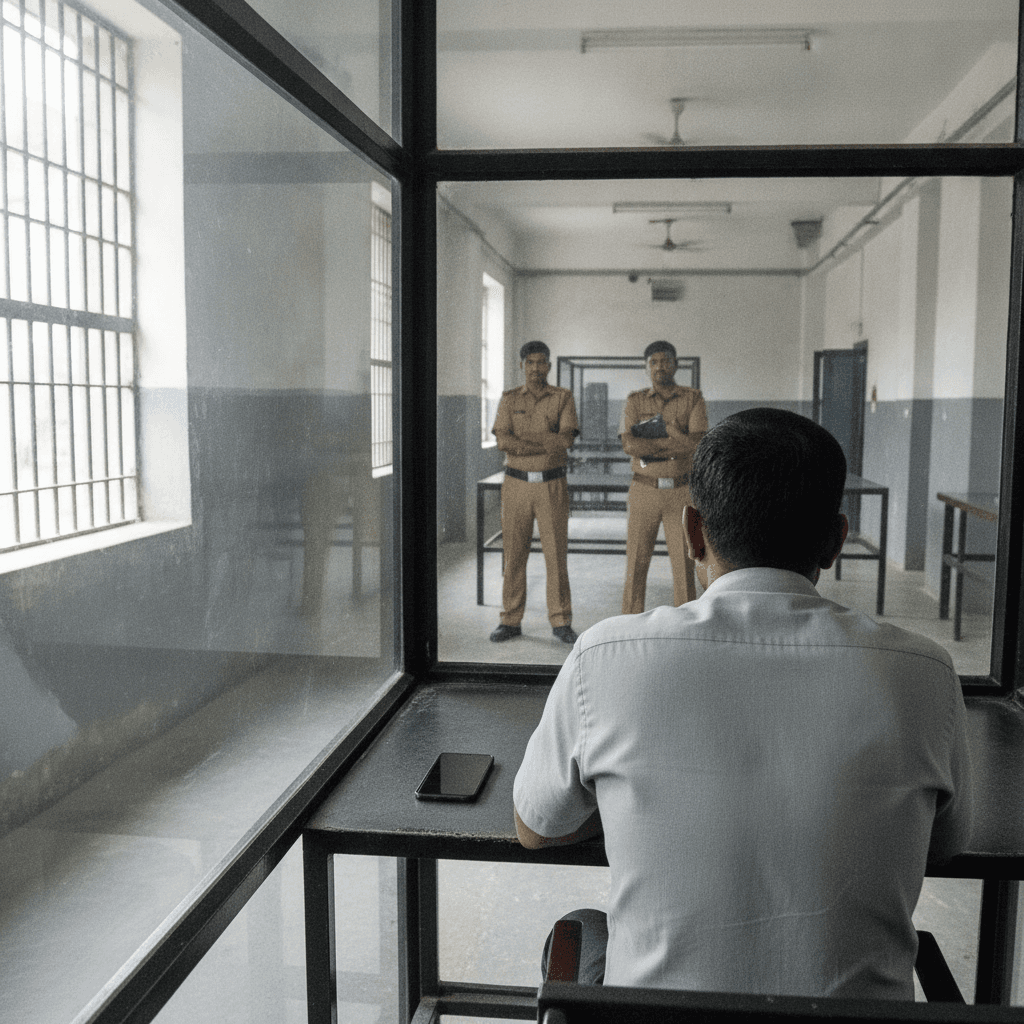
Karnataka High Court Upholds Approver Status for Co-Accused Pradosh, Rejects Actor Darshan's Petition
The Karnataka High Court has rejected a writ petition Karnataka High Court filed by actor Darshan challenging the grant of pardon and approver status to co-accused Pradosh in a criminal case. The court's decision, delivered in September 2026, addresses contentions that Pradosh had improperly communicated with persons outside prison and had been influenced to become an approver, ultimately finding no legal fault in the conduct alleged.
Darshan's petition raised several objections to the trial court's order granting Pradosh pardon status. The actor's primary argument centred on the claim that Pradosh had engaged in communications with his wife and other persons outside the prison, and that these communications had influenced him to turn approver in the case. An approver, under Indian criminal law, is an accused person who has been granted pardon and agrees to give evidence for the prosecution against other accused persons in the same case.
The prosecution presented evidence during the proceedings that prison authorities had lodged a complaint against Pradosh. According to this complaint, Pradosh had falsely declared one of three mobile phone numbers as belonging to his advocate. Prison officials alleged that Pradosh had actually been using this number to speak with his wife, contrary to the declared purpose. This discrepancy formed part of the factual foundation for Darshan's challenge to Pradosh's approver status.
High Court of Karnataka caveat petition status
Pradosh's legal counsel adopted an intriguing defensive position before the High Court of Karnataka caveat petition status could be fully addressed. The advocate argued that there was nothing improper about Pradosh speaking to his wife, drawing a parallel to Darshan's own conduct. The counsel pointed out that Darshan himself had been communicating with his spouse, who had filed the current petition on his behalf. This comparative argument suggested that if Darshan could maintain contact with his wife, the same privilege should extend to Pradosh without affecting his credibility as an approver.
The High Court examined the specific facts concerning Pradosh's use of the mobile number in question. The court found no fault in Pradosh speaking to his wife using a mobile number which had been officially declared to the prison authorities. This finding proved critical to the judgment. By establishing that the communication had been made through an officially declared number—rather than a clandestine device—the court distinguished between proper prison communication protocols and unauthorized contact.
The distinction drawn by the court reflects established principles governing prison administration and the rights of inmates. When a mobile number is officially declared to prison authorities, its use falls within a transparent framework of oversight. The prisoner's communications through such a declared number are subject to institutional monitoring and record-keeping, thereby reducing concerns about hidden influence or coercion. The court's acceptance of this reasoning suggests that official declaration to authorities converts what might otherwise be a violation into permissible conduct.
Darshan's broader allegation—that Pradosh had been influenced to become an approver through these communications—also faced scrutiny. The court did not find sufficient evidence to support the contention that conversations between Pradosh and his wife, conducted through an officially declared channel, amounted to improper influence affecting the validity of his approver status. The judgment implies that family contact alone, when conducted transparently through declared means, does not undermine the reliability of an approver's testimony or the legitimacy of the pardon granted.
Contempt petition format Karnataka High Court standards
The case raises important questions about the balance between prison security and the maintenance of family relationships for inmates. Indian prison law and practice have long grappled with this tension. While strict security measures are necessary to prevent escape, violence, and organized crime within prisons, complete isolation from family can harm rehabilitation prospects and mental health. The High Court's decision reflects a pragmatic approach: permitting communication through officially declared and monitored channels while maintaining vigilance against unauthorized or hidden contact.
The rejection of Darshan's petition also addresses the standards applicable to challenging an approver's status. Under the Indian Penal Code and the Code of Criminal Procedure, an accused person may be granted pardon on the condition that he or she gives evidence for the prosecution. Once pardon is granted by a competent authority—typically the court or prosecution—the decision cannot be easily overturned on mere suspicion of influence. The challenging party must present concrete evidence of improper inducement, coercion, or procedural irregularity. Contempt petition format Karnataka High Court rules similarly require specificity and substantiation rather than generalized assertions.
Darshan's failure to persuade the High Court suggests that communication between an approver and his family members, even if it raises some concerns, does not automatically invalidate the pardon or the approver status. The court appears to have applied a rigorous standard: the communication must be shown to be improper in nature or conducted through unauthorized means to constitute grounds for challenge. A conversation between spouses, facilitated through official prison channels, fell short of this threshold.
The decision also has implications for how courts assess the reliability and admissibility of approver evidence at trial. An approver's testimony is often viewed with caution by courts because of the inherent risk that the approver may have been motivated by self-interest or external pressure to implicate others. However, the mere fact that an approver maintained family contact does not automatically taint the evidence. Courts must examine the substance of the communications and the nature of any alleged influence, not simply the fact of contact itself.
Pradosh's counsel successfully defended the approver status by pointing to the transparency of the communication channel. This argument carries weight in contemporary criminal jurisprudence, where courts increasingly recognize that institutional transparency and official oversight can mitigate risks of abuse. By using a declared number, Pradosh demonstrated compliance with prison protocols rather than an attempt to circumvent them.
The High Court's rejection of Darshan's petition became final with the delivery of the judgment in September 2026. The decision means that Pradosh retains his approver status and may testify for the prosecution in the underlying criminal case. Darshan's legal remedies at this stage are limited; any further challenge would require demonstrating a substantial error of law or a complete misreading of the facts by the High Court, a difficult burden to meet.
For the trial court handling the underlying criminal matter, the High Court's decision provides clarity: Pradosh's evidence will be admissible, though the trial court will assess its weight and credibility in the usual manner. The court will consider whether Pradosh's testimony is corroborated by other evidence and whether any bias or interest has been demonstrated during cross-examination.
The judgment reflects the importance of maintaining proper prison records and communication protocols. By officially declaring mobile numbers to authorities, inmates create a documentary trail that protects them from later allegations of unauthorized contact. This incentivizes compliance with institutional rules and provides a safeguard against unfounded challenges to an inmate's legal status or credibility.
Darshan's challenge has thus been comprehensively rejected. The actor must now prepare for trial knowing that Pradosh will likely testify as an approver for the prosecution. The case illustrates how courts balance security concerns, family rights, and the integrity of criminal proceedings in the context of prison administration and the approver system.
Comments
Sign in to read the discussion and share your thoughts.
Latest from LawWorld
News
View all- Karnataka High Court Permits Continuation of Corruption Case Against Siddhartha Vihar Trust Despite Lokayukta Closure12 Oct 2026
- Karnataka High Court Quashes Land Acquisition for Housing Project in Bannerghatta National Park, Prioritizes Wildlife Protection12 Oct 2026
- Karnataka High Court Imposes ₹1 Lakh Cost for Inappropriate Plea Against ED Officer Marked to CJI12 Oct 2026
- Karnataka High Court Rules Daughter-in-Law Not Automatically Liable for Mother-in-Law Maintenance After Son's Death12 Oct 2026
- Karnataka High Court Orders Psychological Assessment of Parents in Child Custody Battle12 Oct 2026
Articles
View all- Supreme Court Refers DPDP Act Constitutional Challenge to Five-Judge Bench: RTI vs. Privacy Rights at Stake12 Oct 2026
- Supreme Court Disposes PIL on Doxxing and Deepfakes; Directs Union Ministries to Implement Remedial Measures8 Oct 2026
- Supreme Court Issues Notice on Constitutional Challenge to GST Input Tax Credit Denial Provision7 Oct 2026
Blogs
View all- Supreme Court Orders Priority Hearing for Pension Cases: A Decade-Long Wait Deemed 'Grave Injustice'12 Oct 2026
- Supreme Court Clarifies Gratuity Calculation: Monthly Wages Divided by 26 Working Days, Not 3011 Oct 2026
- Supreme Court Affirms Damages Recovery for Delayed Provident Fund Contributions Without Time Limit10 Oct 2026