
Karnataka High Court Questions Election Commission's SIR Process as 67 Lakh Voters Face Potential Disenfranchisement
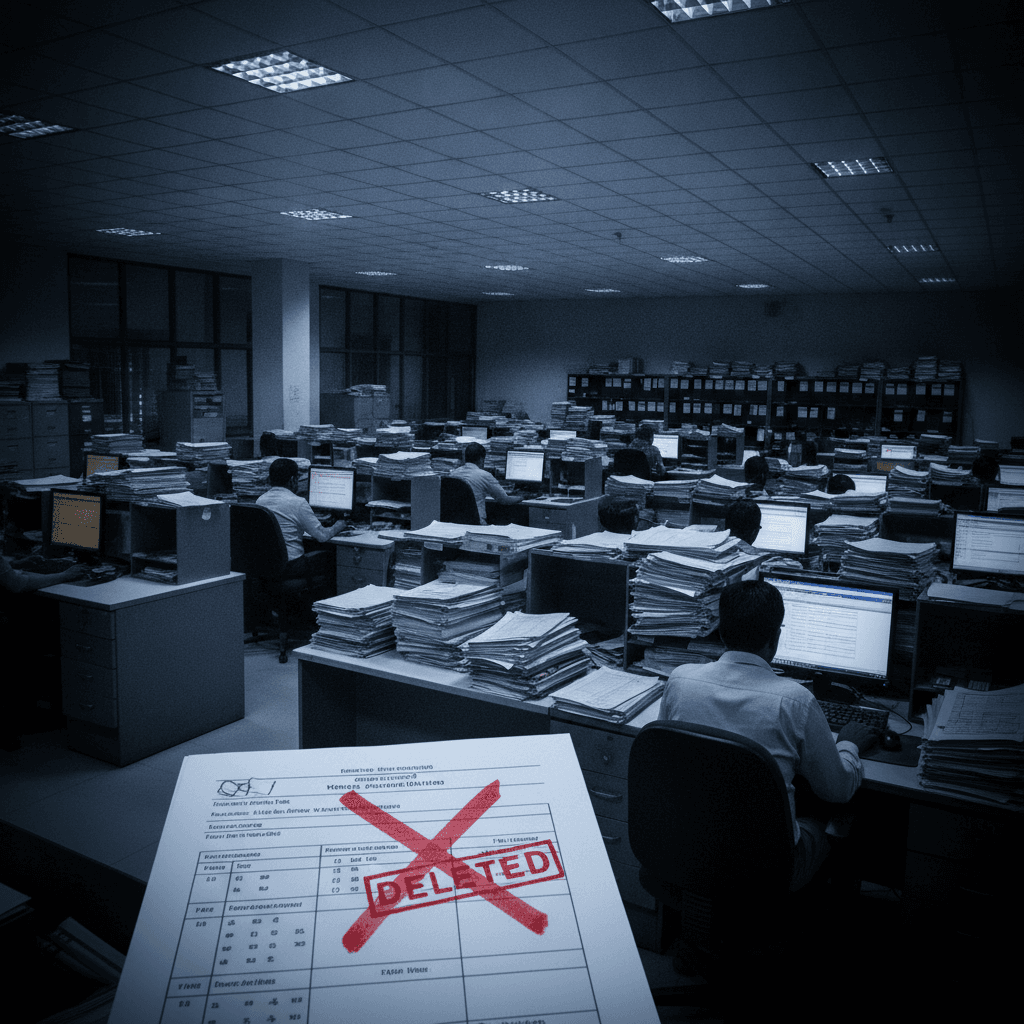
The Karnataka High Court has taken cognisance of a significant public interest litigation that challenges the Election Commission of India's Special Intensive Revision (SIR) of electoral rolls in the state, with the petitioners alleging that approximately 67 lakh voters face potential exclusion from the voter lists without being afforded proper notice or an opportunity to be heard. A division bench of the court has sought substantial clarifications from the Election Commission regarding how the state's SIR exercise aligns with the Supreme Court of India's own directions that govern the SIR process, raising critical constitutional questions about the fairness and transparency of the electoral roll revision mechanism.
The hearing before the Karnataka High Court represents a watershed moment in electoral jurisprudence, as it directly examines whether the Election Commission's implementation of the SIR process complies with fundamental constitutional principles of natural justice and due process. The case has already attracted significant attention from election law practitioners, constitutional experts, and civil society organisations across Karnataka, given its potential to affect the voting rights of millions of citizens and to set important precedents for how electoral rolls are revised in future elections.
The Scale of the Challenge
The magnitude of the alleged voter exclusion—affecting nearly 67 lakh individuals—underscores the gravity of the petition. Electoral rolls form the foundational basis of democratic participation in India, and any large-scale revision process that operates without adequate safeguards risks disenfranchising legitimate voters and undermining the principle of universal adult suffrage enshrined in the Constitution of India. The petitioners have contended that the SIR process, as implemented in Karnataka, has proceeded without providing affected voters with adequate notice of their potential deletion or a meaningful opportunity to challenge such deletions before they become final.
The Election Commission of India has historically relied on the SIR mechanism to remove duplicate entries, deceased voters, and those who have shifted residence to other constituencies. However, the Karnataka petition suggests that the current implementation may have expanded beyond these legitimate purposes and may be capturing voters who remain eligible and resident within their respective constituencies. The absence of individual notice to voters whose names are targeted for deletion represents a significant departure from the procedural safeguards that the Supreme Court of India has mandated for electoral roll revision exercises.
Alignment with Supreme Court Directions
The division bench's inquiry into whether the SIR process aligns with Supreme Court of India directions is particularly significant. The Supreme Court of India has, in multiple judgments, articulated that electoral roll revision must be conducted in a manner that respects the rights of voters and ensures that no eligible citizen is arbitrarily removed from the rolls. These directions have consistently emphasised the importance of notice, the opportunity to be heard, and transparent criteria for voter deletion. The Supreme Court of India has also stressed that the burden of proof in establishing that a voter is ineligible should rest with the Election Commission, not with the voter seeking to retain their voting rights.
By seeking clarification on compliance with the Supreme Court of India's precedents, the Karnataka High Court is effectively conducting a constitutional audit of the Election Commission's SIR implementation. This approach reflects the judiciary's commitment to ensuring that executive bodies, even those vested with quasi-judicial functions like the Election Commission, operate within the bounds of constitutional law and respect the principles of natural justice that have been articulated by the Supreme Court in India across decades of electoral jurisprudence.
Constitutional and Procedural Implications
The petition raises several interconnected constitutional questions. First, it addresses whether the SIR process, as currently implemented, violates Article 14 of the Constitution of India by treating similarly situated voters differently or by applying deletion criteria arbitrarily. Second, it raises concerns about the violation of Article 21, which guarantees the right to life and liberty, interpreting this to include the right to participate in democratic processes through voting. Third, the petition implicitly challenges whether the Election Commission has adhered to the principles of natural justice by denying affected voters notice and an opportunity to be heard before deletion.
From a procedural standpoint, the case also examines the adequacy of the remedial mechanisms available to voters whose names are targeted for deletion. If the SIR process operates largely in the background without transparent communication to affected individuals, then voters may discover their disenfranchisement only when they attempt to vote, at which point remedying the error becomes extremely difficult and time-consuming. This practical reality has motivated the petitioners to seek judicial intervention at the stage of the SIR revision itself, rather than waiting for post-deletion remedies.
Implications for Election Lawyers and Electoral Practice
The case carries major consequences for election lawyers and litigants across Karnataka ahead of prospective elections. If the High Court finds that the current SIR process is flawed, it may issue directions that fundamentally alter how the Election Commission conducts electoral roll revisions in the state. Such directions could include mandates for individual notice to voters whose deletion is proposed, prescribed timelines for voters to submit objections, and transparent criteria that must be applied before any deletion is finalised. These procedural safeguards would represent a significant strengthening of voter protections and would likely become a template for electoral roll revision processes across other states as well.
Conversely, if the court finds the SIR process to be constitutionally sound, it will provide important clarity to election administrators and will likely influence how similar petitions are adjudicated in other High Courts. Either outcome will have ripple effects throughout India's electoral administration, as the Election Commission of India operates under a centralised framework even though elections are conducted state by state.
The Risk of Large-Scale Disenfranchisement
The petition's allegation that a flawed roll-revision process could disenfranchise a large section of the electorate speaks to a systemic risk in the current electoral architecture. If 67 lakh voters are deleted without proper notice or opportunity to be heard, and if even a small percentage of these are actually eligible voters, then the cumulative effect would be the unlawful exclusion of hundreds of thousands of citizens from the electoral process. Such an outcome would not only violate individual rights but would also compromise the legitimacy of any election conducted on the basis of such a defective electoral roll.
The case thus transcends the interests of individual voters and implicates the integrity of democratic processes in Karnataka and, by extension, in India as a whole. An electoral roll that does not accurately reflect the eligible electorate cannot serve as a reliable basis for conducting free and fair elections, a principle that has been repeatedly affirmed by the Supreme Court of India in its jurisprudence on electoral law.
Path Forward
The division bench's decision to seek detailed clarifications from the Election Commission suggests that the court is taking the petition seriously and is not inclined to dismiss it summarily. The court's engagement with the substance of the allegations indicates a judicial commitment to scrutinising executive action in the electoral sphere, even when that action is undertaken by a constitutionally mandated body like the Election Commission of India. The outcome of this case will likely influence how electoral roll revisions are conducted in Karnataka and may establish important precedents for electoral administration across India.
As the case progresses, it will be essential for the Election Commission to provide transparent and detailed responses to the High Court's queries, demonstrating that its SIR process adheres to both the letter and spirit of the Supreme Court of India's directions. The court's ultimate judgment will serve as a critical checkpoint in ensuring that democratic participation remains accessible to all eligible voters and that electoral administration in India continues to evolve in a manner that strengthens rather than undermines the foundations of democratic governance.
Comments
Sign in to read the discussion and share your thoughts.