
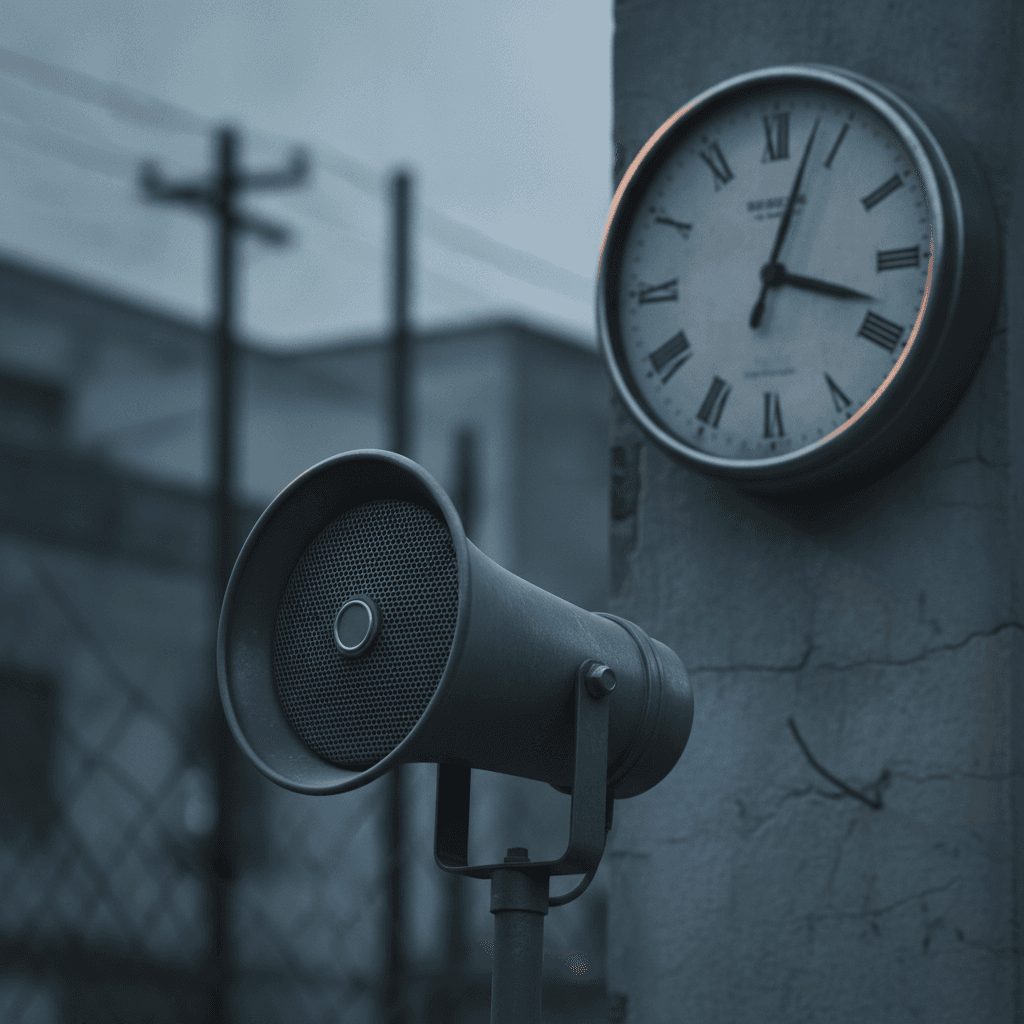
Karnataka HC Quashes FIR Over Two-Minute Loudspeaker Violation: Section 482 CRPC Applied to De Minimis Principle
The Karnataka High Court has delivered a significant judgment on the application of criminal law to marginal time violations, quashing an FIR registered against Bidar Congress MLA Rahim Khan for allegedly operating a loudspeaker two minutes beyond the statutory 10 PM cut-off time during election campaigning. Justice M. Nagaprasanna, sitting singly, allowed the MLA's petition under Section 482 of the Code of Criminal Procedure (CrPC), holding that such a minimal temporal deviation cannot form the basis of criminal prosecution when no standard clock has been prescribed for enforcement purposes.
The judgment represents a careful calibration of two competing public interests: the genuine need to enforce noise pollution restrictions that protect residents, hospitals, and students, and the equally important principle that criminal liability must rest on a foundation of certainty and proportionality. By invoking the de minimis doctrine—the ancient legal maxim that the law does not concern itself with trifles—Justice Nagaprasanna has provided Indian courts with a useful framework for addressing everyday enforcement challenges where precision becomes impractical.
The Facts and the Violation
The FIR against MLA Rahim Khan was registered under the noise pollution rules following a complaint that he had used a loudspeaker during election campaigning activities. The specific allegation centred on the timing of the loudspeaker use: the device was operated for approximately two minutes beyond the permitted cut-off time of 10 PM. While noise pollution regulations across India impose strict temporal limits on loudspeaker use to protect public health and the right to sleep, the question before the High Court was whether such a minimal overshoot could sustain criminal proceedings.
The MLA's petition challenged the FIR on multiple grounds, but the core argument rested on a practical observation: without a prescribed standard clock or synchronized timing mechanism, it is inherently impossible to determine with absolute precision whether a two-minute difference represents a genuine violation or merely a divergence in timekeeping between the enforcement authority's watch, the complainant's mobile phone, and the accused's clock. This argument struck at the heart of what criminal law requires: mens rea and a clear, provable actus reus.
The High Court's Reasoning on De Minimis and Certainty
Justice Nagaprasanna's judgment endorses a nuanced approach to the enforcement of temporal restrictions. The court did not question the legitimacy or importance of the 10 PM loudspeaker cut-off. Noise pollution is a genuine public health concern. Residents have a fundamental right to undisturbed sleep; hospitals require quiet environments for patient recovery; students need peaceful conditions for study. These are not trivial interests, and the regulations protecting them serve important social purposes.
However, the judgment emphasizes that criminal law operates within a different framework than administrative or civil regulation. Criminal liability demands a high degree of certainty. The prosecution must prove its case beyond reasonable doubt, and the accused must have a fair opportunity to defend themselves. When the very factual foundation of an offence—the precise moment at which a loudspeaker was switched off—cannot be established with certainty due to the absence of a prescribed standard clock, the criminal process itself becomes unreliable.
The court's reasoning reflects a principle deeply embedded in Indian jurisprudence: the doctrine of de minimis non curat lex, which translates as "the law does not concern itself with trifles." This doctrine does not mean that small violations should be ignored entirely. Rather, it recognizes that criminal prosecution is not always the appropriate response to minor infractions. When the violation is so marginal that its very existence depends on which clock one consults, criminal prosecution becomes disproportionate and potentially unjust.
Application of Section 482 CrPC for Quashing of FIR
The High Court's decision to quash the FIR under Section 482 of the Code of Criminal Procedure is significant. Section 482 grants the High Court inherent powers to make such orders as may be necessary to prevent the abuse of the process of any court or to secure the ends of justice. This provision is not a general power to interfere with criminal proceedings on the merits; rather, it is confined to cases where the court is satisfied that allowing the prosecution to proceed would be an abuse of process or would work injustice.
Justice Nagaprasanna's application of Section 482 in this context establishes that a prosecution based on a temporal margin so small that it cannot be reliably measured constitutes an abuse of the criminal process. The High Court recognized that proceeding with the FIR would serve no legitimate purpose—it would not meaningfully deter loudspeaker violations, would not protect the public health objective underlying the noise pollution rules, and would instead expose an individual to the machinery of criminal law for a difference that may well be attributable to clock variance rather than deliberate violation.
This approach to quashing of FIR under Section 482 CrPC demonstrates that the High Court is willing to intervene not only when there is no prima facie case on the merits, but also when the factual foundation of the alleged offence is so tenuous that criminal prosecution becomes unjust. The judgment thus expands the scope of Section 482 CRPC quashing of FIR jurisprudence by incorporating proportionality and practical enforceability as independent grounds for intervention.
Implications for Election Campaign Regulation
The judgment carries particular significance for election campaign management and the enforcement of model code of conduct provisions. Election campaigns involve numerous regulatory restrictions, many of them temporal in nature. Restrictions on loudspeaker use, timing of public meetings, door-to-door campaigning windows, and media broadcast schedules all depend on precise timekeeping. If every minor deviation were treated as a criminal violation, election authorities would face an impossible task, and candidates and campaign workers would face unreasonable exposure to prosecution.
By holding that a two-minute overshoot cannot constitute an offence, Justice Nagaprasanna has signalled that electoral enforcement must operate within reasonable margins. This does not mean that gross violations will be tolerated. A candidate who operates loudspeakers for hours beyond the permitted time would still face appropriate consequences. But enforcement must distinguish between deliberate, material violations and marginal deviations attributable to the practical impossibility of perfect timekeeping.
Broader Principles for Noise Pollution Enforcement
The judgment also has implications beyond the specific electoral context. Noise pollution regulations are enforced across India through various statutes and municipal bylaws. Police, environmental authorities, and municipal corporations regularly receive complaints about loudspeaker use, construction noise, and other sound-related violations. If every technical breach, however minor, were prosecuted as a criminal offence, the criminal justice system would be overwhelmed with cases of marginal significance.
Justice Nagaprasanna's judgment suggests that enforcement authorities must exercise discretion proportionate to the actual harm caused. A two-minute overshoot by a political candidate during an election campaign, where the loudspeaker was being used for lawful speech, presents a very different enforcement scenario than repeated, deliberate, and prolonged violations by a commercial establishment or an individual showing callous disregard for noise pollution rules.
Conclusion
The Karnataka High Court's decision to quash the FIR under Section 482 CrPC represents a measured application of the de minimis doctrine to contemporary enforcement challenges. The judgment does not weaken noise pollution regulations or suggest that temporal restrictions on loudspeaker use are unimportant. Rather, it establishes that criminal prosecution must rest on a reliable factual foundation. When the alleged violation is so marginal that it cannot be distinguished from measurement error, the criminal process becomes an inappropriate tool.
For Indian legal practitioners, enforcement authorities, and courts, the judgment offers a useful reminder that the criminal law's power should be deployed proportionately. The quashing of FIR under Section 482 CrPC in cases involving de minimis violations reinforces the principle that justice requires not only the application of rules, but also the exercise of judgment about when and how those rules should be enforced. In this case, two minutes past 10 PM was simply too small a margin to support criminal liability—a principle that will likely guide enforcement decisions across multiple regulatory domains in India.
Comments
Sign in to read the discussion and share your thoughts.