
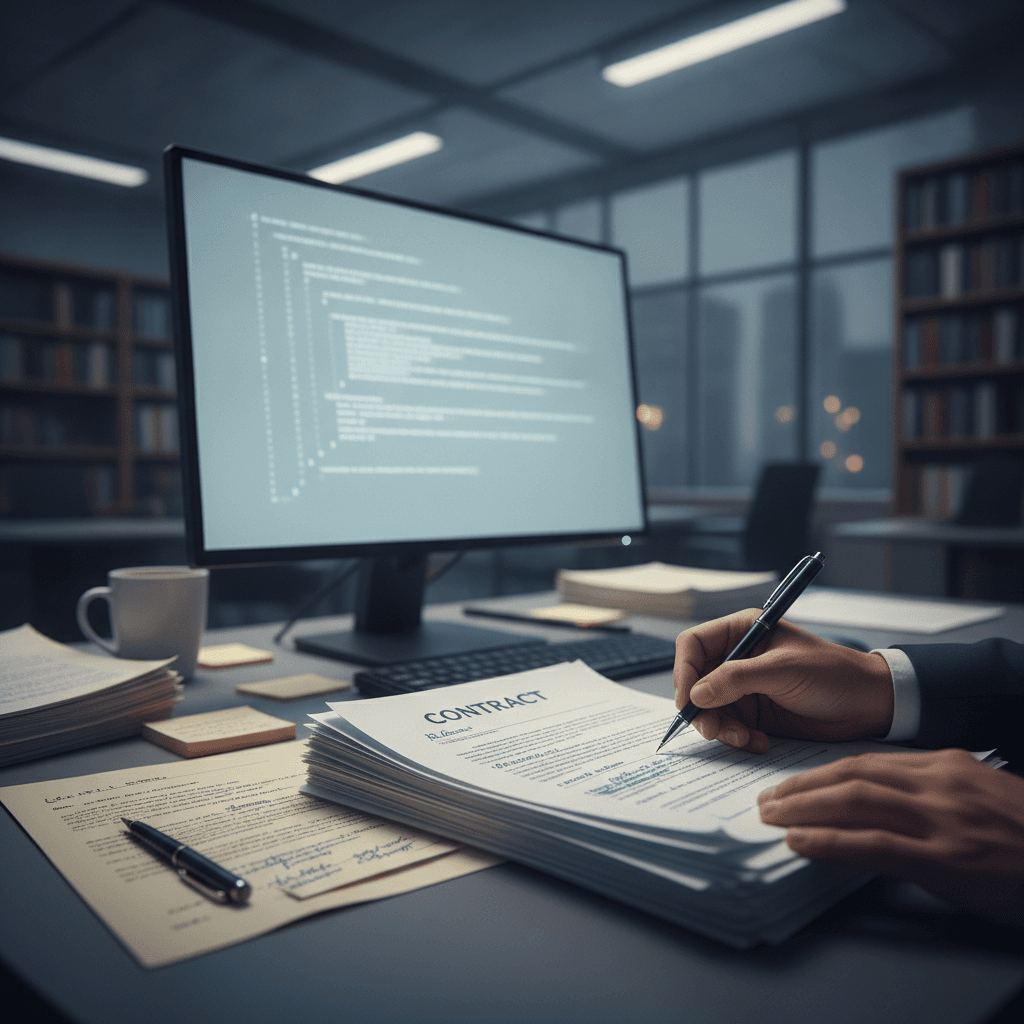
Most advocates treat the question of who "owns" a draft as settled by common sense: the lawyer who wrote it, on behalf of the client who paid for it. AI complicates that assumption in a way few practices have thought through. If a legal-AI tool generates the first draft of a plaint, an opinion, or a contract clause, does copyright subsist in it at all — and if so, who holds it?
What Indian copyright law actually requires
The Copyright Act, 1957 protects "original literary work," and originality has traditionally meant a work that owes its creation to the skill, judgment, and labour of a human author — not mere mechanical production. Indian law does recognise a narrow category of "computer-generated works," where the Act treats the person who caused the work to be created as the author. But that provision was designed for outputs like a database compilation or an automated report, not tested against modern generative AI producing free-text legal prose from a prompt.
This leaves genuine ambiguity. A document that is substantially AI-generated, with minimal human editorial input, sits in a grey zone: it may not meet the originality threshold for copyright at all, meaning nobody — not the advocate, not the client, not the AI provider — holds an enforceable copyright in it as written.
Keep reading — it’s free.
Create a free LawWorld account to finish this piece and unlock the full library of practice guides written for advocates in India.
- Finish every guide, free
- Save articles to read later
- New practice insights weekly
Free forever. No card required.
Comments
Sign in to read the discussion and share your thoughts.