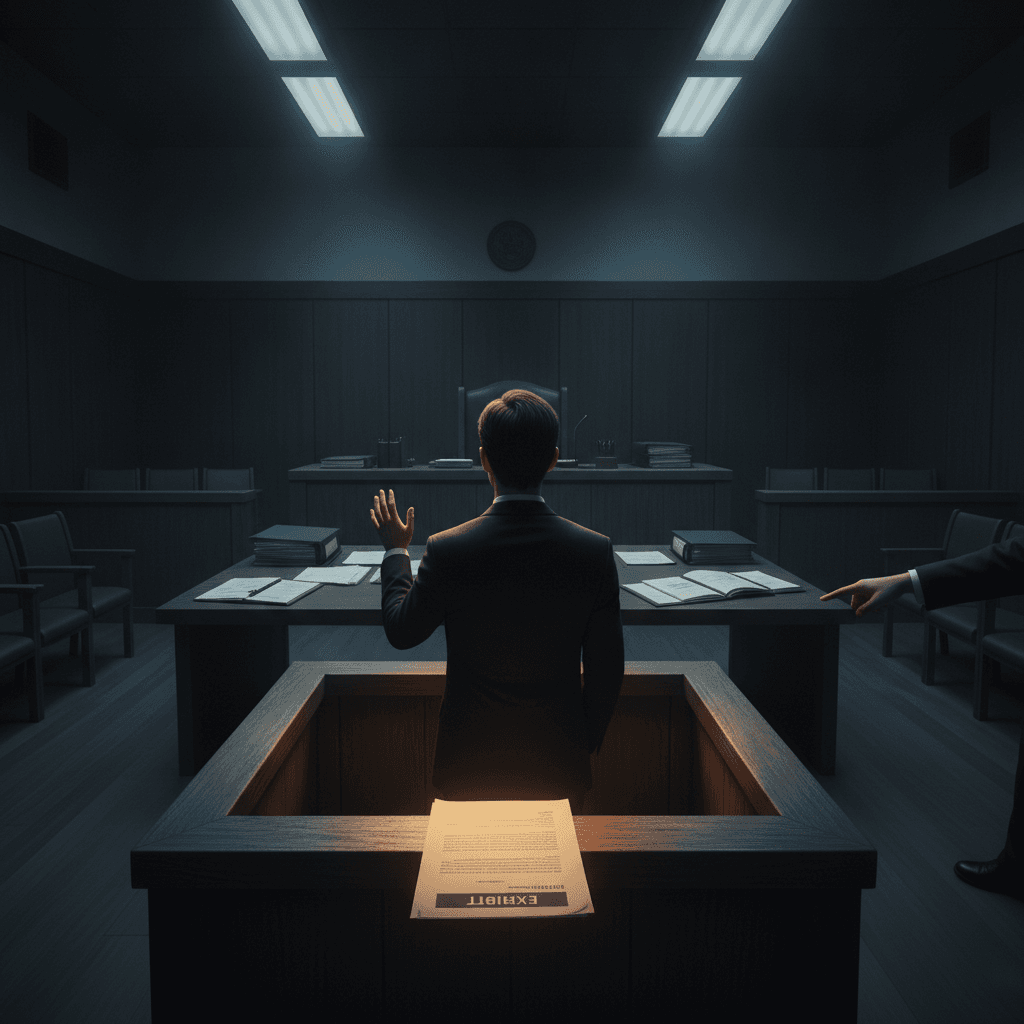
Recalling and Re-examining Witnesses During Trial: A Lifeline When Evidence Goes Wrong
Trial rarely unfolds perfectly. A crucial document surfaces late. A witness is never cross-examined on a damaging piece of evidence. Testimony given early in the case is later contradicted by material that changes everything. A prosecution witness's examination gets cut short before key facts emerge. In these moments, counsel faces a question: can the court bring the witness back?
The answer lies in a powerful but carefully guarded judicial authority: the court's power to recall and re-examine witnesses at any stage of trial where evidence appears essential to the just decision of the case. This power—rooted in the Indian Evidence Act, 1872—has rescued countless cases from the consequences of incomplete examination, missed cross-examination opportunities, and evidence that emerges too late. Yet courts have consistently warned that this power is not a licence to retry a failed case or to give counsel a second chance at incompetence.
Understanding when and how to invoke this power is essential for any litigator. It can be the difference between a just verdict and an unjust one.
The Legal Foundation: Two Limbs of Power
Section 142 of the Indian Evidence Act grants courts the authority to summon any person as a witness, or to recall and re-examine any person already examined, at any stage of the proceedings. The statute creates two distinct limbs, each governed by different standards.
The discretionary limb permits a court to recall a witness or summon a material witness in its discretion. This power is broad but not unlimited. A court may exercise it when it believes the evidence would be helpful, relevant, or prudent to hear. However, because this limb is discretionary, courts apply a flexible standard and may decline the application if they find the request oppressive, vexatious, or designed to circumvent proper procedure.
The mandatory limb is far more powerful. Where the court is satisfied that the evidence of a particular witness is essential to the just decision of the case, the court must summon or recall that witness, regardless of whether a party has applied. This limb shifts the burden. The evidence must be material, not merely helpful. It must be capable of affecting the outcome. When this threshold is crossed, judicial discretion vanishes, and the court's duty crystallises.
The distinction matters profoundly. Under the discretionary limb, a court may refuse a recall application on grounds of inconvenience, delay, or cost. Under the mandatory limb, none of these reasons suffice. The interests of justice override procedural convenience.
When Courts Recall Witnesses: Common Scenarios
Certain fact patterns recur in litigation and have shaped judicial guidance on when recall is appropriate.
A Witness Never Cross-Examined on a Crucial Document
One of the most common grounds for recall arises when a document—often produced late or overlooked during examination-in-chief and cross examination under Indian evidence act procedures—is never put to a witness who has direct knowledge of it. The rule against hearsay and the principle of natural justice both demand that a witness be given the opportunity to respond to material suggestions. If a document undermines a witness's testimony but was never shown to that witness during cross-examination, recall becomes not merely permissible but often necessary. Courts recognise that fairness to the witness and reliability of the verdict both require that the witness be heard on the document.
A Document Marked But Never Proved
Documents are frequently marked as exhibits during trial but never formally proved through the testimony of a competent witness. This creates a dangerous gap: the document sits in the record without foundation. Later, counsel may seek to rely on it in argument, but it remains legally unproven. Courts have held that where a document is material to the decision and no witness has been examined to prove its contents or authenticity, the court may recall a competent witness—often the party who produced it—to lay the necessary foundation. Without such proof, the document cannot properly be considered in the judgment.
Testimony Contradicted by Later Material
When a witness's earlier testimony is flatly contradicted by material that emerges later—perhaps through another witness's evidence or a document produced subsequently—the court may recall the first witness to explain the contradiction. This is not a second chance for counsel; it is an opportunity for the witness to clarify, reconcile, or retract testimony in light of new information. Such recall serves the truth-seeking function of trial and prevents a verdict based on unresolved contradiction.
A Prosecution Witness's Examination Cut Short
In criminal trials, it is not uncommon for a prosecution witness's examination-in-chief to be interrupted or curtailed—perhaps due to time constraints, the witness's unavailability, or procedural confusion. If material facts remain unexamined and those facts are essential to the prosecution's case, the court may recall the witness to complete the examination. Courts distinguish sharply between allowing a party to fill gaps in a poorly conducted case (which is not permitted) and ensuring that material evidence is actually heard (which is required).
The Critical Safeguard: Guarding Against Misuse
Courts have repeatedly warned that the power to recall is not a remedy for poor trial strategy or negligent advocacy. The power exists to serve justice, not to rescue parties from their own failures.
Courts will not permit recall where the real purpose is to fill lacunae in the prosecution case—that is, to patch holes in evidence that was always the party's responsibility to present properly. If the prosecution had the opportunity to examine a witness fully and chose not to, or failed to produce essential evidence at the right time, recall cannot be used to cure that omission. Similarly, counsel cannot use recall as a second attempt at cross-examination. If cross-examination was conducted and the opportunity was missed to put a crucial question to a witness, that opportunity is ordinarily lost. Recall is not a mechanism to re-litigate the cross-examination.
The test is whether the evidence was genuinely unavailable or unknowable at the time of the first examination, or whether it is truly essential to the just decision. Courts examine the timing of the application, the reasons for the delay, and whether granting recall would unfairly prejudice the other party or cause unjust delay.
Recall in Summary and Summons Trials
The power to recall applies across all types of trials, but its exercise varies. In summary trials, where procedure is more flexible and the court has greater control over evidence, recall is more readily granted. In summons trials (the ordinary civil procedure), recall is available but courts apply stricter scrutiny to ensure that parties have genuinely exhausted their opportunities before trial concludes.
In criminal trials, the position is similarly nuanced. The court's duty to ensure a fair trial and a just verdict is paramount, and recall may be ordered even without application where the court believes essential evidence is missing.
Cost and Conditions
When a court grants a recall application, it frequently imposes conditions. The most common is an order for costs. The party seeking recall is often ordered to pay the costs of the recall, including the witness's travel, time, and the court's time. This serves two purposes: it deters frivolous applications and it ensures that the party seeking recall bears the burden of its own negligence or late discovery.
In some cases, courts may impose conditions on the scope of re-examination—for instance, limiting it to specific topics or documents—to prevent the recall from becoming a wholesale re-trial of the case.
Crafting a Recall Application
A successful recall application should contain:
Clear identification of the witness and their earlier testimony
Specific reference to the evidence that is now material (the document, the contradiction, the gap)
An explanation of why the evidence was not fully explored in the first examination
Argument on whether the evidence is essential to the just decision or merely helpful
Proposed scope of the re-examination (limited questions, specific documents)
Acknowledgment of any delay and reasons for it
Offer to bear costs if appropriate
Courts respond well to applications that are honest about the reasons for recall and that frame the request as serving justice rather than remedying negligence.
Conclusion: Justice Over Convenience
The power to recall and re-examine witnesses is one of the law's most important safeguards against unjust verdicts. It recognises that trials are human enterprises, subject to oversight, late discovery, and unforeseen developments. Yet it is a power that must be exercised carefully, with clear sight of its purpose: to ensure that material evidence is heard and that verdicts rest on the fullest possible record.
For litigators, understanding when recall is appropriate—and when it is not—is essential. The power is there when evidence emerges as truly essential, when examination was genuinely incomplete, and when fairness demands a second hearing. It is not there to paper over negligence or to give a failed strategy a second life. Courts will grant recall where justice requires it. They will refuse it where it would merely reward poor advocacy. The line between the two is not always sharp, but it is always there.
12% read
Keep reading — it’s free.
Create a free LawWorld account to finish this piece and unlock the full library of practice guides written for advocates in India.
Finish every guide, free
Save articles to read later
New practice insights weekly
Free forever. No card required.
Comments
Sign in to read the discussion and share your thoughts.